


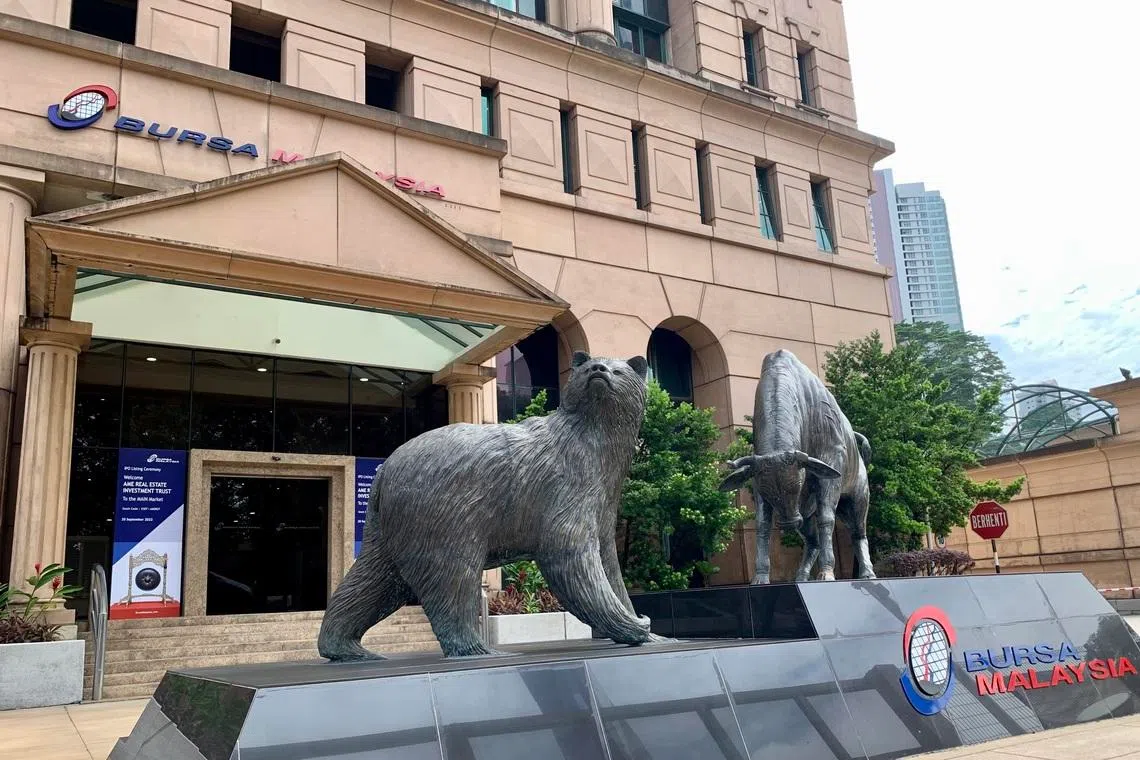
SINGAPORE – Malaysia emerged as the top market for initial public offerings (IPOs) in South-east Asia in the first half of 2026, with 36 listings, while Singapore trailed with five debuts, a Deloitte report released on July 13 showed.
The listings in Malaysia raised US$1.3 billion (S$1.68 billion), while those in Singapore raised US$868 million.
It still marks an improvement for Singapore, which saw only one IPO in the first half of 2025.
There have been signs of rejuvenation in Singapore’s capital markets, after the Monetary Authority of Singapore and Singapore Exchange (SGX) made efforts in 2025 to boost liquidity and encourage investor interest.
In February 2025, Singapore’s central bank launched the Equity Market Development Programme, which was a $6.5 billion initiative designed to boost investor participation beyond large-cap stocks.
Deloitte South-east Asia capital markets services leader Tay Hwee Ling noted that Singapore’s performance reflects growing investor confidence and strong support for these recent market reforms.
In total, South-east Asia saw 47 IPOs across the region in the first half of 2026, raising more than US$3.07 billion in proceeds.
While there were 53 IPOs in the first half of 2025, the proceeds amounted to only US$1.41 billion.
Tay said: “Deloitte’s report highlights a resilient South-east Asian IPO market that continues to attract larger and higher-quality listings despite a moderation in overall IPO volumes.”
The report noted that the market demonstrated a significant shift towards larger transactions.
Compared with the first half of 2025, IPO proceeds in 2026 increased by 117 per cent, and the average IPO deal size grew from US$26 million to US$65 million – representing an increase of about 2½ times.
Tay said: “This reflects a continued trend of quality taking precedence over quantity as investors focus on larger, stronger and more mature issuers.”
South-east Asia’s listing performance was supported by three blockbuster IPOs that each raised more than US$500 million.
They were UI Boustead real estate investment trust in Singapore, Sunway Healthcare Holdings in Malaysia and Dien May Xanh Investment Joint Stock in Vietnam.
Together, these listings contributed more than US$8.93 billion in market capitalisation.
In the first half of 2025, there were no IPOs exceeding US$500 million in proceeds.
Looking ahead to the rest of 2026, Tay said the South-east Asia IPO market is expected to remain healthy, supported by a strong pipeline of issuers, improving investor sentiment and easing interest rate conditions.
“While overall listing volumes may remain selective, the market is expected to continue favouring fewer but larger and higher-quality transactions.”
She added that Malaysia is expected to sustain its strong IPO momentum, while Singapore should continue attracting sizeable institutional listings.
But she cautioned that global macroeconomic uncertainties as well as heightened investor scrutiny of valuations and aftermarket performance are likely to continue influencing the timing and success of IPO launches.
“Nevertheless, companies with strong fundamentals, clear growth strategies and appropriate pricing are expected to continue attracting investor interest,” she said.
The report also noted that Singapore has embarked on a landmark partnership with Nasdaq, developing a Global Listing Board that will allow companies to achieve a dual listing on the SGX and the US stock market.
The rules and processes for listing will be harmonised so companies need to prepare only one set of offering documents to list simultaneously on the SGX and Nasdaq, making it easier for companies to raise capital in both markets.
Companies that want to list on the Global Listing Board are expected to meet a $2 billion minimum market capitalisation threshold, together with requirements around fund-raising in Singapore and retail allocation rules.
This is to ensure the companies have sufficient liquidity for the listing across two markets, as well as allowing Singapore investors to participate in the listings.
In March, Nasdaq’s vice-chair Bob McCooey had said the opportunity for dual listing has drawn interest from companies across the bourse’s major sectors, including financial and fintech, industrial, consumer, technology and healthcare.

