


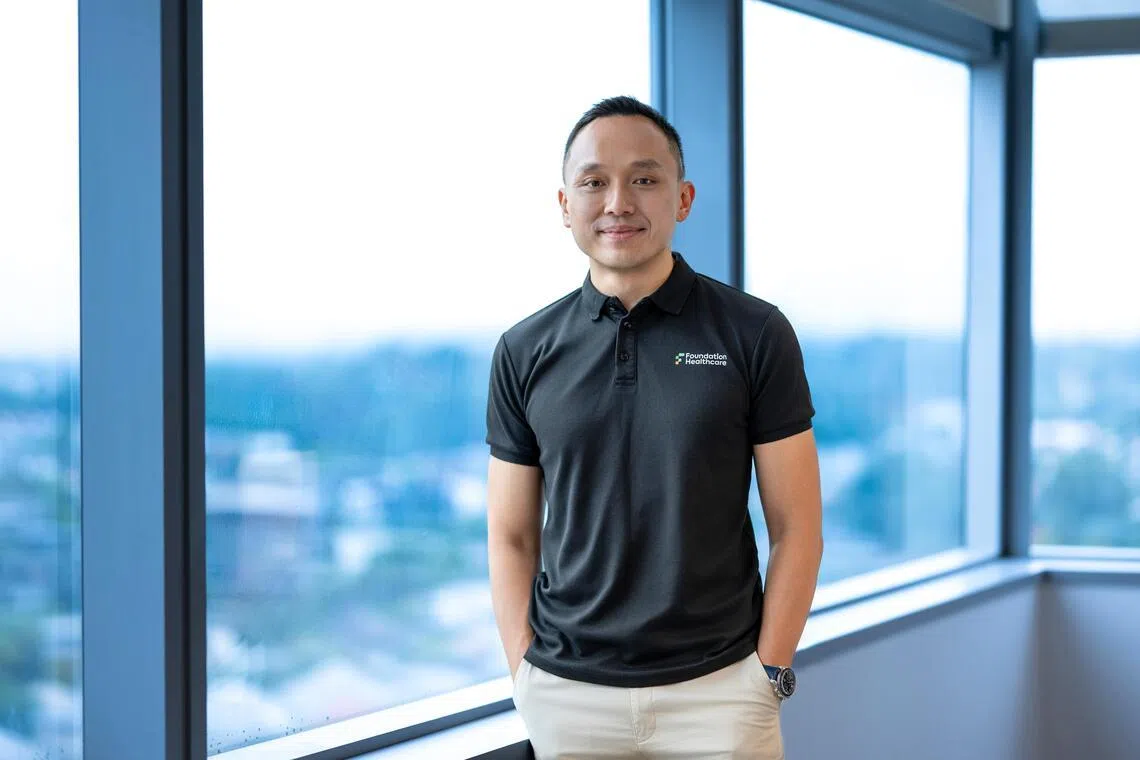
SINGAPORE – Shares of private healthcare group Foundation Healthcare Holdings (FHH), the first healthcare business to list on the Singapore Exchange (SGX) in four years, fell on their first day of trading on July 8.
The counter opened on the Mainboard 1 cent above its initial public offering (IPO) price of 76 cents a share, but failed to sustain the upward momentum. It dropped below its IPO price at 10.37am and continued to fall, closing its first day of trading at 70 cents, down 7.9 per cent.
The Temasek-backed healthcare group’s Singapore public offer of 87 million shares were around 9.4 times subscribed with over 3,800 valid applications. Overall, the offering of 162.6 million shares was around 3.8 times subscribed.
In total, the IPO raised gross proceeds of $242 million, including commitments from 10 cornerstone investors. They include Amova Asset Management Asia, Lion Global Investors, Manulife Investment Management, and UBS AG, which acted through its Singapore branch.
Some of the other cornerstone investors were also investing in SGX for the first time, chief executive Liaw Yit Ming told the media on July 1. These include Aregence Capital Management, Granite Asia, and US-based Hood River Capital Management.
FHH’s weak debut extends a pattern of lacklustre performances among many of the companies that have listed on the SGX in 2026.
GIC-backed co-working space operator JustCo fell below its IPO price upon commencing trade, with its shares trading about 41.5 per cent below its 94 cents offer price since its listing in May.
UI Boustead REIT, the largest SGX listing so far this year after raising S$973.6 million in March, also had a subdued debut, ending its first day of trading 8.5 per cent below its IPO price of 88 cents.
FHH has fallen below its IPO price despite outlining plans to use about $100 million of its listing proceeds to acquire specialist practices and medical centres in Singapore, while expanding its presence in Malaysia and Hong Kong.
The company is also planning to expand its day surgery clinics. These allow patients to undergo medical procedures and be discharged the same day. By eliminating the need for an overnight hospital stay, day surgery clinics significantly reduce costs for patients and insurers.
The group currently operates two day surgical centres in Paragon Medical and Novena, the latter situated within the office tower of Novena Square.
Liaw said that the group envisions its day surgery centres playing a complementary role to the major hospitals by taking on the less complex and risky procedures.
A large part of a patient’s bill typically comprises the surgical facility fee which would be charged to the hospital where the surgical procedure was performed. By moving these procedures in-house and negating a need to ward the patient, Liaw said the group could reduce healthcare costs by around 20 per cent to 40 per cent.
“We want to provide insurance companies and consumers transparency in cost and medical outcome,” Liaw told The Straits Times in an interview. “If you gain the trust from the insurance companies and patients, insurance companies will favour you and that’s how we should grow revenue.”
Day surgery centres are also much cheaper to set up compared to a standalone medical centre. For instance, FHH’s Novena centre cost under $8 million, and it took just four months to renovate the office space to a medical-grade facility.
The group’s strategy is also in line with the Government’s push for day surgical procedures over overnight hospitalisation through higher subsidies, to reduce the strain on public hospitals, he noted.
FHH aims to expand its network of specialist doctors, currently at 108 across 16 specialties, with a number of them bringing vast experience to the group as former heads of departments at Singapore hospitals.
Post-IPO, doctors who previously held non-controlling stakes in FHH’s practices will see their ownership converted to shares amounting to 36 per cent of the company’s shares in total. FHH will also now fully own all of its medical practices with no minority interest.
Liaw said that this share swap was already conducted before the IPO was launched, and does not dilute the public offering.
He told ST that despite having numerous renowned doctors, it does not face a key man risk as all its doctors with shares having a five- to eight-year vesting period. During this period, they would also be required to recruit younger doctors to FHH’s network, ensuring the renewal of their practices.
Each of its doctors currently contributes no more than 5 per cent of the group’s revenue, he noted.
Liaw added that FHH has a first-mover advantage operating in a unique healthcare space, as it would be very challenging for other asset-heavy healthcare groups to transition to a similar business model.

