


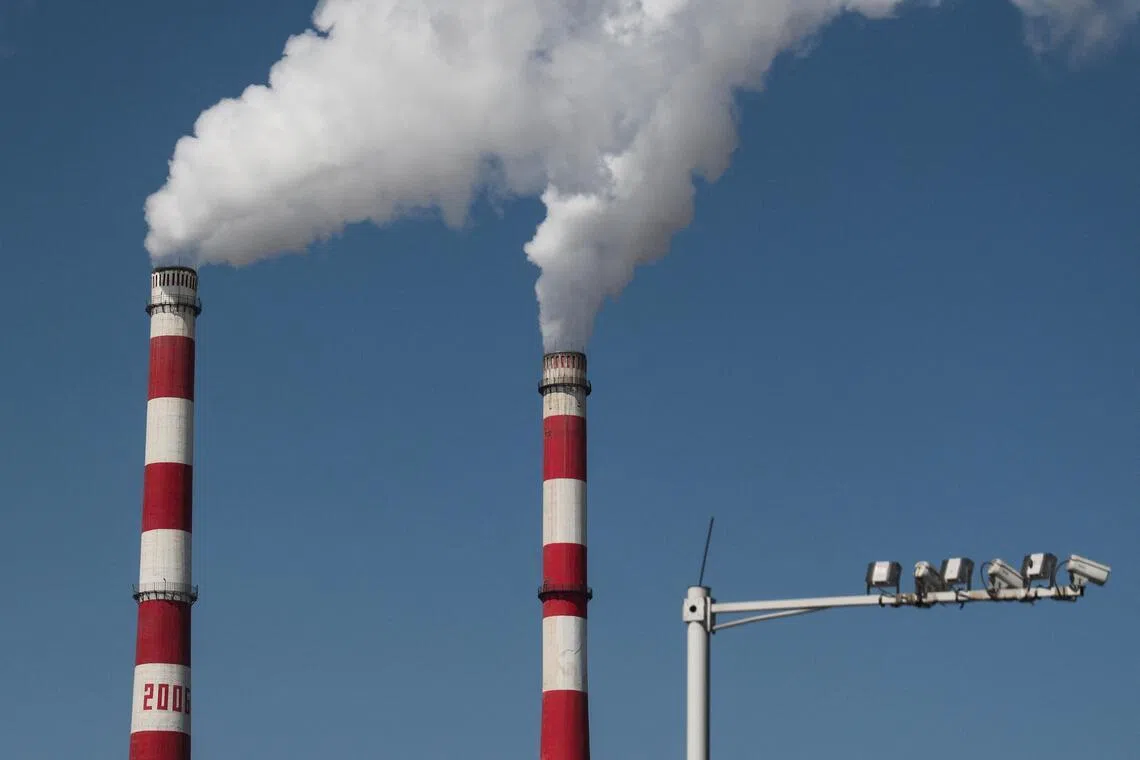
BEIJING – China’s coal-fired power generation is set to rebound in 2026 from its first fall in a decade, analysts said, due to the impact of El Nino and the Iran war and as renewable sources of energy have failed to keep pace with demand.
The world’s biggest power consumer increased its usage of thermal power by 3.4 per cent year-on-year in the first five months of 2026 to 2.53 trillion kilowatt-hours (kWh), statistics bureau data showed last week. Thermal power is mostly from coal with a small amount from gas.
Consultancies S&P Global Energy and Wood Mackenzie expect coal-fired power to rebound by 1.5 per cent to 2 per cent, respectively, to 5.4 trillion kWh in 2026 from in 2025 while data analytics firm Kpler expects coal consumed in the power sector to rise some 3 per cent to 2.7 billion tons.
As China cuts liquefied natural gas imports to mitigate higher costs from the Strait of Hormuz blockade, S&P forecasts that gas power will fall 12 per cent to 300 billion kWh, adding another source of incremental demand as coal rises to fill the gap.
Rising prices are also pushing gas into the role of a peak load supplier, meaning it will not be dispatched until power demand spikes, said Sharon Feng, special advisor at Beijing-based consulting firm Azure International.
The rise in coal usage highlights China’s challenge in decarbonising its power sector.
Even as the world’s second-largest economy aims to wean itself off of coal, the electrification of its transportation fleet and data centres are further driving demand for power.
Air conditioning use is also rising, as El Nino is expected to produce higher-than-normal temperatures this summer, and a rebound in exports is boosting demand from the manufacturing sector, Feng said.
El Nino could reduce rainfall in south-western hydropower hubs, which would force hydropower-importing provinces with strong power demand like Guangdong, Jiangsu and Zhejiang to use more fossil fuels, Wood Mackenzie analyst Yuxi Wang said.
Coal’s grip on China has gradually fallen along with accelerated growth in the renewable fleet since 2020, when Xi Jinping announced China would become carbon neutral by 2060. That same year, China pledged a target of 1,200 gigawatts (GW) of wind and solar capacity by 2030, a milestone it reached six years early in 2024.
In mid-2023, renewables had overtaken coal in sheer capacity, making up more than half of the fleet.
By 2025, the growing amount of renewable power generated pushed coal power into its first decline in a decade. Coal’s share in the generation mix fell to 51.4 per cent in 2025, according to think tank Agora Energy.
It also helped, arithmetically, that China’s overall power demand growth moderated to 5 per cent in 2025 from nearly 7 per cent in 2024, when the pandemic recovery drove an uptick in economic activity.
For fossil-power generation to fall in 2026, clean energy growth would need to exceed growth in power demand, likely to rise again by 5 per cent or more, said Matt Owen, energy system analyst at think tank Ember.
But renewable energy output growth has slowed year-on-year in 2026 because of weak wind generation, low solar utilisation in China’s western provinces, and a slowdown in new installations compared with 2025, Owen said.
And since China continues to build new coal plants every year, it is effectively “locking in” a certain amount of power generation from coal, said Qi Qin, an analyst at the Helsinki-based Centre for Research on Energy and Clean Air.
“Many coal power plants rely on medium- and long-term contracts to secure high annual generation volumes, which makes it harder for renewables to displace coal,” Qin said. REUTERS