


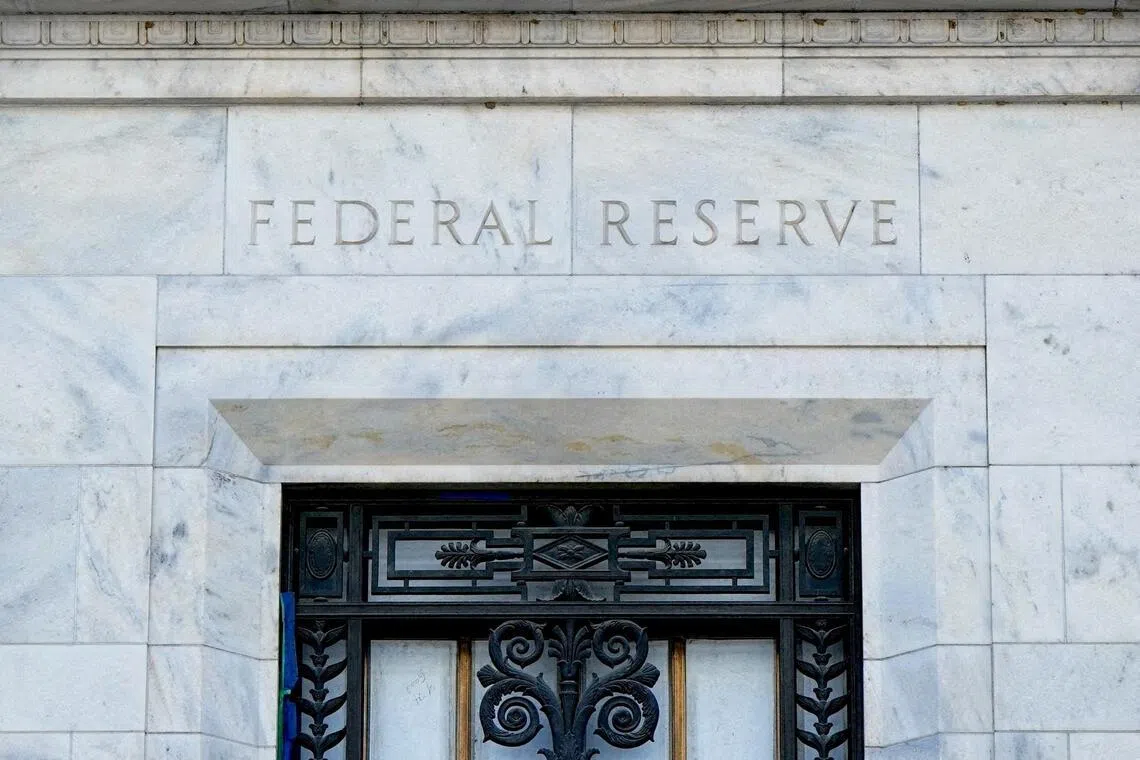
WASHINGTON – The US Federal Reserve is due to release the results of its annual bank health checks on June 24 at 4pm ET (4am Singapore time).
Under the “stress test” exercise, the Fed tests big banks’ balance sheets against a hypothetical scenario of a severe economic downturn, the elements of which change annually. Usually, the results are a big deal because they dictate how much capital those banks need to set aside to be healthy, and how much they can return to shareholders via share buybacks and dividends.
Coming amid a sweeping overhaul of capital rules led by US President Donald Trump’s bank regulators, 2026’s tests will not change capital levels, although they will still offer insight into the health of the banking system.
Here’s what you need to know.
The Fed established the tests following the 2007-2009 financial crisis as a tool to ensure banks could withstand a similar shock in future.
The tests formally began in 2011, and large lenders initially struggled to earn passing grades. Citigroup (C.N), Bank of America (BAC.N), JPMorgan Chase & Co (JPM.N), and Goldman Sachs Group (GS.N), for example, had to adjust their capital plans to address the Fed’s concerns. Deutsche Bank’s US subsidiary failed in 2015, 2016 and 2018.
However, years of practice have made banks more adept at the tests and the Fed also has made the tests more transparent. It ended much of the drama of the tests by scrapping the “pass-fail” model in 2020 and introducing a more nuanced, bank-specific capital regime.
The test assesses whether banks would stay above the required 4.5 per cent minimum capital ratio – which represents the percentage of its capital relative to assets – during the hypothetical downturn. Banks that perform strongly typically stay well above that. The nation’s largest global banks also must hold an additional “G-SIB surcharge” of at least 1 per cent.
How well a bank performs on the test also dictates the size of its “stress capital buffer”, an additional layer of capital introduced in 2020 which sits on top of the 4.5 per cent minimum.
That extra cushion is determined by each bank’s hypothetical losses. The larger the losses, the larger the buffer.
2026’s test, which applies to 32 banks, includes a severe global recession, and heightened stress in commercial and residential real estate markets. Banks with large trading operations are also tested against a global market shock, as well as the surprise default of their largest counterparty.
The Fed announced in February that it would not update those buffers following the 2026 test, and instead will stick with the existing buffers for the time being.
That means June 24’s results will provide a glimpse for analysts and investors into the overall health of each firm, but will not mean much in terms of capital allocation.
The Fed is holding capital steady as it reworks the tests in response to industry criticisms. Banks have long complained that the process is overly opaque, subjective and a massive undertaking. The Fed made changes to address criticisms, including moving away from the “pass/fail” model and scrapping a qualitative component that lenders said gave the Fed too much discretion to ding them.
The central bank also created the stress capital buffer to simplify the system and to more closely tailor capital levels to each bank’s individual risks. But the industry was still unhappy, arguing that the process remained too opaque, and in 2024 sued the Fed to force it to make fixes.
Under the Fed’s proposed changes, banks would be able to see and provide feedback on the once-confidential models it uses for the test, as well as the annual scenarios.
The shift was a major win for banks, although critics warned it could make the exams less dynamic.
Fed vice-chair for supervision Michelle Bowman, who is steering the changes, said freezing capital levels during 2026’s exam would allow regulators to incorporate feedback and “correct any deficiencies”. REUTERS