


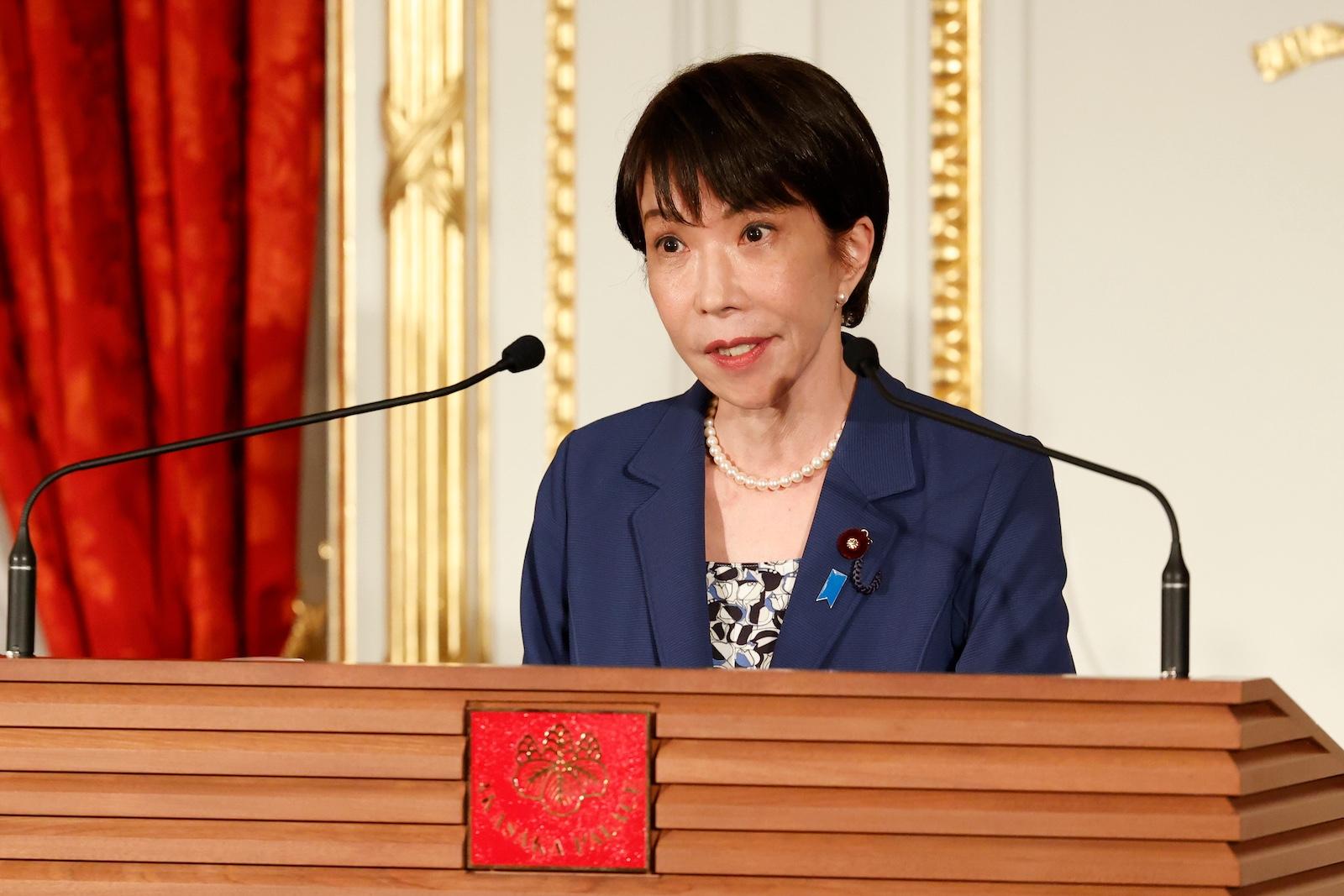
Japanese Prime Minister Sanae Takaichi plans to propose three principles aimed at strengthening global energy security at next week’s Group of Seven summit in France as renewed tensions in the Middle East raise concerns about oil supplies, a government source said Thursday.
The three principles comprise maintaining free and transparent energy trade, supporting larger strategic oil reserves and promoting closer cooperation between oil-producing and oil-consuming countries, according to the source.
Japan hopes the initiative will help build a shared understanding among G7 leaders on the need to safeguard energy supplies amid increasing geopolitical risks.
The proposal is also intended to expand international support for the Partnership on Wide Energy and Resources Resilience Asia, a Japanese-led financing framework designed to help Asian countries secure stable oil supplies.
Takaichi is expected to present the three principles during a session on energy and economic security at the summit, which opens Monday.
Regarding the principle of free and transparent energy trade, Japan, a resource-poor country heavily dependent on imported oil and natural gas, will call for protecting key sea lanes, opposing opaque export restrictions and transit fees in international straits, and promoting rules to keep global energy supplies flowing.
Supporting larger strategic oil reserves is aimed at helping countries meet International Energy Agency requirements to maintain emergency oil stocks equivalent to at least 90 days of net imports.
Japan also plans to encourage the development of alternative shipping routes to help prevent supply disruptions when critical chokepoints such as the Strait of Hormuz become inaccessible.
The proposal comes as the U.S. military said Wednesday it had launched a fresh round of strikes against multiple Iranian targets, while Iran announced the complete closure of the Strait of Hormuz to all vessels.
© KYODO

