


SINGAPORE – Wealthy individuals looking to open a private banking account in Singapore can expect a shorter onboarding time by the end of 2026, as authorities seek to improve the competitive edge of the Republic’s wealth management sector.
On May 25, the Monetary Authority of Singapore (MAS) said it was working with the Private Banking Industry Group (PBIG) on initiatives that aim to streamline account opening processes using a “risk-appropriate” approach.
These initiatives will see the median time needed to open a private banking account to within a month, down from the current median duration of about 6 weeks or even longer for more complex cases, said MAS managing director Chia Der Jiun.
“More efficient account opening will improve the competitiveness of the wealth management industry while maintaining high standards,” Mr Chia said.
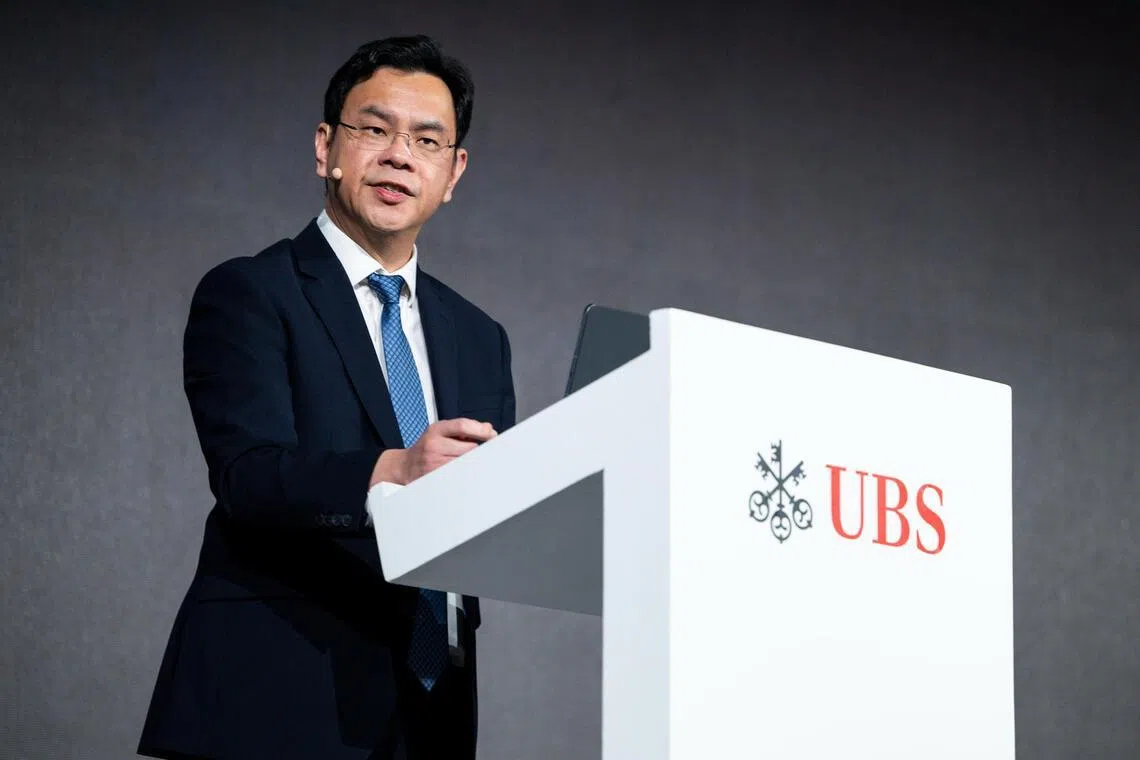
He was speaking to the 1,500 plus participants who attended the UBS Asian Investment Conference Singapore Wealth Edition at the Shangri-la physically and virtually from around the globe.
On May 25, MAS issued a circular guiding financial institutions to establish a client’s source of wealth in a “risk-proportionate” way, rather than take a one-size-fits-all approach.
Where there are red flags that may indicate higher risk concerns, financial institutions should escalate such cases to senior management, the regulator said in the circular to all chief executive officers and financial institutions.
The circular builds on the observations of an Account Opening Workgroup, which is co-chaired by MAS and established under the PBIG, to improve account opening efficiency while maintaining sound regulatory standards.
The workgroup had identified industry practices that go beyond what MAS’ and international standards required, and considered how to re-align these practices with a risk proportionate approach.
The new guidelines supplement earlier MAS guidance, including a 2024 circular and an information paper on MAS’ supervisory expectations for financial institutions’ application of anti-money laundering controls.
It is meant to help financial institutions apply the principles of materiality and relevance more carefully, so that they can be more targeted and avoid unnecessary and excessive steps during account opening processes.
The long and tedious process to open a private banking account has been a major pain point for the wealth sector globally and in Singapore, especially following the 2023 money laundering case where more than $3 billion of illicit assets were seized here.
A syndicate of foreign nationals funnelled illicit proceeds from cross-border fraud and illegal online gaming into the local financial system to establish a veneer of legitimacy.
Following sweeping supervisory investigations, the MAS imposed composition penalties amounting to $27.45 million on nine financial institutions. It also issued prohibition orders ranging from three to six years against several individuals responsible for overseeing the accounts of these clients of interest.
On May 25, the PBIG said it was committed to achieve the shorter onboarding time by the end of 2026.
To support this, PBIG has issued a set of “process enhancement tips”, offering practical ways to address common account opening challenges.
It offers practical, experience-based solutions for banks to address bottlenecks, leverage technology, and implement proportionate risk assessments, that will reinforce Singapore’s position as a trusted and competitive wealth management hub, said Mr Lee Lung Nien, banking head for Singapore at Citi and co-chair of the Account Opening Working Group.
Case studies and training for relationship managers and compliance professionals will be rolled out in the coming months to further support the changes without weakening safeguards.
Mr Chia said safety, stability and trust remain core advantages of Singapore, alongside dynamism and a wide range of capabilities in wealth and asset management, foreign exchange, banking, insurance, payments, fintech and AI adoption.
He said MAS would continue to reinforce the sector’s core foundations through four pillars: a skilled workforce, risk-proportionate regulation, innovation and partnership.
Greater emphasis will be placed on upskilling the financial sector workforce, especially in AI-related capabilities, while continuing to support innovation through sandbox testing of new ideas and calculated risk-taking, sustainable finance initiatives, tokenisation and digital assets, and the adoption of AI in finance.
Ms Young Jin Yee, co-head UBS Global Wealth Management Asia Pacific and UBS country head Singapore, said South-east Asia is at an inflexion point, where growth powered by strong demographics, but facing policy complexity challenges.
Mr Chia highlighted three uncertainties that could derail the market’s current resilience amid the Iran war: The situation in the Gulf and the reopening of the Strait of Hormuz; the sustainability of AI investment; and the concentration of global growth on AI.
He stressed the importance of policy responses to develop resilience, strengthen adaptive capacity of the workforce, and build diversified growth sources.

