


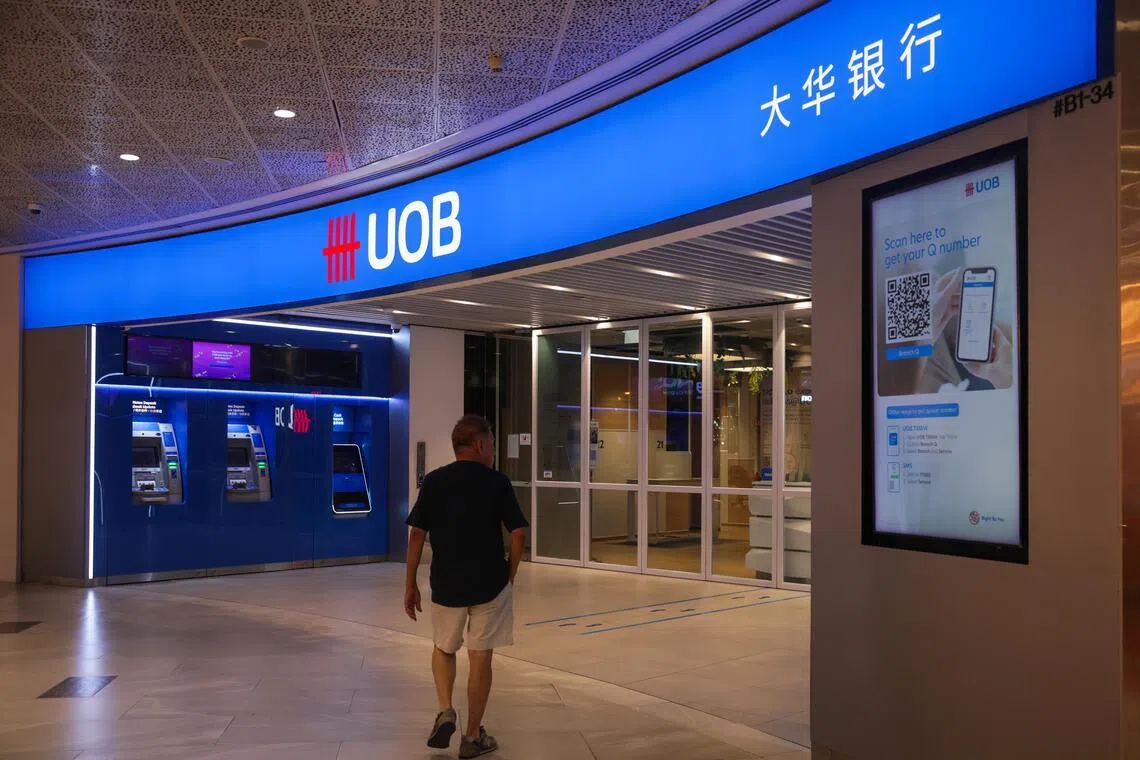
SINGAPORE – The High Court has criticised United Overseas Bank (UOB) over what it called the bank’s inconsistent legal positions on late payment charges in mortgage cases, after the lender repeatedly dropped such claims only when questioned by the court.
In a written judgment on May 18, Assistant Registrar (AR) Randeep Singh Koonar said it was “unsatisfactory” that UOB persisted in making claims for late payment charges in court actions, but withdrew them when asked to justify the legal basis.
The judgment was delivered on a 2026 case involving a mortgage action filed by UOB against a company that defaulted on a $556,200 loan secured by a commercial unit at Oxley Bizhub in Ubi Road 1.
But AR Randeep noted that on two other 2025 cases, the bank withdrew such claims after the High Court queried them.
“UOB should take a principled and consistent position on its legal entitlement to impose the late payment charge,” the assistant registrar said.
“(It’s) unsatisfactory for UOB to persist in making such claims but drop them once made to justify and defend their position.”
In the current case, the bank took the company, SGmade Co-Operates, to court in March 2026. Accounting and Corporate Regulatory Authority records show that the company is a footwear retailer.
The loan to SGmade Co-Operates was granted in June 2023 and was to be repaid over 312 monthly instalments. UOB issued its first demand letter in September 2025 after the borrower fell into arrears. A second demand letter followed in October 2025, when the bank recalled the loan and demanded full repayment of more than $542,500.
By December 2025, the bank had served a notice on the borrower and occupants to leave the premises within one month.
In court, UOB sought orders for vacant possession of the property, repayment of the outstanding loan sum, and an $80 late payment charge for each missed instalment.
The case was heard in the High Court on April 10, but the borrower did not turn up and remained unrepresented throughout the proceedings.
Despite the borrower’s absence, which meant UOB’s applications were uncontested, the bank did not score an immediate walkover victory.
The assistant registrar said: “(Even) in an unopposed application, it remained for UOB to satisfy the court that all the procedural and substantive requirements for granting the orders sought … were met.”
AR Randeep questioned whether UOB could continue charging late fees after recalling the entire loan and demanding immediate repayment of the full amount.
The High Court also criticised shortcomings in the bank’s court papers.
The assistant registrar said UOB’s supporting affidavit failed to explain the contractual basis for recalling the loan and demanding full repayment.
“It is insufficient for a claimant to make sweeping and unparticularised assertions in the supporting affidavit and leave the court and the defendant to pore over pages of contractual documents to decipher what its case is,” he said.
UOB later amended its application and dropped the claims for late payment charges.
When pressed by the High Court, the bank conceded that it was “not legally entitled to impose late payment charges on monthly instalments that fell due after the banking facilities had been terminated”.
The assistant registrar agreed with the bank’s concession.
The dispute centred on a standard clause in UOB’s facility letter imposing an $80 fee “on each instalment payment not paid on due date”.
AR Randeep said the wording of the loan agreement was “plain and unambiguous” because the late payment charge applied only to missed “instalment payments”.
Once the bank recalled the loan and demanded full repayment, there were no longer monthly instalments to pay, he said.
He added that while UOB could still impose late interest charges on the outstanding sum, it could not continue charging monthly late payment fees.
The assistant registrar said the outcome was commercially sensible.
If UOB decides not to terminate the facility, it may claim arrears, late interest and late payment charges, he said. But if the bank decides to terminate the facility and claim the full outstanding amount, it cannot claim payment of the late payment charge, he added.
He also noted that while UOB ultimately conceded its position in the case, the point on late payment charges was worth addressing because similar clauses are commonly found in loan agreements issued by UOB and other banks.
Although UOB eventually succeeded in obtaining possession orders and repayment of the outstanding loan sum, the High Court trimmed the bank’s legal costs request.
UOB had sought $8,000 in costs, but the High Court awarded $7,500 instead.
The bank was represented by Ms Gracia Goh of Rajah & Tann Singapore.
When contacted, a UOB spokesman said on May 25: “The bank accepts the court’s ruling that the late payment charge should not continue after the facility has been terminated and will follow this guidance moving forward.”

