


SINGAPORE – The hospitality industry in Singapore is experiencing a delicate phase in its adoption of new technology, as operators balance productivity gains against the risk of losing the human touch that defines premium service.
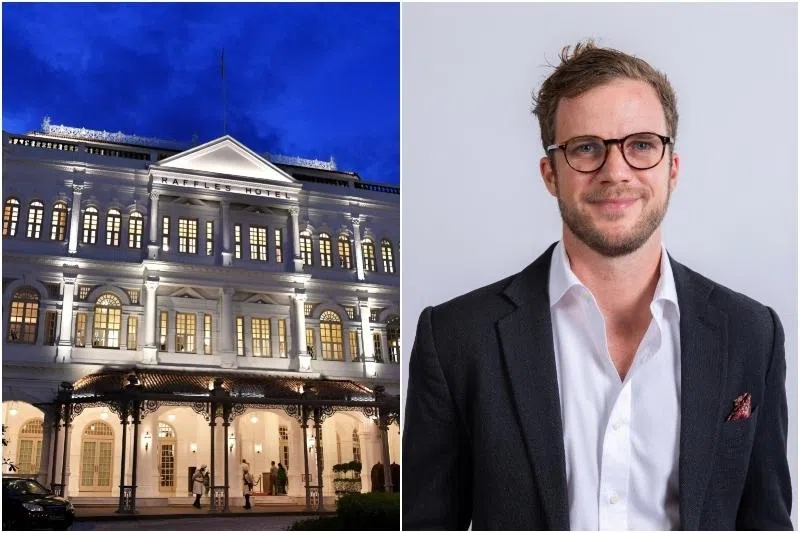
The shift is particularly acute in a global business and leisure hub like Singapore, where a diverse mix of travellers are attended to by front-line workers from different cultures, said Mr Matt Spriegel, chief executive and founder of Atiom, a training platform for the hospitality industry.
“The next stage of competitiveness is about combining operational efficiency with a consistently high-quality human service experience that aligns with Singapore’s premium hospitality positioning globally,” he told The Straits Times.
Singapore-based Atiom, founded in 2017 by Mr Spriegel, uses gamification and artificial intelligence to help companies in the hospitality and services sector build better workplace habits and improve performance.
The firm has gained steady traction and, in 2025, secured an expanded partnership with Accor, a global hospitality group whose portfolio includes brands such as Raffles, Fairmont and Sofitel.
Atiom employs 25 specialists focused on product development, technology innovation and deployment, across its offices in Singapore, Thailand, China and the United Arab Emirates.
Mr Spriegel grew up in the US and later studied development economics in Kenya before working in Shanghai for drugmaker Boehringer Ingelheim.
He said the hospitality industry is still grappling with the after-effects of changes made during the Covid-19 pandemic. Contactless tools such as QR-code ordering – widely adopted by restaurants and hotels to reduce interaction and cut labour costs – have created a non-service-oriented culture that still persists.
What began as a public health response has since hardened into a technology-first mindset, with human interaction stripped – staff hand diners a code, avoid eye contact and leave guests to scan, order and pay on their own, Mr Spriegel said.
While such systems improve speed and hygiene, they also diminish the interpersonal engagement that defines hospitality.
Mr Spriegel said: “On paper, it sounds efficient – reduce labour costs, enable contactless service, speed up orders. But in practice, guests experience a human-less interaction. Staff don’t engage, don’t upsell, don’t build rapport.
“What was meant to be an efficiency becomes a service failure because it eliminates the personal touch that makes hospitality valuable.”
Revenue suffers from missed personal recommendations, while trust is eroded in a sector where 86 per cent of consumers prize human interaction, according to PwC’s 2025 Customer Experience Survey.
These challenges come amid mounting structural pressures in Singapore, said Mr Spriegel. Tight labour supply, higher wage demands and more demanding customers are making it harder for hospitality and service businesses to keep standards high as they grow.
National initiatives such as the Job Redesign Reskilling Programme and the Jobs Transformation Map for the hotel industry reflect a growing recognition that the industry cannot rely solely on increasing headcount to meet demand.
Instead, operators must rethink job design, train staff and use technology to support productivity, Mr Spriegel said.
AI is never going to completely take over the hospitality industry, but the brands that use it strategically will set the standard, he added.
Rather than replacing front-line roles, technology should be used to remove administrative and operational friction, and to tackle the science of front-line jobs such as processes, data analytics and standards.
This would free employees to focus on guests and the art of service, which includes empathy, cultural awareness and problem-solving.
Administrative matters is an area where technology can create immediate value, but it is not what guests remember or are willing to pay more for, Mr Spriegel said.
Certain parts of hospitality need to remain human-led: welcoming a guest, resolving frustration with empathy, tailoring recommendations and reading the mood of a conversation.
“These moments rely on empathy, intuition, authentic connection – qualities technology still struggles to replicate authentically,” he said.
Technology should be an invisible infrastructure that works in the background to simplify complex matters and empower staff, added Mr Spriegel.
When it becomes visible and impersonal, it signals that the business has prioritised a line item over the guest experience.
“While there are savings in delivering at scale and making informed decisions faster, the moment a guest perceives that technology is replacing the human touch rather than enhancing it, trust begins to erode and you have crossed the line,” he said.
Ultimately, he believes front-line roles will not disappear but evolve.
“The more we lean into AI to handle operational efficiencies, the more valuable the human skill of creating memorable, personalised guest experiences. Those roles won’t disappear. They will evolve to focus on what humans do best: connection, empathy and judgment calls that require emotional intelligence,” Mr Spriegel said.

