


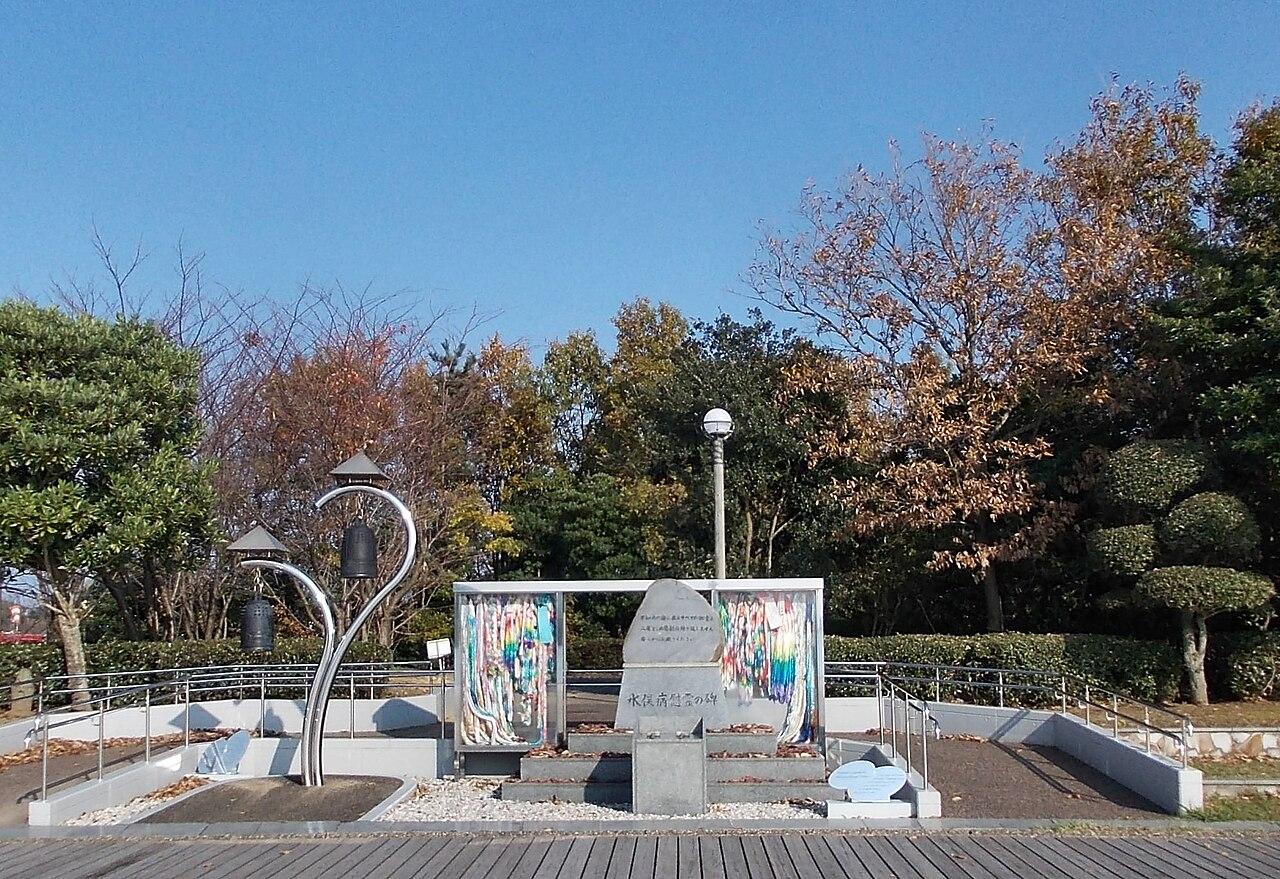
A southwestern city on Friday marked the 70th anniversary of the official recognition of the Minamata mercury-poisoning disease, with many aging victims still seeking relief over one of the country’s worst industrial pollution disasters.
An annual memorial service for the victims was held in the city of Minamata, Kumamoto Prefecture.
The anniversary comes as many victims remain without full relief, with sufferers’ groups calling for a review of the government’s patient recognition system and lawsuits by people excluded from relief measures continuing.
Environment Minister Hirotaka Ishihara, during a visit to Minamata for the memorial service, met Thursday with victims who urged the government to review the patient recognition system and do more to end discrimination and prejudice against sufferers of the disease.
As of the end of March, applications for official patient recognition in Kumamoto and neighboring Kagoshima Prefecture totaled around 33,000, but only 2,284 people had been recognized. More than 1,000 people were still awaiting screening results.
Minamata disease was officially recognized on May 1, 1956, after a local health authority received a report from a doctor about the emergence of an unknown illness. The Japanese government recognized it as a pollution-caused disease in 1968.
The neurological disease was caused by mercury-tainted water discharged into the sea by a chemical plant operated by Chisso Corp.
People who ate contaminated seafood suffered symptoms including paralysis of the hands and feet, and visual field defects. The disease also causes birth defects.
Recognized patients are eligible for benefits, including a lump-sum payment of 10 million yen or more and medical expenses, under the pollution-related health damage compensation law. But many applications have been rejected since the government tightened recognition criteria in 1977.
The government introduced relief measures for unrecognized sufferers of the disease in 1995 and 2009 including lump-sum payments, though at much lower amounts than those for officially recognized patients. Lawsuits filed by people excluded from the measures due to factors such as where they lived are continuing.
Before meeting with victims’ groups, Ishihara visited support facilities for sufferers in Minamata. At a meeting with the minister at one of the facilities, Shinobu Sakamoto, 69, who developed Minamata disease due to maternal exposure, said, “Minamata disease is not over. I am worried about how I can carry on living” without sufficient public support.
In response, Ishihara said the government will work on providing medical and welfare support.
© KYODO

