


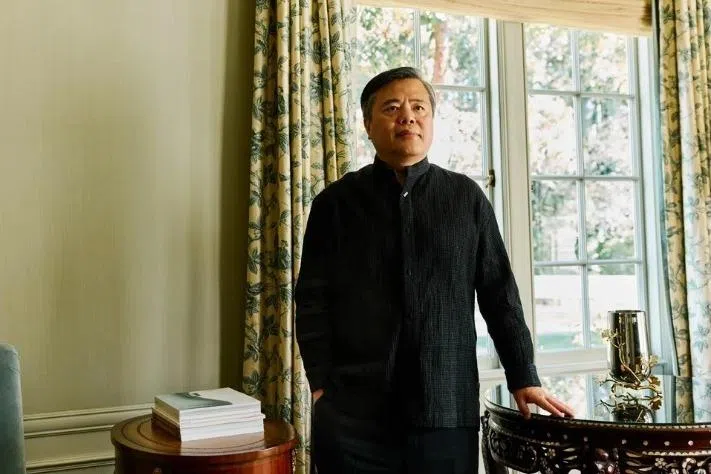
BEIJING – The fallout from Meta Platforms’ controversial acquisition of Manus is prompting one tech founder to erect strict walls between his Chinese and US businesses, calling it a regrettable but necessary template for navigating geopolitical tensions.
MiroMind – founded by Chen Tianqiao, a pioneer of China’s online gaming industry – has implemented protocols to prohibit the cross-border sharing of information or code while minimising the movement of personnel, data and assets.
Mr Chen has invested US$100 million – part of a US$2 billion total commitment from his Shanda Group into so-called “discoverable AI” – into MiroMind, which employs more than 60 scientists across locations including Singapore, Tokyo, and Seattle.
His action followed queries from regulators after Meta’s US$2 billion (S$2.6 billion) buyout of Singapore-based buyout, the billionaire told Bloomberg News.
Beijing on April 27 ordered the Manus deal unwound after a months-long probe into potentially illegal tech transfers. More broadly, agencies have moved to restrict US investment into some of the country’s highest-profile AI firms without prior approval.
Officials had contacted Mr Chen’s team in March, he said, cautioning against transferring technology out of the country unilaterally. Mr Chen said the issue was resolved after outlining the envisioned internal firewalls, under which each region’s business is handled locally.
“Previously, I believed we could bring together Chinese and global talent to contribute to humanity’s future. But after the Manus incident, we have had to fully implement firewalls,” Mr Chen said in an online interview from his California home last week. “Admittedly, this approach can feel like ‘cutting off our own limbs,’ but under the current regulatory environment, it is a necessary compromise.”
Mr Chen’s remarks – made to Bloomberg News before Beijing announced it was blocking the Meta acquisition – represent the first major acknowledgment from a high-profile industry figure of the aftershocks from the post-Manus scrutiny.
Manus’s founders got their start in China but relocated their headquarters and key staff to Singapore in 2025. It wasn’t clear when the deal was announced in December whether Beijing would exert its authority on a transaction that technically took place beyond its borders.
Beyond the Manus probe, the industry faces heightened scrutiny over offshore listings and American capital investment. The pressure risks driving more outward-looking founders to abandon their domestic operations as they chase funding and users in the US and other Western markets.
MiroMind’s approach may now offer a formula for domestic star-tups hoping to set up global businesses and avoid the sort of regulatory uncertainty that’s engulfed Manus – a clean separation of a start-up’s Chinese and overseas operations that Mr Chen hopes will allow his company to raise capital and manage an international business.
MiroMind will begin its first external fundraising in the second half of 2026 as it nears meaningful revenue through deals with asset managers and energy infrastructure providers.
The start-up attracted scrutiny of its own after the departure of key scientist Dai Jifeng, a Tsinghua University professor who formerly worked at SenseTime Group.
Mr Dai told the Washington Post that MiroMind tried to force him to relocate overseas, triggering his departure. The dispute drew comparisons online to Manus, which decamped to Singapore last summer before the Meta buyout. Mr Chen denied Mr Dai’s account, while Mr Dai declined to comment to Bloomberg News queries.
At the heart of the post-Manus debate is how the start-up restructured to enable a sale to a foreign company prior to any regulatory review in Beijing.
While Manus is a Singapore-incorporated firm, its founders originally developed the tech while living in China. In July, Manus relocated its China-based staff to Singapore, cutting dozens of roles in the process.
Mr Chen himself was one of the biggest beneficiaries of US capital – an increasingly difficult path for today’s entrepreneurs.
Riding an online gaming boom, Shanda raised US$152 million in a Nasdaq listing in 2004, making Mr Chen a billionaire at 30. After failing to fend off rivals such as Tencent Holdings and Alibaba Group Holding, Mr Chen took his company private in 2012 and repositioned it as an investment group. He has been living overseas for 16 years, first in Singapore and then California.
“The international environment is extremely complex,” Mr Chen said. “Under current geopolitical conditions, companies effectively have no choice but to pick a side.” BLOOMBERG

