


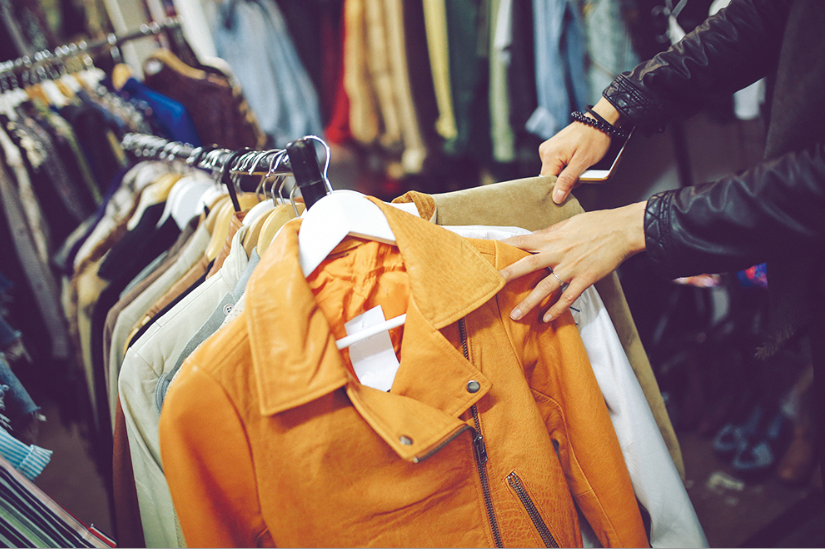
There is a trend of preferring premium brands in addition to reasonable price-oriented re-commerce consumers. As the re-commerce market grows, it is analyzed that premium brands with longer product life and stable brand value are gaining competitiveness.
According to fashion company LF, the transaction volume of the Resale platform Ellie Market, which was launched in September last year, doubled from the beginning of its opening. The average number of used products sold daily and the number of sales applications has also doubled from the previous month as of March, growing rapidly.
The number of brands available for sale has also expanded from 15 to Tabland in six months, expanding to more than 170. When Eli Market sends clothes that customers don’t wear, the platform handles collection, inspection, classification, storage, and sales, and provides the sales price as an Eliward that can be used at LF Mall.
What’s noticeable is that premium and classical brands are at the center of transactions. “The proportion of brands with classic designs and stable quality is overwhelmingly high among products registered in the Elie Market,” an LF source said. “Premium brands with long product life are showing relatively high competitiveness in the re-commerce market.”
In the case of Eli Market, only three brands, Hedges 40%, Dax 22%, and Vanessa Bruno 17%, are combined to account for 80% of registered products. The less fashionable and longer-lasting brands are, the more actively they are traded in the used market. The product price range and discount rate vary from brand to brand, but there are usually many items in the range of 80,000 won to 100,000 won at a 60-80% discount. In particular, Hedges and Dax transactions doubled in February from the beginning of the launch.
The number of users has also expanded. Among customers who use the Elie Market, those in their 50s and older account for 48 percent and 32 percent, with those in their 40s and older accounting for 80 percent of the total. “Contrary to previous perception that the used fashion market is a low-cost transaction market centered on the younger generation, it is expanding into a premium market where various age groups participate,” said LF.
Premium products are also growing in the OLO relay market operated by Kolon FnC. Kolon FnC has expanded its handling brands since February, and its purchases of used clothes have doubled compared to the previous one. Among them, demand for premium products is also high, it said.
For example, premium lines such as Kolon Sports’ “Antatica” and men’s clothing series’ “Lafayette” have a discount rate of about 40% lower than that of general products, but they are about 5 times faster to burn out inventory. An official from Kolon FnC explained, “Brand trust and scarcity are also being reflected in used transactions.”
Major customers in the OLO market are in their 40s and 50s. A company official said, “As the price is 60 to 70 percent discounted from the initial launch price, there is a demand to reasonably buy proven premium products.”
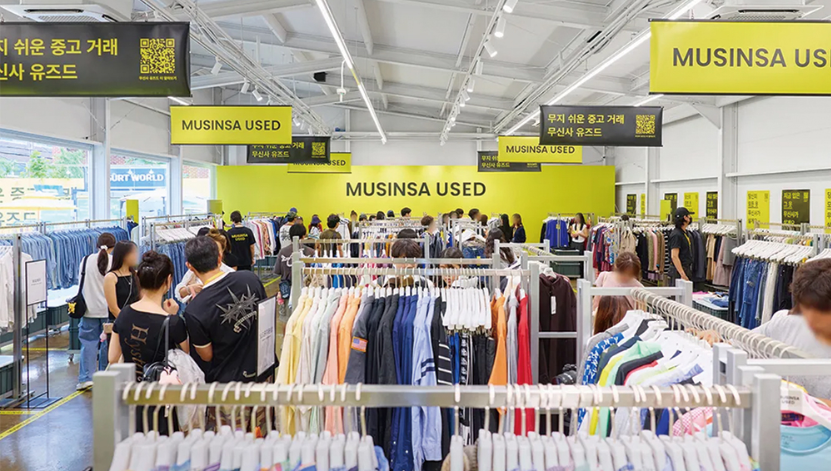
Demand for premium products is also steadily showing up in Musinsa’s second-hand fashion service, Musinsa’s Usd, which has a relatively young customer base. Musinsa’s Usd is in its 20s and 30s, seven out of 10 users. Musinsa’s Usd’s average daily transaction volume from January to February this year was about nine times higher than in the early days of its launch in August and September last year.
Luxury and designer brands account for more than double-digit percentage of total transactions. Musinsa said, “Sports and outdoor brand products are so popular that they account for half of the total sales.”
SALLY LEE
US ASIA JOURNAL