


SINGAPORE – The Republic’s manufacturing production bounced back in March, increasing by 10.1 per cent after its slight dip in February.
The slower growth in February was due to temporary shutdowns during the Lunar New Year festive period, which eased in March as people returned to work, said DBS economist Chua Han Teng.
This is according to data released by the Economic Development Board (EDB) on April 27.
On a seasonally adjusted month-on-month basis, manufacturing output increased 4.7 per cent in March. Excluding the biomedical manufacturing cluster, manufacturing output increased 3.5 per cent.
On a year-on-year basis, all manufacturing clusters recorded output growth in March, except biomedical manufacturing and chemicals.
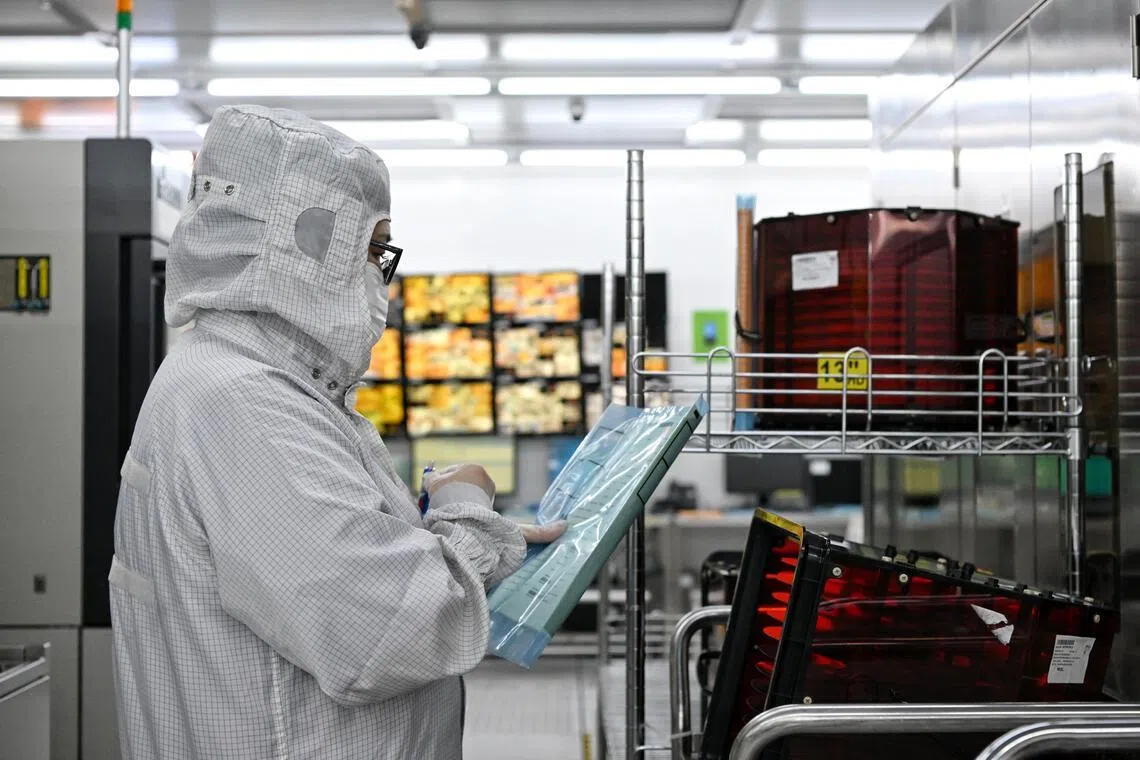
Electronics grew the most by 30 per cent. The growth came from the infocomms and consumer electronics, as well as the semiconductors segments on the back of robust AI-related demand.
Following the heightened volatility observed in the first quarter of 2026, manufacturing performance is expected to be uneven in the coming months, said Mr Chua.
While the trend for electronics remains positive, early signs suggest that Singapore’s broader manufacturing sector is facing rising input cost pressures and longer delivery lead times linked to the Middle East conflict, as reflected in the March manufacturing purchasing managers’ index, said Mr Chua.
Precision engineering output surged 14 per cent, with the precision modules and components segment recording higher output of optical instruments, electronic connectors, metal precision components and tools, dies, moulds, jigs and fixtures.
General manufacturing also grew by 7.6 per cent.
On the flipside, output in biomedical manufacturing declined 14.3 per cent due to softer demand for medical devices and a different production mix of active pharmaceutical ingredients. Chemicals also declined 16 per cent, on account of lower output in the petroleum and petrochemicals segments due to disruptions in feedstock supply.
Feedstock supply refers to the consistent sourcing, logistics, and availability of raw materials needed for industrial production, energy generation, or manufacturing processes.
Headwinds in the petrochemicals segment could intensify in the months ahead as refineries draw down their limited feedstock inventories, said UOB economist Jester Koh.
“Nevertheless, overall manufacturing output could continue to hold up, cushioned by strong electronics and semiconductor output,” he added.

