


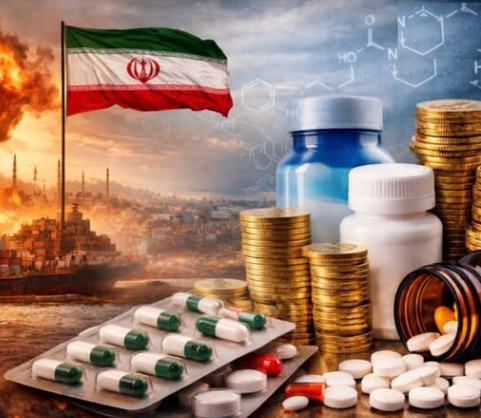
If the war between the U.S. and Iran is prolonged, the U.K. public healthcare system could face a shortage of medicines within weeks. Concerns are raised that the supply of major painkillers such as aspirin and paracetamol (acetaminophen) will be disrupted.
According to the British Daily Telegraph, Medicine UK, a consultative group of pharmaceutical companies that supplies prescription drugs to the British public health service (NHS), recently said, “There is a growing concern because the supply of some chemicals and solvents used to manufacture active ingredients is currently very scarce.”
Approximately 85% of NHS prescription drugs are produced by this organization. In particular, pharmaceutical companies that produce generic and biosimilar drugs, which have expired or are not covered by patents.
According to Medicine UK, as early as June, the NHS could face severe pressure due to a lack of supply, and even if patients receive a prescription, they may not get a medicine on time or experience price hikes. However, he explained that there has been no daily shortage so far.
Drugs that are feared to lack include aspirin and paracetamol (acetaminophen) painkillers. Paracetamol is a fever and pain reliever widely known as Tylenol. Cocodamol, a combination pain reliever that combines paracetamol and codeine, is also included. Numerous antibiotics and stroke prevention medications can also be affected.
The reason for this concern is that pharmaceutical production is closely linked to the petrochemical industry. It is explained that major painkillers such as aspirin and paracetamol are made from petrochemical by-products, and production is disrupted as the war shakes the supply of crude oil and chemical raw materials. In fact, it is reported that only a quarter of the usual raw materials are supplied to some manufacturers.
Some point out that the impact could spread not only to pharmaceuticals but also to the entire medical system. Richard Sullivan, a professor of cancer and global health at King’s College London, said in an interview with the British Medical Journal that “the supply chain of cancer drugs and robotic surgery consumables has been disrupted. Robotic surgery consumes a significant amount of equipment every time it is performed.”
Earlier, British pharmacists urged the government to stock up on medicines. The British Independent Pharmacy Association (IPA) sent a letter to the health minister, West Streeting, pointing out that the supply of medicines that millions of people depend on every day is threatened. At the same time, he also mentioned cardiovascular disease-related drugs such as propranolol, a blood pressure drug, and cholesterol treatments as unstable items.
At the end of last month, Jim Mackie, the head of the NHS, said he was concerned about the supply of syringes, gloves, and intravenous infusion bags.
JULIE KIM
US ASIA JOURNAL