


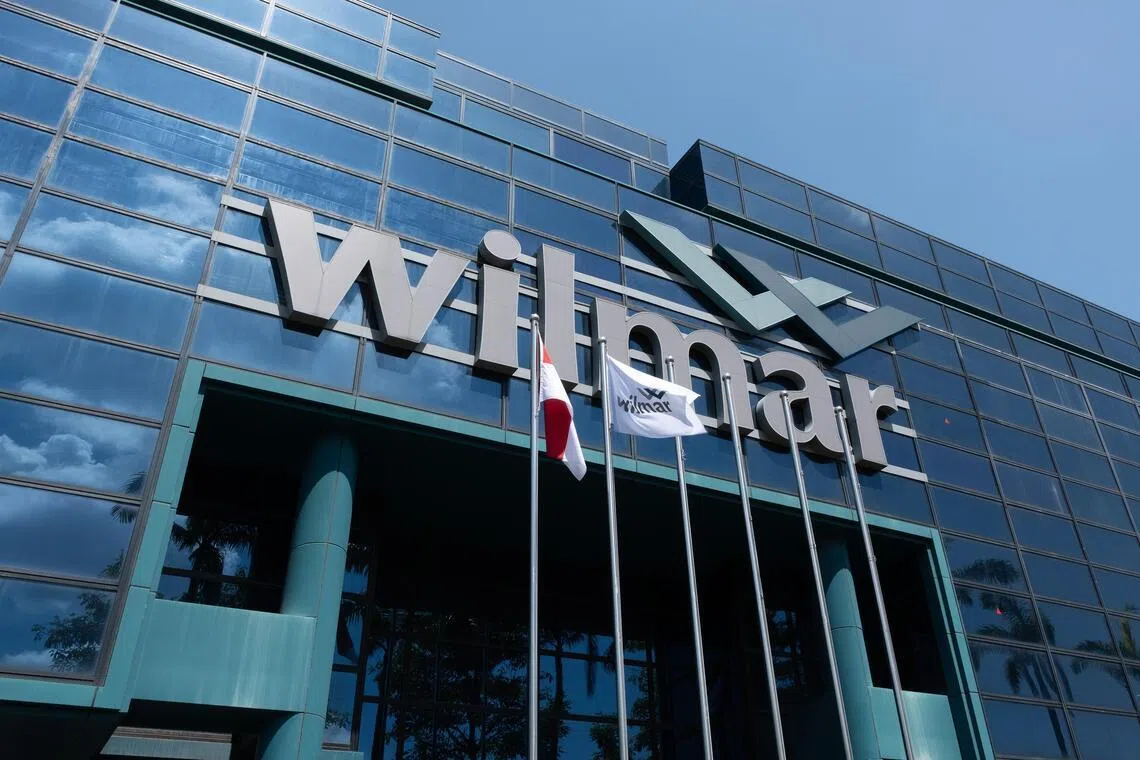
SINGAPORE – A strongly worded submission from a minority investor over Wilmar International’s costly legal troubles questioned whether its board has the independence to safeguard shareholder interests.
In response, Wilmar said it has made board changes to strengthen its independence and oversight.
The questions were submitted ahead of the company’s April 23 annual general meeting by both minority investors and the Securities Investors Association (Singapore) (SIAS), and disclosed on the Singapore Exchange on April 17. The practice is meant to foster greater engagement between shareholders and company management.
Wilmar’s unnamed minority shareholder said severe regulatory penalties in legal cases in the past year have “further exposed” what the shareholder described as a board that had become “deeply insular and rigid”, and was “living in a comfortable bubble”.
The shareholder acknowledged recent moves to reshuffle board committees, but said these did not go far enough, arguing that “moving the same faces around does not create true independence” if the board remains a “stagnant group” where “complacency and groupthink inevitably set in”.
The shareholder noted that despite directors being “among the most highly remunerated”, investors were still dealing with legal issues, a rising debt profile and reduced dividends.
The minority shareholder also asked how shareholders could trust that a board made up of longstanding members had the “independent teeth” to safeguard their interests, and called for a clearer and more transparent succession and renewal plan over the next five to 10 years.
The concerns come after Wilmar grappled with legal cases in China and Indonesia that have cost the company more than $1 billion in fines, raising questions over governance and oversight.
Indonesia’s Supreme Court in late 2025 overturned a previous acquittal after it found five of Wilmar’s subsidiaries guilty of corruption in obtaining palm oil export permits during Indonesia’s cooking oil crisis and domestic palm oil shortage in 2021 and 2022, seizing 11.8 trillion rupiah (S$874 million) in security deposits.
The companies were accused of illegally profiting from the evasion of state-imposed export controls on cooking oil and palm oil.
A Wilmar Indonesian executive was later sentenced to six years in prison in March for bribing judges in the case.
While respecting the court’s decision, Wilmar expressed regret and stressed that its actions during Indonesia’s cooking oil shortage were taken in compliance with regulations and in good faith, and noted that it may seek a judicial review.
In China, a Wilmar subsidiary was found guilty in November 2025 of acting as an accomplice in contract fraud involving fake documents related to palm oil trades between state-owned enterprise Anhui Huawen and a privately owned counterparty, Yunnan Huijia Import & Export. The fraud led to a 5.2 billion yuan (S$970 million) loss for Anhui Huawen.
The subsidiary, Yihai Kerry Arawana, was ordered by a Chinese court to jointly bear losses amounting to 1.88 billion yuan, while its former general manager was fined and sentenced to 19 years in prison.
Wilmar has since filed an appeal maintaining its innocence and arguing that it was a victim of the fraud. The fine remains unpaid while the company awaits a final second-instance ruling.
In response to the questions from the minority shareholder, Wilmar said it has strengthened board independence and oversight by restructuring its risk and sustainability committees to be made up entirely of independent directors since December 2025.
It also noted that none of its independent directors, who form the majority of the board, has served more than nine years. Wilmar said it has been refreshing its board regularly, appointing at least one new director every two years since 2016, and annually since 2021, to bring in fresh perspectives and avoid groupthink.
At the same time, the company stressed that stability and experience remain key strengths, with directors’ industry expertise seen as critical in navigating complex regulatory and operating environments.
Wilmar said its governance framework includes annual assessments of directors’ independence and structured succession planning, while maintaining a balance between renewal and continuity.
SIAS asked how Wilmar’s board oversees significant legal and regulatory proceedings across the group’s global operations, and what role independent directors play in supervising investigations and shaping legal strategy.
Wilmar said its board and relevant sub-committees are regularly briefed on significant developments, including legal matters, and provide guidance on legal strategy based on investigations conducted by local teams.
SIAS also asked the board to elaborate on how Wilmar enforces its zero-tolerance stance on corruption, including the risk assessment procedures in place and the level of anti-corruption training provided to employees in higher-risk roles.
In response, the group said it has policies covering areas such as gifts, lobbying and facilitation payments, and requires anti-bribery clauses in contracts.
It added that employees undergo training on anti-corruption and fraud, and that whistle-blowing channels are in place for both staff and external parties to report misconduct. Those found to be in breach face disciplinary action, including dismissal, clawback of bonuses and possible legal consequences.

