


Follow our live coverage here.
SINGAPORE – Singapore stocks ended the week higher on April 10 after the US and Iran agreed to a two-week ceasefire, putting a temporary halt to what has been almost six weeks of fighting.
The benchmark Straits Times Index (STI) rose 0.8 per cent, or 38.04 points, to 4,996.05 on April 8 after the agreement between the two nations was announced, before paring some gains to close the week at 4,989.41.
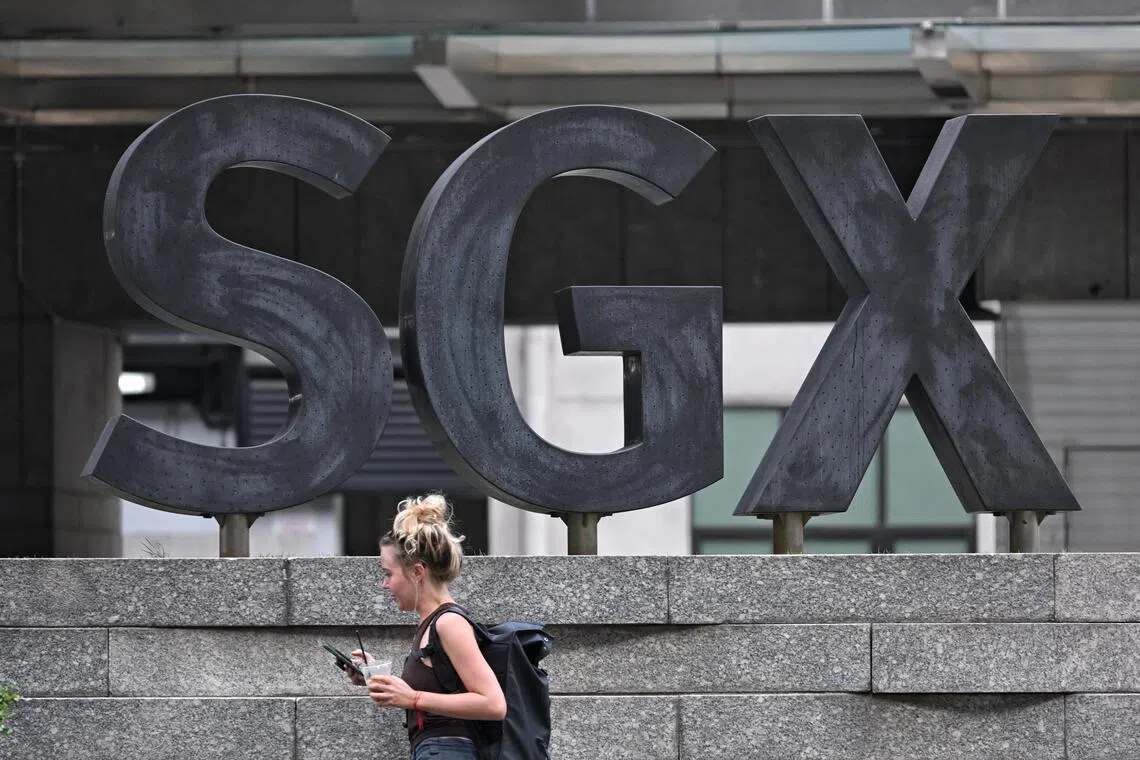
Notable gainers included Singapore Exchange (SGX), which rose more 5.5 per cent over the week to $21.09, and Venture Corporation, which gained 3.91 per cent to $15.95.
Singapore Airlines climbed to as high as $6.79 on April 8 before paring gains to close the week flat at $6.64.
But shares of Singtel bucked the trend, falling 3.17 per cent through the week to close at $4.88 on April 10.
This comes as the Central Provident Fund (Amendment) Bill was introduced in Parliament on April 7 to enable the proposed transfer of Singtel special discounted shares (SDS) from holders’ CPF accounts to their Central Depository (CDP) accounts.
Singtel SDS were offered to CPF members in 1993, when they had the option to use their CPF savings to purchase the shares at a discount to Singtel’s listing price of $1.90. A second tranche of Singtel SDS was offered in 1996.
A transfer will enable some 615,000 Singaporeans aged 50 and above to hold the shares under their own names and sell them for cash.
Subject to the Bill being passed, the CPF Board will work with Singtel, CDP and other stakeholders to facilitate the transfer, after which the CPF Board will no longer be the trustee of Singtel SDS.
Singtel SDS holders can continue holding their shares or sell their shares for cash if they wish, through Singapore Post branches or on the website of local broker Phillip Securities.
They can choose to retain the proceeds in their CPF Ordinary Account, or receive them in cash in their bank account registered with the CPF Board.
For those who choose to keep their shares, Singtel’s attractive dividend yield remains a compelling reason to do so, particularly given that interest rates on cash deposits remain relatively low, analysts said.
Singtel’s shares may also have further upside in the future – its Indian and Australian businesses are expected to be the main driver for its growth in the financial years 2027 and 2028, which could be as high as 13 per cent to 14 per cent, analysts said.
Singtel has also begun to invest heavily in digital technologies such as data centres, cloud systems and artificial intelligence, as part of its five-year growth strategy called Singtel28, launched in 2024.
Still, some analysts say Singtel is looking overvalued at its current level. The telco’s share price has more than doubled in two years while its revenue has been relatively flat, meaning further upside might be limited for now.
Trading on the SGX surged in March despite the war, with total value up 78 per cent year on year to $52.8 billion. The average daily trading value rose 62 per cent to $2.4 billion, the highest since October 2007.
Retail investor trading hit a 13-year high, while institutional participation increased 13 per cent from the previous month.
Institutional investors continued to buy into small- and mid-cap stocks for a third straight month, with net inflows of $218 million in March, bringing the 12-month total to more than $600 million.
The pickup in activity comes amid measures under the central bank’s Equity Market Development Programme, which aims to boost interest in the local stock market.
One of the beneficiaries of investors’ rising interest in Singapore stocks is the LionGlobal Singapore Trust Fund, which has reached $1.25 billion in assets under management.
The fund returned 33.7 per cent over the past year, outperforming its benchmark by 12.7 percentage points.
Its gains were driven largely by exposure to small- and mid-cap stocks listed on the Singapore Exchange, which have generated about 70 per cent of excess returns over the past decade as at Feb 28, 2026.
Mr Goi Kok Ming, son of “Popiah King” Sam Goi, has been appointed chief executive of PSC Corporation, the company said in a bourse filing on April 9.
He is currently a non-executive and non-independent director, and will be redesignated as executive director when he takes on the role on May 5.
His father is executive chairman and a substantial shareholder of PSC, and also chairman of food manufacturer Tee Yih Jia, known for its popiah skins.
The elder Goi had in July 2025 launched a mandatory offer for the remaining shares in PSC at 40 cents apiece, after breaching a rule under Singapore’s Code on Takeovers and Mergers in 2023.
The breach arose from share purchases made during an ongoing buyback mandate, which lifted his stake above 30 per cent. He did not make the required general offer.
Mr Sam Goi later said he had misunderstood the scope of the share buyback exemption and was unaware that the purchases on Dec 4, 2023, would breach the rules.
Following consultations with the Securities Industry Council (SIC), he proceeded with the offer in July 2025, allowing shareholders to exit based on their holdings as at Dec 4, 2023.
The SIC said on April 7 that it would take no further action against Mr Goi, citing the remedial steps taken.
Shares of PSC rose nearly 2 per cent through the week to close at 42 cents on April 10.
Meanwhile, Olam Group’s co-founder and chief executive Sunny Verghese will step down in April.
Mr Verghese, who has led the group for nearly 40 years, will remain chief executive of the company’s subsidiary Olam Agri.
Olam Group also said its deputy chairman Yap Chee Keong will take over Mr Lim Ah Doo’s role as chairman, while the group’s chief financial officer will also step down.
All the leadership changes will be effective from Olam’s annual general meeting on April 27.
The company said in a statement that the changes reflect the board’s commitment to “strengthening its corporate governance and transparency standards”.
Shares of Olam Group edged up 0.58 per cent through the week to close at 86.5 cents on April 10.
Supermarket operator Sheng Siong gained over 6.9 per cent to close the week at $3.09, while shares in CNMC Goldmine jumped more than 8 per cent to a high of $1.54 on April 8 before paring gains to close the week flat at $1.45.
CNMC, which is listed on the Catalist board, is still up nearly 40 per cent since the start of the year, supported by a rally in gold prices.
Gold prices stabilised around the US$4,800 mark following the truce between the US and Iran.
The precious metal has remained down about 8 per cent over the past month and is about 15 per cent below its record high of US$5,589 on Jan 28.
Mr Alex Ho, sales trader at CMC Singapore, told The Straits Times on April 8 that underlying support for gold prices like central bank buying, a softer dollar and sticky inflation, remain in place.
“But the ceasefire removes one of gold’s key near-term props: the energy shock premium,” he said.
“If the ceasefire holds and oil keeps falling, the safe-haven bid will quickly disappear… Gold then needs a clear drop in US real yields or a fresh downturn in risk sentiment to climb higher,” he added.
Markets are likely to remain volatile this week despite the ceasefire, with shipping through the Strait of Hormuz still restricted and uncertainty over US-Iran talks in Pakistan.
The US-Iran ceasefire deal has also caused the US dollar to weaken against other major currencies.
Meanwhile, a growing number of US Federal Reserve policymakers said that interest rate hikes may be needed if inflation continues to exceed the central bank’s 2 per cent target, according to minutes of its March 17 to March 18 meeting released on April 8.
Saxo chief investment strategist Charu Chanana said that the markets are trading “two different narratives at once”.
“Equities are responding to ceasefire hopes, but oil and rates are still trading the reality that the Strait of Hormuz remains heavily restricted,” she said.
“That keeps energy supply concerns, shipping costs and inflation risks alive, which should limit how aggressively markets can price US rate cuts or how far the US dollar can weaken, even if the broader risk mood has improved.”

