


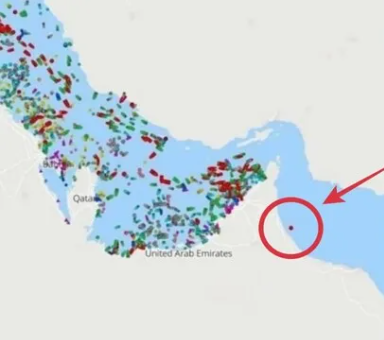
About 15 ships have passed through the Strait of Hormuz, which is controlled by Iran, in the last 24 hours, according to reports. It is believed that Iran has started a “selection traffic” system by directly controlling the passage of the strait.
According to an Iranian Fars news agency, 15 vessels with prior permission from Iran passed through the Strait of Hormuz in the past 24 hours. Bloomberg said on Sunday that 16 merchant vessels passed through the strait after analyzing vessel tracking data. Eleven of them left the Persian Gulf, and five entered the Persian Gulf from outside the sea.
In detail, four bulk carriers from Iranian ports and a product carrier from Saudi Arabia passed through Hormuz on the 4th. Two oil tankers, including an oil tanker “Ocean Thunder” carrying 1 million barrels of Iraqi crude oil bound for Malaysia, followed by one LNG carrier bound for India on the 5th.
Citing two sources, Reuters said Ocean Thunder was one of seven Malaysian-related vessels licensed by Iran to cross the Channel. The Iranian military called Iraq a “criminal empire” on Wednesday and said, “Iraq is not subject to any restrictions that we have imposed on the Strait of Hormuz. These restrictions apply only to enemy states.”
The number of vessels that entered the Persian Gulf was five, one chemical carrier, one LPG carrier, two bulk carriers and one container ship, which passed the strait and entered the Gulf waters on Wednesday. Some of them are linked to Iran and are subject to U.S. sanctions.
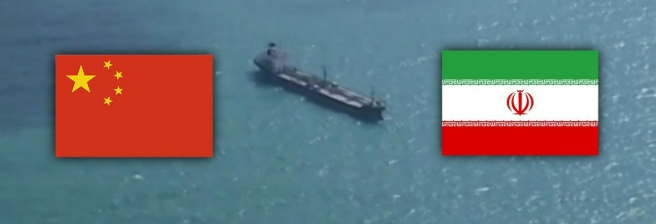
Most of the large ships confirmed in the last 24 hours used the narrow northern route between Larak and Kesum Island, Iran. Analysts say that Iran has virtually controlled the passage of the strait and has been converted to a selective passage system rather than a full blockade of the Strait of Hormuz.
The nationality of the 15 to 16 ships that passed this time was not disclosed, but limited traffic has been detected recently, mainly in Iran or pro-Iranian ships and friendly countries such as China, Russia, and India. In addition, there are cases in which passage was allowed to non-enemy countries such as France, Japan, and Oman-linked ships.
Iran’s Islamic Revolutionary Guard Corps (IRGC) said in a separate statement that the Strait of Hormuz will never return to its previous state, adding that it will not be able to navigate the existing U.S. and Israel. It also added that it is finalizing preparations to implement a new security order in the Persian Gulf.
SAM KIM
US ASIA JOURNAL

