


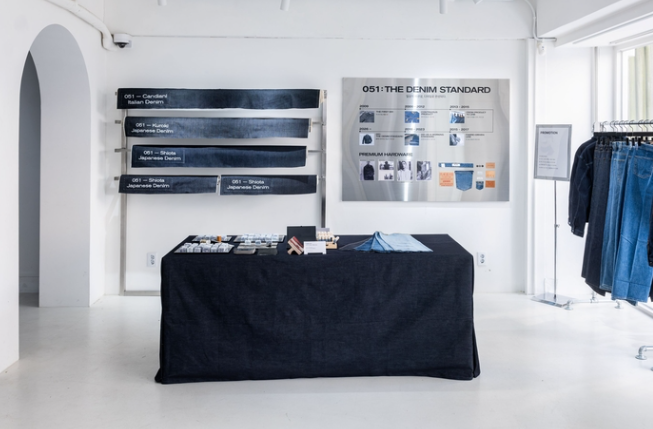
As economic uncertainty and polarization of consumption intensify, the fashion industry is taking the “premium strategy” as a new breakthrough. It seems that it is targeting consumers by raising the overall completeness of materials, design, and manufacturing processes, not just price hikes.
According to the industry, the denim brand Flack is strengthening its “material-oriented premium strategy.” The signature product, “051 Line,” is a product that combines the fit data that Flack has accumulated and the know-how in developing denim, and has become a key line by exceeding 170,000 cumulative sales. Flack explained that it has been applying global materials such as Italian yarn and U.S. cornmeal to improve product completeness, and recently introduced the “051 Premium Denim Line” in collaboration with the Shiota plant in Okayama, Japan, to further enhance its high-end strategy.
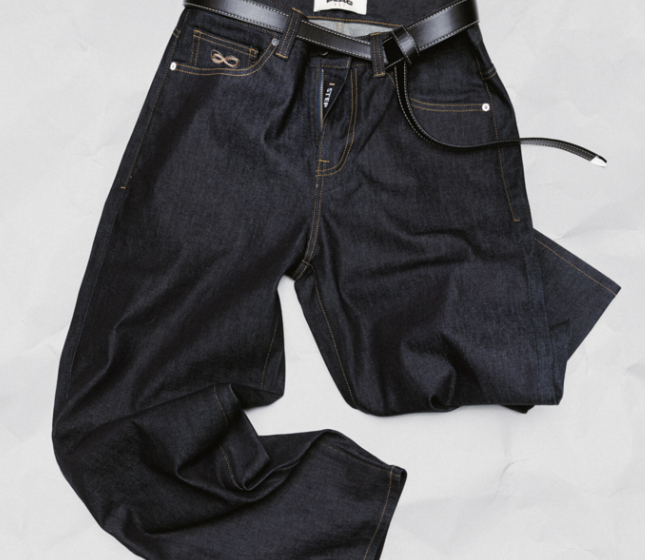
The 051-premium denim line was found to be receiving positive responses, with some products quickly sold out, followed by reorder, and accounting for about 17% of brand sales within Musinsa.
“We are effectively implementing premium strategies by gradually increasing the completeness of materials and production,” a Flack official said. “We will continue to collaborate with premium fabric companies that have been recognized for their technology and heritage in the global denim market in the future to strengthen our brand heritage.” Global manufacturing and distribution (SPA) brand Jarado has also started to expand its premium positioning. It signed a creative partnership with John Galliano for two years and pushed for a re-establishment of its brand image.
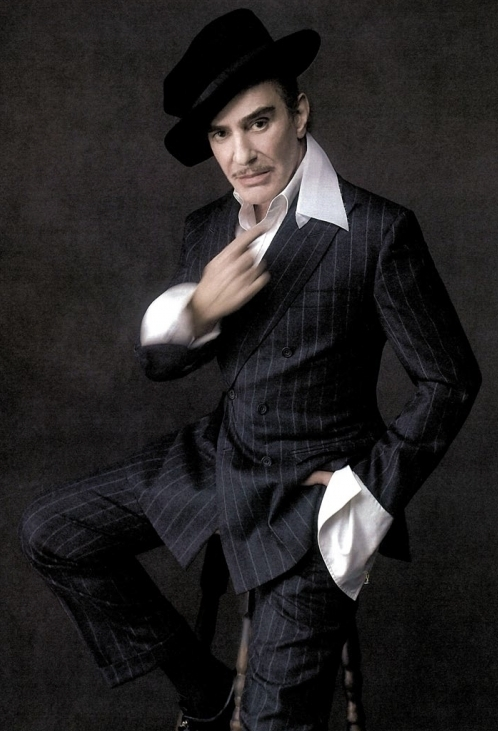
Galliano is one of the leading designers in the luxury fashion world, having worked through Givenchy, Christian Dior, and Maison Margiela. Zara’s strategy is to strengthen the brand’s high-end image and secure a new customer base through reinterpretation of his archives.
Dax, run by LF, has chosen a heritage-based high-end strategy. Since recruiting creative director Luke Guadathan from Burberry, he has continued to expand and modernize European high-end materials.
Recently, it has been making changes centering on the ‘Dieoriginal Line’, which reinterprets the brand’s identity. It is characterized by a reconstruction of existing signature items such as trench coats, quilting outerwear, and tailored jackets with a concise silhouette and a modern sense.
“With value consumption trends, comprehensive completeness of materials, production methods, and brand stories has become important,” an industry official said. “Consumption will be more pronounced as brands with differentiated product competitiveness.”
SALLY LEE
US ASIA JOURNAL

