


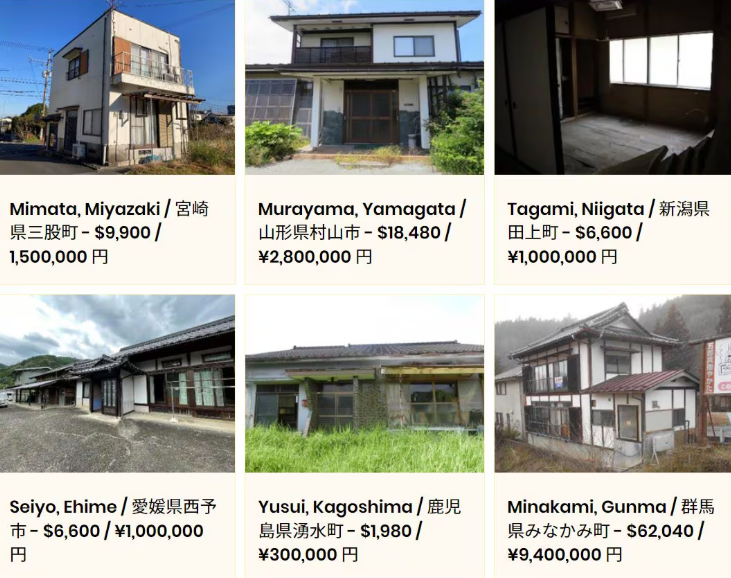
In Japan, the government, local governments, and real estate companies are actively working to solve the problem of 9 million vacant houses (13.8% of all houses) across the country as of October 2023. Akiya Bank (empty house bank) is a system that allows owners to easily check information on vacant houses for sale and rental on the Internet. Most of them are operated by local governments, and Hiroshima Prefecture even provides virtual reality (VR) screen services so that they can look at every corner of the house without visiting in person.
In the “national version” vacant house bank opened in 2017 by the Ministry of Land, Infrastructure and Transport in partnership with a large real estate company, you can select conditions for each area of your choice, type (sale, rental, residence, business use), surrounding living environment (urban accessibility, childcare-friendly, possible farming, sea view, etc.), and price. When you click on an empty house of interest, you will get detailed information such as the floor plan and construction year as well as internal and external photos. It helps to “connect” vacant houses to someone else’s home without being left unattended or forcibly demolished. As of last month, 19,075 vacant houses in 1,134 local governments nationwide were registered in the national edition. In Japan, the “Special Measures Act on the Countermeasures for Vacant Homes” came into force in 2015, allowing the removal of vacant houses that adversely affect the surrounding environment for safety and hygiene reasons. Starting in 2023, poorly managed vacant houses are excluded from the benefits of fixed asset tax reduction. As a result, the burden on vacant house owners has increased. Setagaya-gu, which has the largest number of vacant houses in the country with 58,000, provides owners with free consultation on inheritance, management agency, sale, rental, and demolition. It also holds monthly briefing sessions. Local lawyers, real estate associations, architect associations, and banks are helping this. Recognizing that vacant houses are a local resource, they are also used as care facilities for the elderly, child-rearing bases, and after-school activities spaces for the intellectually disabled in cooperation with civil society organizations.
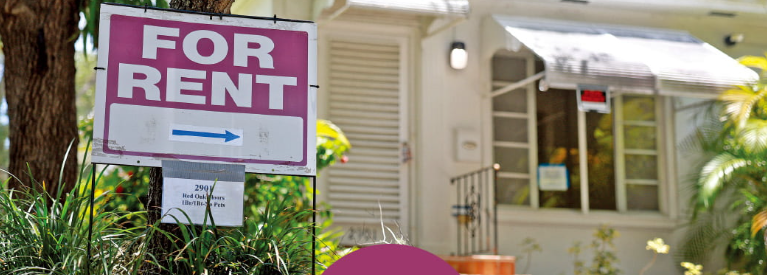
Most local governments in Japan have an organization dedicated to addressing the issue of vacant houses, just like the Setagaya district. The government also supports repair costs so that vacant houses can be fixed and used. Nevertheless, 3.85 million units remain vacant and abandoned houses, as there are no plans to rent or sell them, nor are they used as villas. The problem of vacant houses is serious in Europe as in Japan and other Asian countries. The U.K., which is suffering from vacant houses ahead of Korea, is trying to solve the problem by using its “public authority.” The U.K. has been suffering from a shortage of affordable housing for low- and middle-class people as housing prices have risen since the early 2000s. Meanwhile, the number of vacant houses is on the rise. Popular commuter areas in downtown London or around the railroad are seeing an increase in the number of vacant houses as more people buy them and leave them unattended. Popular vacation spots and tourist attractions such as the Welsh and Norfolk coasts have seen more “second homes” and vacant houses have been created. As the number of vacant houses has increased, problems such as deteriorating residential conditions and crime prevention areas have also become serious.
The British government has decided to solve these two problems by expanding the supply of low-cost housing recycled from empty houses. The central government enacts related laws that can prioritize the exercise of property rights by homeowners, and the local government determines and implements specific application plans according to local circumstances.
First of all, taxes on owners of vacant houses were increased. Depending on the period when the house is empty, up to 300% of the council tax can be levied. Council tax is a tax that people living in local houses pay for local administrative services such as garbage disposal and security. They used it as a kind of fine.
I also share a carrot book. If an old empty house is renovated so that it can be reused, VAT will be reduced, and if it is supplied as a cheap house using an empty house, government support project costs will be paid.
France is responding to the problem of vacant houses by combining data, taxes, and platforms. According to the French National Institute for Statistical Economy, the number of vacant houses increased from 1.2 million in the 1990s to 3.1 million in 2023. It accounted for 8.2% of all houses. In France, a specialized research institute investigates the status of vacant houses and builds a database, and reflects it every year in the government public data system. Based on this data, the central government has been imposing annual taxes on vacant houses since 2013, and the local government has been imposing residence taxes since 2007. The structure is that taxes are levied up to 17% in the first year and up to 34% in the following year based on the rent of vacant houses. On top of that, through a guide involving local government networks across the country, the process of checking vacant houses, resolving them, and recycling cases are shared. It is an online platform that connects owners and real estate agents, and also supports sales and rental. It was designed not only to collect taxes, but to lead to actual transactions and utilization.
Vancouver, Canada, has taken a similar approach. A so-called “speculation vacant house tax” is imposed on houses that do not actually live or use as rent for more than six months out of the year. It is judged that the practice of buying a house for investment purposes and leaving it empty is fueling a rise in housing prices and a shortage of rental housing. After the implementation of the system, 5,920 apartments were converted into long-term rental housing between 2018 and 2019, which is evaluated to have had the effect of introducing neglected housing into the actual rental market.
JULIE KIM
US ASIA JOURNAL

