


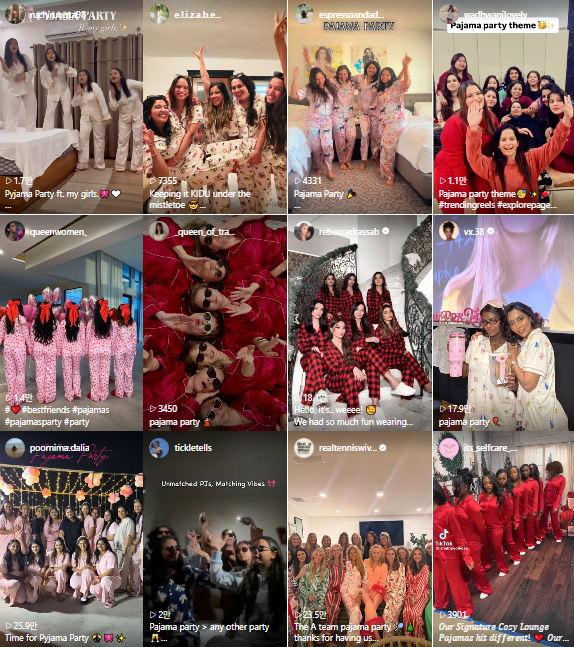
Pajama parties, which used to be treated as “the play of adults,” are spreading into the party culture of children. As pajama parties have become popular including elementary school students’ birthday parties and graduation gatherings, the clothing industry is also strengthening homeware products worn together regardless of generation.
After COVID-19, home parties using pajamas have become social media content among the MZ generation. They gather in private spaces such as friends’ homes, wear pajamas with the same concept, prepare balloons and cakes, take pictures, and share them on social media. As the sensibility of “cute-and-cute” has spread, which naturally creates a comfortable style rather than decorating for going out, pajamas have begun to serve as a “dress code” for parties beyond simple indoor clothes.
Recently, this culture is spreading rapidly to the elementary school generation. In addition to graduation and admission seasons, there is a way for friends to wear pajamas with the same concept and take pictures at birthday parties. Children’s parties, which used to be food-oriented in the past, are changing into a combination of “experience of wearing together” and filming culture.
“I invited my friends for my daughter’s birthday and threw a pajama party,” said a woman in her 40s living in Seoul. “Not only children but also mothers take pictures wearing pajamas with the same concept.” She added, “I look forward to what pajamas children will wear rather than what food they will prepare.” As pajamas have become a common lifestyle item among generations, product strategies of the clothing industry are also changing. According to a global market research firm, the global pajama market is expected to grow to around 14.5 billion U.S. dollars by 2026. Homeware demand is also on the rise in line with the home economy trend.
Brands that have traditionally focused on underwear and innerwear are also expanding their range of pajama and loungewear products, including “Ageless Homewear” that families can wear together. BYC is focusing its efforts on strengthening its lineup of pajamas and easywear by introducing seasonal pajama products in line with rising demand for homeware.
At the same time, the company launched “All Day Long Pajama Set” as a homeware line for pajama parties. Targeting people in their 20s and 30s, the product also sold out in online malls, emphasizing comfortable fit and home fashion styling at the same time. Traditional brands are also targeting the demand for pajama parties by having a dedicated lineup.
If traditional brands are expanding their stride to homeware, fashion companies are strengthening their brand strategies aimed at the “family homeware” market. E-Land Retail’s family homeware brand Anybody is a representative example.
Following the “Snoopy Pajama” using the famous IP, AnyBody is targeting the demand of the MZ generation by introducing a pajama collection in collaboration with the character “Space Dust.” In addition, the company has added kid sizes to major pajama products to target the demand for family looks where parents and children wear the same design.
An industry official said, “As the pajama party culture spreads from adult-centered to younger generations, homeware is changing into a lifestyle item worn by generations rather than pajamas of a specific age.”
SALLY LEE
US ASIA JOURNAL