


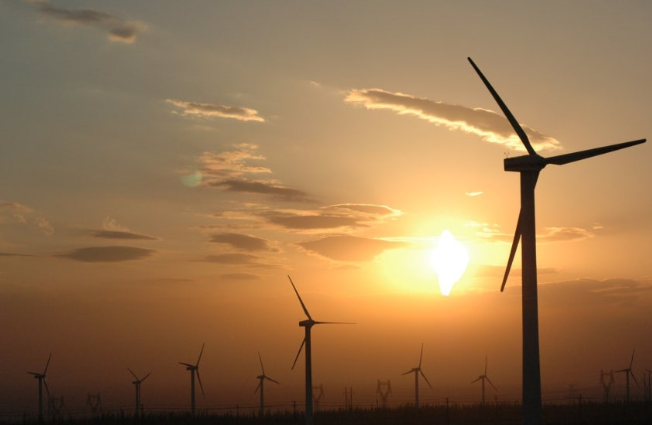
China’s energy independence policy, which has invested in renewable energy for decades, is drawing attention as international oil prices have soared since the war between the U.S., Israel and Iran broke out, deepening the anxiety of countries that have relied on imports of Middle Eastern crude oil. Analysts say that China has recently responded relatively stably due to its long-term supply of electric vehicles and increased proportion of alternative energy such as solar power, wind power, and hydropower to reduce its dependence on fossil fuels, which have clear limits on imports and production.
“China has invested hundreds of billions of dollars in electric vehicles and renewable energy for decades,” the New York Times reported. “This long-term strategy is paying off as other countries are suffering from turbulence in the oil market.” China is one of the fastest countries to pursue electric vehicle transition. According to the New York Times, about half of the new cars sold in China last year were electric and hybrid vehicles, not internal combustion engines.
According to the Center for Global Energy Policy at Columbia University in the U.S., about one-third of China’s total energy consumption is generated by electricity. The figure is about 50 percent higher than the global average. In particular, solar, wind, and hydroelectric energy produced by Chinese panels generate more than one-third of this electric energy. China’s demand for refined oil, gasoline, and diesel, on the other hand, has declined for two consecutive years.
China has also significantly increased its crude oil reserves. According to energy analyst Kepler, China`s crude oil reserves stand at about 1.3 billion barrels, more than three times that of the U.S. The Washington Post said that crude oil supply is sufficient to cover disruptions for more than six months.
Some predict that China will be able to reap more reflective benefits in the future. The Washington Post analyzed that Europe, where energy security has been shaky, could become more dependent on Chinese-made batteries, solar panels and core minerals, which are essential for the transition to renewable energy.
JENNIFER KIM
US ASIA JOURNAL

