


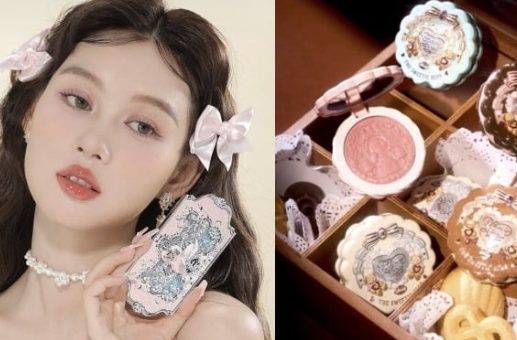
Many popular products, such as Sweetie Bear Almond Cookie Color Blusher and Swan Ballet Pink Makeup Palette, are no longer sold at the official online mall of the Chinese local cosmetics brand Flower Nose. The brand, which entered the domestic market last year, is growing in popularity among women in their 20s and 30s under the concept of a princess. Although it is said that it was sold out due to rapid increase in demand, most of the products are sold out of stock on other platforms, Musin Beauty. Even though the same product was priced up to 28% cheaper at Musin Temple. The reason for the wide inventory gap between the official mall and the distribution platform is that Flower Nose allocated most of the Korean supplies to Musin Temple. Considering that products must be sold cheaply according to Musin Temple’s discount policy and that there is a fee paid to the platform, Flower Nose is doing a lower business in Korea.
As Chinese cosmetics brands give up some of their margins, they are aggressively attempting to enter famous Korean distribution platforms such as Olive Young, Musin, and Coupang. Chinese beauty companies, which have to make profits while entering the Korean market at a high cost, are starting a business that is losing money. Chinese brands claim investments to settle in the Korean market, but analysts say that they are strategic investments to advance into the global market. Once entering the Korean distribution platform, there will be a justification for marketing under the K-beauty category in overseas markets. Once you get on the Olive Young stand, you can conduct K-marketing in connection with the Korean Wave in the global market. Flower Nose’s ultimate goal is to take advantage of Asian cultures such as K-pop and K-beauty to enter advanced global markets such as the U.S., Europe, and Japan. To this end, it became the first Chinese cosmetics brand to form a partnership with Urban Outfitters in 2024. “Chinese brands that are about to enter the Korean market are closely watching the case of Flower Nose while aiming for K-marketing,” said a representative of a cosmetics vendor.
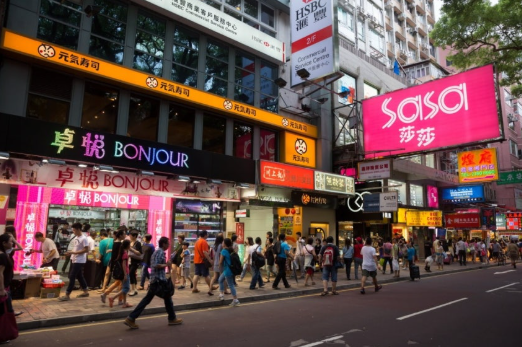
A domestic import distributor has also been asked to enter Olive Young by a local skincare brand based in Shanghai, China, and is reviewing related contents. The Shanghai-based skincare brand, whose annual sales exceed 1 billion yuan, plans to rebrand itself as K-beauty by entering Korea. Although it has established itself as a popular brand commonly seen in cosmetics stores in China, it is believed that the image of C-beauty in the global market will not be easy. In order to increase trust in quality, local manufacturers are also in the process of changing their product lines to Korean OEMs such as Cosmax and Kolmar Korea. To this end, the company gave up more than 30 percent of its margin compared to the previous one. In addition, Chinese color brand “Judydol” recently entered the Korean online platform Coupang and is selling its products at a price more than 20 percent lower than in China. Chinese household goods retailers are jumping into the Korean offline beauty market altogether. Called the “Chinese version of Daiso,” it plans to open its first store in Gunsan, North Jeolla Province late last year and a large beauty-oriented store in Chungmuro, Jung-gu, Seoul in the first half of this year. Recently, it also secured store sites in six regions including Busan, Daegu, Gwangju, and confirmed new stores by the end of this year. It aims to target the domestic beauty market by banking on its own color line and ultra-low price strategy. The reason why Chinese cosmetics brands are aiming for the Korean market is that they will become a bridgehead for entering the global market. As the demand for K-beauty grows in the global market, it can capitalize on its popularity by settling in the Korean market. This is possible because the competitiveness of Chinese cosmetics has gone viral due to social media contents such as Instagram and TikTok, and the rejection of Chinese cosmetics among Korean consumers is decreasing. According to the Korea Customs Service, the amount of Chinese cosmetics imported last year exceeded $71.76 million, the highest ever. It increased by 84% year-on-year (38.96 million dollars). Already, some Chinese brand companies are promoting their products with phrases such as “K-beauty style” and “Developed with Korean Beauty Technology,” which contain Korean beauty trends on Southeast Asian e-commerce platforms Shopee and Lazada or use Korean OEM technology.
An official from the cosmetics industry analyzed, “In the past, Chinese cosmetics or Korean products were used to take away some of the global sales, but now official brands are scrambling to find ways to market Korea.”
SALLY LEE
US ASIA JOURNAL