


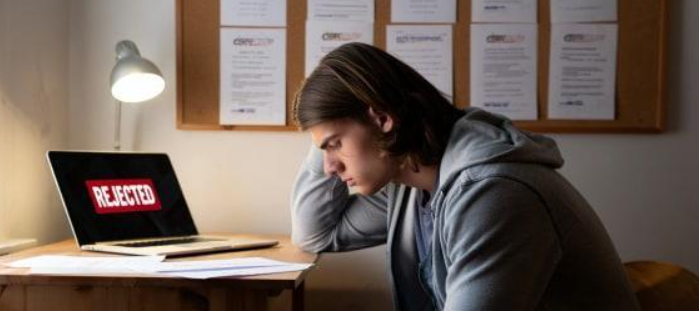
Swiss public broadcaster SRF reported that a care service company in Lumblang, near Zurich, posted a team leader-level employee recruitment advertisement on a job search site last month and wrote that it was “Generation Z’s Emissary.”
The text also says ‘No sick leave mind Monday and Friday’.
There is no set standard for what age Generation Z refers to. Swiss media interpreted the announcement as excluding applicants born in 1995-2010.
Under Swiss law, age restrictions on hiring are not considered discriminatory acts. The phrase in question was later deleted, but criticism poured out that it openly revealed the prejudice that young people are lazy.
Yael Meyer, of consulting firm Cheam, said, “It is shortsighted and irresponsible to pick up and exclude Generation Z and turn a blind eye to their expectations of the labor market.”
“It is a stereotype and a long tradition that has nothing to do with reality,” said generation researcher Francois Höplinger. “Since Socrates (an ancient Greek philosopher), young people have complained that they are lazy and do not listen to adults.”

According to the Swiss Federal Statistical Office, the number of sick leave days by age in 2024 was the highest with an average of 10.6 days for 55 to 64 years old. Those aged 15 to 24, who are considered Gen Z, followed with 9.5 days, and those aged 25 to 34 with 8.2 days.
Höplinger said that young people value the balance of work, family, and leisure, but that the Gen Z debate was exaggerated, saying that “differences within generations are more pronounced than differences between generations.”
In Germany, where political and business figures often refer to Swiss labor culture as an example, debates over Generation Z are also in full swing. It is interpreted that the political circles’ demands to work more are aimed at young people who are considering work-life balance.
“My parents didn’t complain when they were rebuilding Germany after World War II. Did they talk about work-life balance and working four days a week?” Prime Minister Friedrich Merz said last month, sparking controversy over generations.
The moderate conservative ruling Christian Democratic Party (CDU) is considering regulating so-called “lifestyle part-time” by law, which reduces working hours for leisure without inevitable reasons such as caring.
However, Monica Schnitzer, chairman of the Economic Experts Committee, a federal government advisory body, said, “Generation Z works more than the previous generation,” pointing out that politicians are looking for scapegoats to pass on the responsibility for low growth.
Schnitzer said young people enter the labor market quickly these days and work more on average, adding that “a combination of academics and labor is a must for many, not an option.”
According to the Institute of Employment Market and Vocational Research (IAB) under the German Labor Agency, the labor participation rate between the ages of 20 and 24 rose from 69.7 percent in 2015 to 75.9 percent in 2023. “It is a widespread prejudice that Generation Z is demanding and working less, but it is wrong. Young people are more diligent than ever,” the institute said.
JENNIFER KIM
US ASIA JOURNAL

