


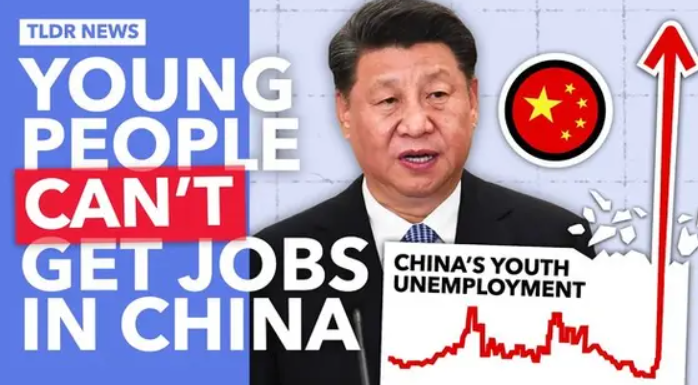
Chinese state-run media and political commentators have recently used the game term “kill line” to hit the U.S. This is a move to divert complaints from young people due to high unemployment and poverty rates. They have even mobilized video game terms familiar to young people to highlight social problems in the U.S., their competitors such as homelessness, household debt, and drug addiction.
Critics point out that China intends to brainwash the superiority of its system to future generations and prevent criticism of the leadership over distorting and emphasizing the weaknesses of the United States rather than actively solving worsening economic problems in the country. Last month, foreign media such as the New York Times (NYT) and the British Economist pointed out that Chinese state-run media and commentators are repeatedly using the term Killain, citing the poverty problem in the United States. The expression was first used in the context of out-of-game in November 2025 when a Chinese creator introduced examples of the poor that he witnessed during his stay in the United States. He claimed in the video that life continues on the Killain, but below them are the poor, including children knocking on doors to get food on Halloween night, delivery workers starving at low wages, and injured workers who are discharged because they cannot pay for treatment.

Since then, Killain has been established as a figurative description of the disastrous life of Americans and contradictory capitalist logic, who have reached the critical point where it is impossible to restore their normal lives. First, it spread on social media in China, and now even Chinese state media and political critics have begun to repeatedly use Killain rhetoric. Late last year, Beijing Le Bao and Nanfang Le Bao, state media of the Communist Party of China, highlighted Weibo Killain, and King Guanchai published more than a dozen comments using Killain terms to describe the poverty, health care and working environment of the United States in less than two weeks.
China’s propaganda strategy, which focuses on the social issues of the U.S. and draws attention from its own people, has been widely used since the Cultural Revolution, but analysts say it is unusual to adopt expressions that were first used by young people like Killain into a new context. The New York Times pointed out that the power of Killain lies in its simplicity. It is possible to criticize the United States more effectively through simple metaphors that are easily understood by young Chinese people who enjoy various games. Behind this, it is pointed out that the intention to hide the worsening economic problems in China, such as youth unemployment and poverty, is hidden.
According to the World Bank’s Poverty Outlook report released last year, the number of Chinese citizens below the poverty line (8.3 U.S. dollars per day) set by the WB in 2021 was about 300 million out of 1.4 billion people. Against this backdrop, the Chinese economy is losing momentum. According to the China National Bureau of Statistics, the growth rate (compared to the same period last year) fell to 4.5 percent in the fourth quarter from 5.2 percent in the second quarter and 4.8 percent in the third quarter. According to the bureau, the unemployment rate of people aged 16 to 24 in urban areas reached 16.5 percent in December last year. Despite the four consecutive months of decline, the figure is higher than that of the U.S., which recorded 10.4 percent in the same period.
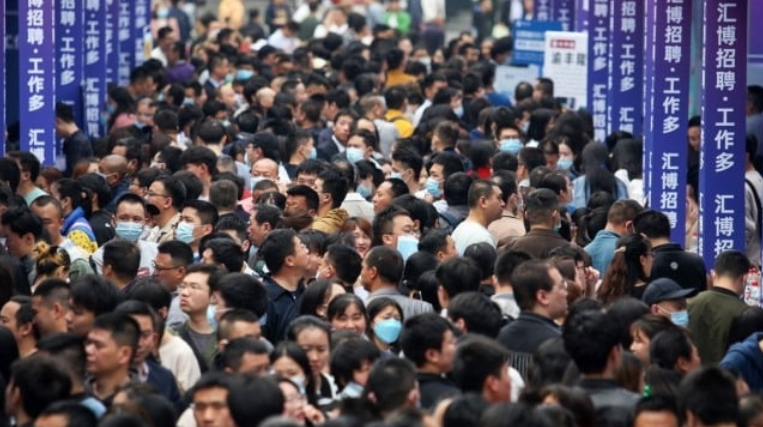
In addition, some point out that China’s actual economic problems are not as publicly known as the United States. Unlike the U.S. homeless people on the streets, in Chinese cities, the authorities strictly manage begging and homelessness, making the lives of the poor rarely noticeable in their daily lives. There are also criticisms that even Chinese people cannot access poverty issues in their own country because the government controls state-run media. Most residents of Chinese cities can only see the existence and lives of the poor in their country indirectly through foreign media such as the U.S. As for youth unemployment, China’s National Bureau of Statistics abruptly stopped releasing statistics when the youth unemployment rate soared to a record high of 21.3 percent in June 2023. Criticism has been raised that the Chinese authorities are obsessively using Killain expressions to prevent young people from protesting and criticizing their country’s problems. Beyond promoting the superiority of the Chinese system by highlighting the shortcomings of its competitors, it is sending a distorted message that “the U.S. is on the verge of collapse, but China is still tolerable” for the emotional stability of its people. Some even analyze that the background of such attempts is the belief that “the decline in the U.S. status is linked to China’s national pride.”
However, some say that Killain is an expression of the U.S. attempting to reorganize China’s social security system by using the U.S. social issues as a counterpart. The move is aimed at once again inspecting and tightening the social security mechanisms that China is advocating by shedding light on the side effects behind the “American Dream” that anyone can succeed quickly and efficiently if they work hard. Some argue that Killain rather helps the U.S. government realize the social problems that the U.S. government has taken for granted and indifferently through external eyes. The Killain investigation is helping the U.S. open a forum for discussions on ways to improve the quality of life for its people.
EJ SONG
US ASIA JOURNAL

