


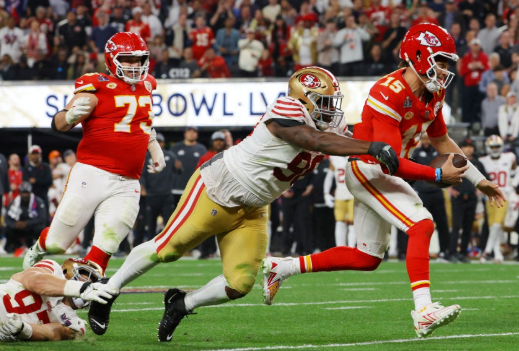
Analysts say that the advertising budget, which had moved to online platforms and streaming channels, is returning to TV with sports broadcasting as a focal point. According to the British daily Financial Times (FT), the unit price of the 30-second commercial slot (time slot) of the NFL’s championship match this year exceeded $10 million for the first time in history. Advertising sales closed at the fastest pace ever, and the average unit price of advertisements was around $8 million.
NBCUniversal, the largest U.S. broadcaster, will simultaneously broadcast the game between the Seattle Seahawks and the New England Patriots at the Super Bowl on the 8th through NBC’s terrestrial, Spanish-language channel Telemundo and streaming platform Pikok. In addition, it has organized the Milan-Cortina d’Ampezzo Winter Olympics in Italy and the NBA All-Star Game, and has been branding the month of February as “Legendary February.”
NBCUniversal predicts that the strong TV sports advertising market will begin in earnest. Mark Marshall, chairman of NBCUniversal, said, “The Super Bowl in 2026 will be the biggest event in the history of the U.S. advertising industry. The sports advertising market is very strong now.”
In fact, this confidence is supported by advertising sales. This Super Bowl commercial slot was sold out before the fall of the previous year, just before the start of the American football season, and it was found that advertisements for the Winter Olympics were already signed at the beginning of the year. About 90% of the 2026 North American World Cup commercial slots are also sold.
As the Super Bowl broke the total number of TV and streaming viewers in the U.S. last year, reaching a record of 127.7 million, advertisers are believed to have completed contracts quickly. More than two-thirds of Super Bowl advertisers signed contracts in connection with Olympic advertisements, and 40% of all advertisers were new advertisers who participated in Super Bowl advertisements for the first time.
Previously, over the past six months, the U.S. TV advertising market has shown a solid trend as the “joint viewing experience” has been re-examined. With the widespread judgment that streaming and social media advertisements have a low purchase conversion ratio compared to exposure frequency, advertisers have turned to sports broadcasts that allow large-scale simultaneous viewing. In particular, it is observed that the market has grown as tech companies have resumed advertising enforcement, and pharmaceutical companies have also shown steady demand for advertising.
This trend is leading to a 30-second revival of TV commercials. Global OTT services such as Netflix and Amazon Prime Video also introduced advertising pricing plan, which increased demand for 30-second commercials. “As streaming and social media advertisements do not produce as much profit as expected, advertisers are returning,” Marshall said. “This will not be a one-off phenomenon.”
Meanwhile, this year’s Super Bowl commercial seems to have been produced in a light and pleasant atmosphere in consideration of political and economic tensions in American society as a whole. Food purchase and delivery agency Instacart selected actor Ben Stiller and singer Benson, while website production company SquareSpace selected actor Emma Stone and movie director Yorgos Lanthimos. Kellogg featured familiar national actor William Shatner, and Pepsi drew attention with a teaser ad using a polar bear, which was considered a symbol of Coca-Cola.
JULIE KIM
US ASIA JOURNAL

