


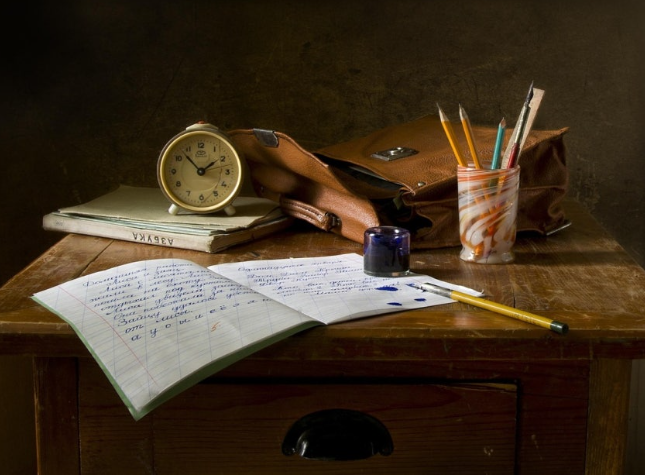
“A new ‘it bag’ has appeared. But this time, neither the logo nor the brand is important. Instead, what’s in the bag becomes the style.”
The recent trend in the overseas fashion and lifestyle markets is the so-called “analogue bag.” Instead of using a smartphone, they carry word puzzles, novel books, notebooks, knitting tools, and sketchbooks to choose offline. The bag has even been nicknamed “a bag that stops scrolling” by millennials and Generation Z.
The Guardian, a British daily newspaper, introduced this as a new ‘it bag’ in which the contents of the bag determine the value, not the designer label. In the midst of online fatigue and information glut, fashion is paradoxically evolving into a tool of ‘digital moderation’. Analog bags are not a movement to leave your smartphone at all. The key is the habit of preparing a substitute. The moment you take out your phone, you can replace it with another action.
David Sax, the author of The Revenge of Analog, which deals with the revival of analog culture, said, “The idea that we can all take a meditative stance and immediately fall into calm is unrealistic for most people. Cell phones provide everything you want, so you have to have an ‘alternative’ in your hand to fill the void,” he told the Guardian, a British daily newspaper. He likened analog bags to “a toy box for concentration.”
The first person to use the term was Sierra Campbell, a content creator who lives in California, the United States. “My biggest fear is regretting how much time I spent on my phone right before I died,” he told the Guardian in a TikTok video. Paradoxically, the idea received an explosive response on social networking services, and people on social networking sites began to reveal their analogue bag components. The trend is becoming more and more granular. A wicker basket-type bag next to the sofa, a suitcase for long-distance travel, and even a “romantic weekend” bag have appeared. Some suggested doing a word-finding puzzle together, instead of solving each Wordle with a mobile phone.
An analog bag in the video clip that Campbell disclosed contained a subscription magazine, a gel pen and a sketchbook for the New Yorker. The video recorded hundreds of thousands of views in a short period of time. The Guardian interpreted the phenomenon as a cultural reaction to screen fatigue and doomscrolling.
This is supported by the actual figures. According to Ofcom, a British telecommunications regulator, British adults check their phones every 12 minutes on average. Additionally, a UK comparison site survey found that adults use their smartphones for five hours on average per day, excluding business purposes. Analog bags are not an isolated trend. The rise of analogue technologies such as LP records, paper magazines, and compact film cameras, “cozy hobbies” such as ceramics, knitting, and embroidery, and the rise of offline gatherings and dinner parties are in line with the rise of digital technology. People are seeking stability and immersion in activities that require touching and spending time with their hands as digital becomes the norm.
Campbell mentioned Charles Duhig’s “The Power of Habit” as an opportunity to change this habit. Duhig describes habit as a structure of cue-action-reward. Instead of getting rid of the “phone-picking clue,” Campbell’s choice was to switch to another behavior that would give the same reward. He told the Guardian, “Put newspapers in your bag if you need news, books if you need entertainment, and sketches or knitting if you need creativity. Just like exercise, what you will actually do is the best option.” As a result, his daily screen time was reduced from seven hours to three hours. This trend is difficult to see as a temporary digital detox. Pete Etchells, a psychologist and author of Unlocked: The Real Science of Screen Time, told the Guardian: “We just formed a habit, not an addiction to mobile phones. The spread of analog bags could be a sign that people are starting to understand their relationship with technology anew.” He continued, “We have options as to how we will spend our time. If you are not happy with how you use it, then trying to find other options and increase that accessibility is very positive.”
An interesting point about analog bags is that fashion is no longer just a tool of show-off, but a device that reveals lifestyle. As soon as books, pencils, and puzzles become styles instead of logos, the direction of consumption shifts from ‘more’ to ‘more’.
Bags that make you put your smartphone down. Bags that make you take out paper instead of a screen. The trendy analog bag is not just a prop, it may be the most everyday tool to regain our time.
SALLY LEE
US ASIA JOURNAL

