


In 2026, the United Arab Emirates (UAE) will undergo changes that go far beyond the turn of the calendar. The country’s tax system will become digitalized, regulations on virtual assets will tighten, a nationwide railway will open, and electronic invoicing will become mandatory.

From July 2026, the UAE will officially roll out its electronic invoicing (e-Invoicing) system. While participation will initially be voluntary, large corporations will be required to comply.
Under the current roadmap, companies with annual revenues exceeding AED 50 million must appoint an approved service provider (ASP) by July 31, 2026. Mandatory issuance of electronic invoices will begin on January 1, 2027. Small and medium-sized enterprises will follow in phases starting in July 2027.
A Dubai-based accountant noted that “PDFs or scanned copies will no longer be recognized as valid tax invoices. Only machine-readable formats such as XML or JSON will be accepted.”
According to Deloitte, once fully implemented, the system could reduce invoice processing costs by as much as 66%. However, companies must also factor in the initial costs of system setup and the adjustment period. Saudi Arabia has already implemented e-Invoicing since 2021, and countries such as Egypt and Jordan have either introduced or are preparing similar systems. The UAE is now joining this regional trend.
Another major but less visible change concerns VAT refunds. From January 1, 2026, a five-year statute of limitations will apply to VAT refund claims. Previously, VAT credits could be carried forward indefinitely, but going forward, credits older than five years will expire.
This makes VAT credits from 2021 particularly urgent, as they will begin expiring in 2026. “If you have old VAT balances, you should consider applying for a refund within this year,” advises a Dubai-based tax expert.
A transitional arrangement has been introduced. If, as of January 1, 2026, a refund claim has already expired or is due to expire within one year, businesses will have until January 1, 2027, to submit their claim. Missing this grace period, however, means the funds will be permanently lost.

There is also a significant change related to the reverse charge mechanism. Until now, importers were required to issue self-invoices for reverse-charged transactions. From 2026, this obligation will be abolished. Instead, companies must maintain thorough documentation such as contracts, purchase orders, and proof of payment. While administrative work may decrease, the burden of proof during audits remains unchanged.
Those involved in social media activities should also take note. By January 31, 2026, all content creators and influencers operating in the UAE must obtain a Mu’lin license.
Although this licensing framework has existed for some time, enforcement has historically been lax. That will change in 2026, with stricter regulation and a significantly expanded scope. Anyone promoting or reviewing products or services online in the UAE—whether paid or unpaid—will be subject to the requirement. This includes individual bloggers as well as corporate marketing professionals. The license must be renewed annually, though it will be free for the first three years.
The UAE Media Council explained that the licensing system aims to regulate the rapidly growing advertising market and improve content quality. Korean companies planning influencer marketing campaigns in Dubai or Abu Dhabi should verify that their partners are properly licensed, as working with unlicensed influencers may pose compliance risks.
Perhaps the most visible physical transformation in the UAE’s 2026 business environment will be the launch of Etihad Rail’s passenger service. The 900-kilometer railway network will connect 11 cities across all seven emirates.
Estimated travel times on key routes include 57 minutes from Abu Dhabi to Dubai and 105 minutes from Abu Dhabi to Fujairah, with trains reaching speeds of up to 200 km/h. The Abu Dhabi–Fujairah journey, which currently takes about two and a half hours by car, will be reduced by more than half.
Station locations are also taking shape. Dubai’s station is under construction near Jumeirah Golf Estates Metro Station; Sharjah’s station will be near University City; Fujairah’s station will be located in the Sakamkam area; and Abu Dhabi’s station is expected to be situated between the Mussafah industrial zone and Mohammed bin Zayed City.
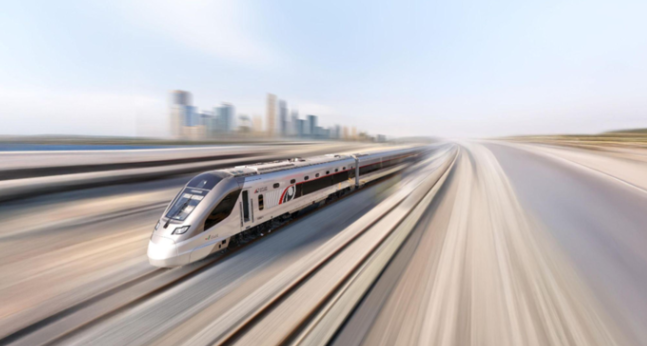
From a business perspective, this railway network could reshape commercial and residential patterns. Local media predict that more workers will choose to live in lower-cost emirates such as Sharjah or Ajman while commuting to Dubai. As many residents have already been priced out of Dubai’s housing market, the railway is expected to accelerate this trend.
Separately, a high-speed rail line between Abu Dhabi and Dubai is also planned. Designed to operate at speeds of up to 350 km/h and cut travel time to just 30 minutes, the line is scheduled for completion by 2030.
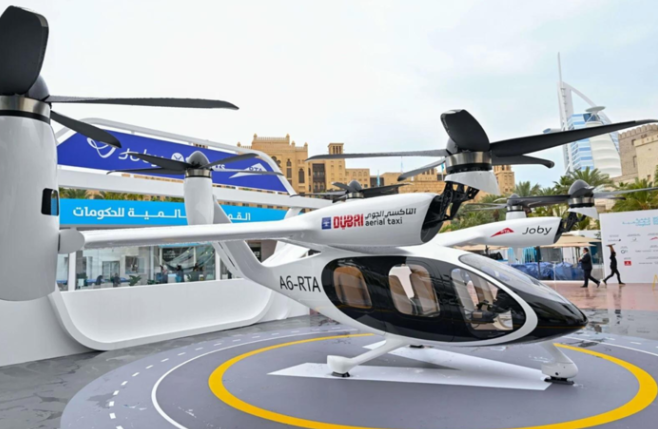
Meanwhile, in 2026, Dubai will launch what it calls the world’s first commercial air taxi service. U.S.-based Joby Aviation has secured a six-year exclusive operating agreement with Dubai’s Roads and Transport Authority (RTA). Backed by a USD 900 million investment from Toyota, Joby Aviation currently boasts a market capitalization exceeding USD 9 billion.
Test flights have already been successfully completed. In November 2025, the electric aircraft conducted a 17-minute piloted flight from Margham airfield to Al Maktoum International Airport. Demonstration flights at the Dubai Airshow attracted tens of thousands of spectators.
Initial vertiports will be located at Dubai International Airport, Palm Jumeirah, Dubai Marina, and Downtown Dubai, with additional sites planned at Atlantis The Royal and Dubai Mall. Joby’s air taxi can carry up to five people, including the pilot, and has a top speed of 320 km/h. A journey from Dubai International Airport to Palm Jumeirah, which typically takes 45 minutes by car, will take just 10 minutes by air.
Of course, operations are expected to be limited in the early stages. Pricing, as well as safety and reliability under Dubai’s extreme heat and sandstorm conditions, remain open questions. Still, following landmarks like the Burj Khalifa and Palm Jumeirah, the introduction of air taxis further cements Dubai’s reputation as a true “city of the future.”
SAM KIM
US ASIA JOURNAL

