


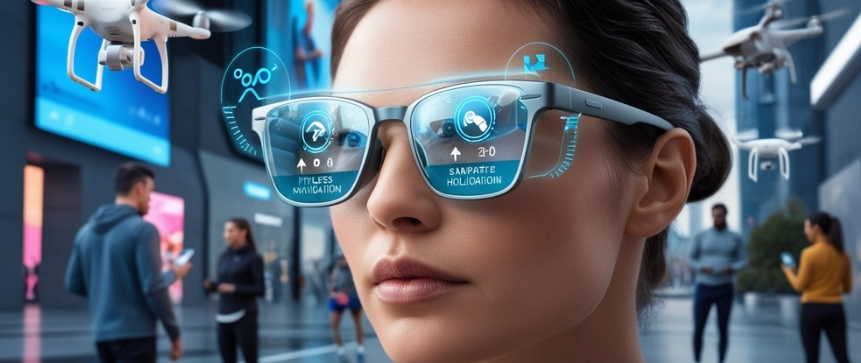
The competition over voice artificial intelligence (AI) technology is fiery among wearable device manufacturers participating in CES 2026. This is because there is a voice AI wind across the wearable market as big tech such as Meta, Google, and OpenAI install voice recognition technologies in their services to set the stage for a winning move. While “Physical AI,” which combines AI and the physical world, has become a key trend, observers say that the wearable market, which is considered the representative industry of physical AI, will lead the change.
According to the American Consumer Technology Association (CTA), the organizer of the CES on the 4th, heated discussions will take place on the future of smart glasses at the LVCC Exhibition Hall on the 8th, the third day of the official opening of the event. Starting with Kelly Ingham, vice president of wearable business at Meta, the parent company of Facebook, executives from Xreal, a Chinese smart glass manufacturer, HTC Vive, a Taiwanese wearable extended reality (XR) company, and Lenovo, China, which is expanding its business from PCs to XR, will attend.
Meta is a leading company that has led the market by launching luxury sunglasses manufacturers Raven and Smart Glass. Some members of HTC’s XR business unit and its affiliate HTC Vive moved to Google early last year. Lenovo is a maker that constantly knocks out the wearable market by jointly making Meta and XR headsets. Xreal is leading the global augmented reality (AR) glasses market. This performance is considered an opportunity to see a strategic battle between U.S. and Chinese companies to take the lead in the wearable market.
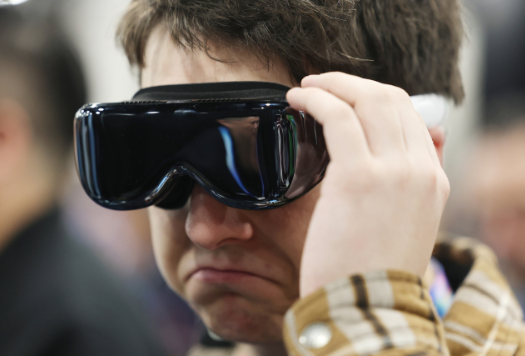
Industry sources expect that a large number of smart glass manufacturers will unveil new wearable products with voice AI at this year’s CES. Bloomberg expressed expectations that Xreal and Vuzix will introduce innovative wearable devices at this year’s CES. New technologies with voice recognition technology on the ring are also expected to be launched.
Big tech is already in the race to dominate voice-over AI. Google is releasing smart glasses this year where you can talk to your AI model Gemini. Amazon is chasing after the company by acquiring “B,” an AI wearable startup that developed a bracelet-type recording device. ChatGPT developer OpenAI is striving to strengthen its voice AI model by reorganizing its organization to release artificial intelligence (AI) devices that interact with voice.
Voice recognition technology was popular in the past but was shunned due to inaccurate recognition rates. However, given AI is evolving at an alarming rate since ChatGPT’s launch, the prospect that voice-based AI will intensify again in the future is bolstered. According to Precious Research, a market research firm, the voice-based AI product market is expected to soar from 14.57 billion U.S. dollars this year to about 63.38 billion dollars in 2035.
JENNIFER KIM
US ASIA JOURNAL

