


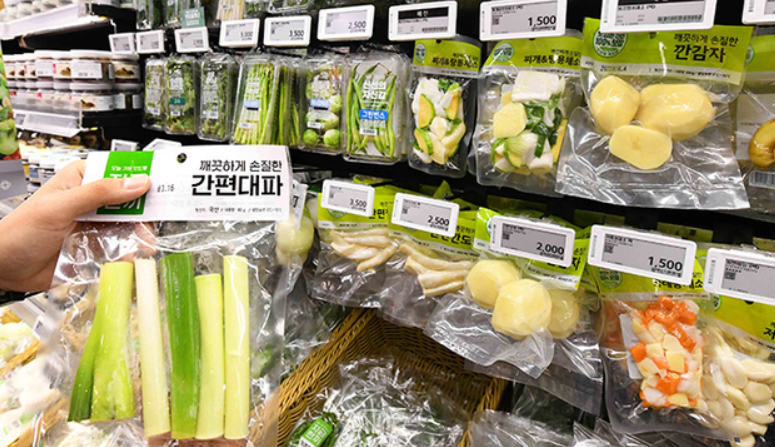
The standards for food consumption are changing amid high prices and the spread of single-person households. Breaking away from the trend of placing importance on quantity versus price, “small-capacity and mini-formats” have emerged as a new strategy for the food industry. Changes in consumer perceptions that value convenience, health, and minimization of waste are rapidly reorganizing the market landscape.
According to sources in the industry on Wednesday, SPC Samlip recently introduced its flagship winter product Samlip Hoppang, which is customized for single-person households. Instead of three to five packs, the company has introduced a new one-bite takeaway hoppang, which contains only one pack, to ease the burden on consumption. Changes are also evident in the dairy, dessert, and confectionery markets. Namyang Dairy’s Chocoemon Mini (120 ml) unsweetened sugar is increasing in sales mainly through online channels. The company has been targeting consumers’ demand to lighten up the calories by reducing them to less than 100 ㎉ without adding sugar. This year, Haitai Ice launched the Babam Bite Mini, a bite-sized version of Babam Bite, and the Nuga Bite Mini, a version of Babam Bite. It was praised for its dainty size that fits perfectly and adds a round design to make it tasteful. Lotte Well Food has released ‘Mini Screw Bar’, ‘Mini Jaws Bar’, and ‘Crunky Choco Bar Mini Okdongja’.
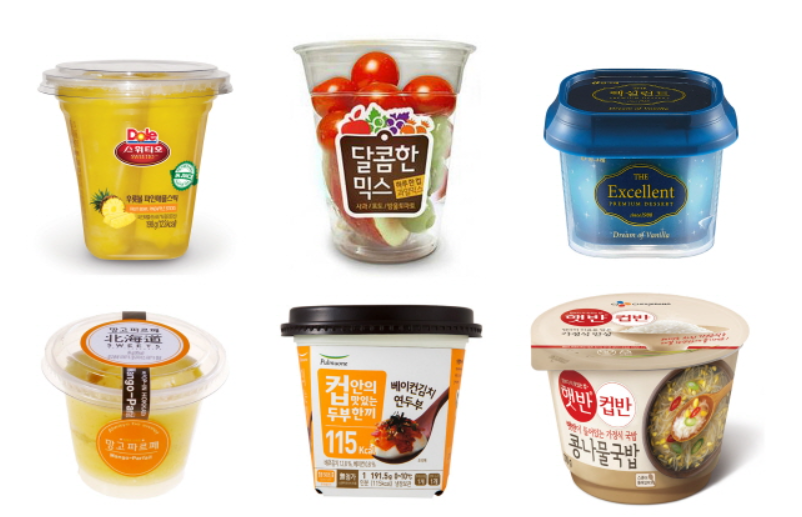
The trend of small quantities is also spreading in the areas of dining out and alcohol. Burger King has introduced “Baby Burger,” which was popular in France. The company has reduced the existing menu, including quattro cheese Whopper, whole shrimp Whopper, and bulgogi Whopper, to bite-sized portions so that people can enjoy multiple flavors at the same time. Moon Bear, a homemade beer brand of Kyochon F&B, has responded to the demand for small-sized beer by launching four types of “mini cans” that reduce the existing 500 ml can to 250 ml. In addition, Guksoon Dang introduced “Baekseju Miniature,” which is one-quarter of the 100 Seju, and Seoul Merchants launched “Tizen Kombucha Lemon,” which is 480 ml PET capacity instead of 750 ml. In addition to differentiating itself as a fermented liquor using kombucha, the company has lowered entry barriers with its small-dose design. This change is in line with the movement of consumption value. In a high-priced environment, consumers are choosing a strategy to lower their burden by dividing purchasing units rather than reducing total expenditure. In particular, in the case of food, it is analyzed that as the storage period and frequency of consumption directly affect the purchase decision, the standard of “cost-to-cost (performance versus price)” is also shifting to consumption efficiency and minimization of waste, not quantity. The expansion of one or two-person households and the purchase structure centered on online and convenience stores are also helping to spread small-capacity products.
The trend is similar in the global market. According to Grandview Research, a global research institute, the global single serving packaging market is expected to reach 10.4 billion U.S. dollars last year, with annual growth of 6.3 percent by 2030.
An industry official said, “A strategy to break away from price competition based on quantity and subdivide consumption experience and usage context is becoming important. Small-capacity products are being used as a means to strengthen brand image and profitability at the same time as demand for appropriate consumption increases.”
SALLY LEE
US ASIA JOURNAL

