


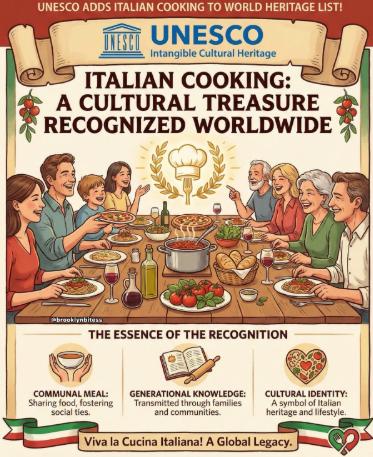
Italian cuisine, known to the public as pasta and pizza, has been recognized as a UNESCO World Intangible Cultural Heritage that humanity should protect.
The government and industry expected the announcement to boost tourism, but some worry that traditional Italian food will be commercially high-end and unified.
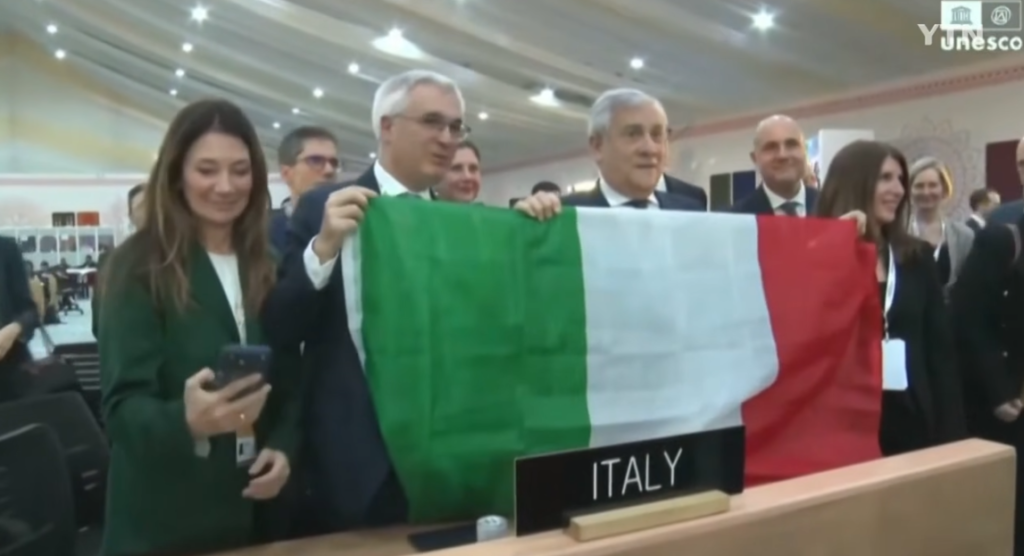
According to foreign media such as AFP and AP on the 10th, UNESCO held its 20th Intangible Cultural Heritage Conference in New Delhi, India, and decided to list Italian food culture as an intangible cultural heritage.
Representatives from 185 countries attended the meeting, but only 24 countries, including France, Germany, and China, were given the right to vote for new candidates.
The Italian government has been pushing for the registration of Italian cuisine as a World Heritage Site since March this year. Emphasizing the cultural value of Italian cuisine, Italy’s Ministry of Agriculture, Forestry and Culture defined culinary culture as a “social consciousness that unites family and community.”
“There is no one Italian dish,” he said. “Italian cuisine is a mosaic of regional diversity.”
Prime Minister Jorja Meloni also helped in the registration effort, saying, “Italian food is a symbol of culture, identity, tradition, and strength.”
In the process of promoting cultural heritage listing, the Italian government emphasized to UNESCO that simple Italian cuisine is meant to value seasonality, fresh agricultural products and waste reduction.
Italian media reported that this is the first time that a country’s food culture, rather than a single dish, has been listed as an intangible cultural heritage.
However, some say that it is not the first time that traditional French gastronomy was listed as a World Heritage Site in 2010.
UNESCO designates and protects knowledge, technology, culture, and art created by a community or group as intangible cultural heritage through interactions such as environment, history, and nature.
According to Deloitte, a global accounting and consulting group, the Italian restaurant market was 251 billion euros as of last year, accounting for 19% of the global restaurant market.
Inside Italy, the UNESCO decision is expected to be a boon to Italian tourism.
Industry groups predict that tourism demand will increase by up to 8% over the next two years, with the number of Italian guests increasing by more than 18 million.
According to data released the day before by the University of Sapienza in Rome, after Naples pizza artisan technology was registered as an intangible cultural heritage, overseas professional education courses soared 283% and related authorized schools soared 420%.
SALLY LEE
US ASIA JOURNAL