


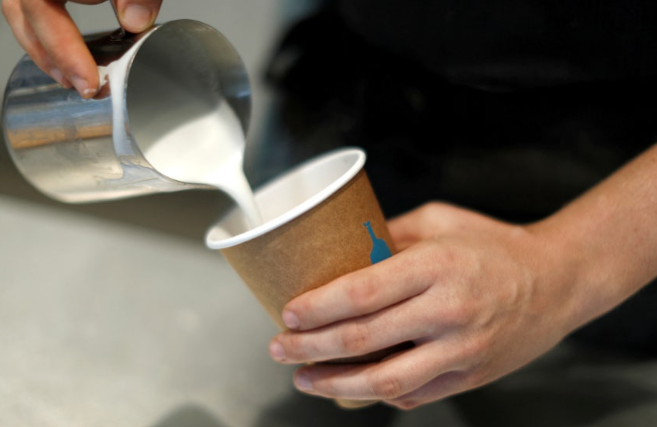
Global food giants, which were scrambling to buy cafes five to six years ago, are now clamoring for a bargain. According to Reuters and the investment bank (IB) on Monday, Nestle, the world’s largest food and beverage company, recently chose Morgan Stanley as its advisor and is considering various strategic options including the sale of blue bottle coffee. It did not disclose specific options or sale price.
In 2017, Nestle acquired a 68% stake in Blue Bottle Coffee for about $425 million. At that time, Blue Bottle Coffee was called the “Apple of the coffee world” and was considered a leading brand in the specialty coffee trend. At the time of the transaction, the total enterprise value estimated at the time of the transaction reached about $700 million. Experts now predict that Nestle will offer Blue Bottle Coffee at a significantly lower market price than eight years ago. It is a so-called withdrawal.
Coca-Cola is also looking to sell Costa Coffee, the UK’s largest coffee chain. Coca-Cola bought the brand in 2019 with an astronomical investment of £3.9 billion. Currently, the sale price is around £2 billion. Compared to the acquisition price, the company’s value has been halved. The Blue Bottle coffee case is a symbolic event that shows the gap between maintaining brand philosophy and business reality. Blue Bottle is a premium brand that boasts a method of extracting hand drip method and flexible interior design that allows baristas to pour coffee by hand. This is the method that large companies that value profitability and operational efficiency hate the most. Introducing an automated system that produces espresso with a click of a button like Starbucks undermines the brand identity of the Blue Bottle brand, and if you stick to the existing method, you cannot quickly grow a brand. Eight years have passed since Nestle’s acquisition, but the number of Blue Bottle stores is still around 100 stores worldwide. It is embarrassing to even compare with Starbucks, which has 40,000 stores worldwide.
According to market researcher Grokipedia analysis, Blue Bottle did not meet the basic financial standards set by Nestle Group. In particular, the turnover rate is low and labor costs are high. Experts added that Nestle CEO Philippe Navratil’s declaration that he would reduce the proportion of physical retail (offline stores) soon after taking office was related to this.
Companies such as Nestle and Coca-Cola are familiar with B2B models, which are mass-produced in factories and distributed in the distribution network, or asset-light models that minimize hiring of employees or expansion of facilities. Soft drinks such as Mixed Coffee and Coca-Cola, which are Nestle’s main products, are highly efficient businesses with operating profit ratio of 15 to 25 percent. On the other hand, offline cafes leave a single-digit margin at best.
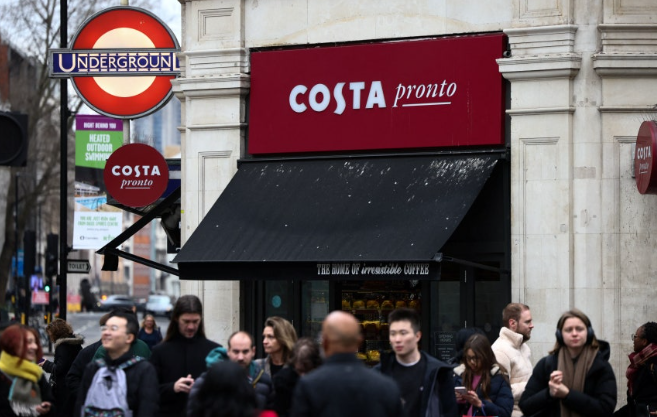
According to the UK retail analysis media World Coffee Portal and Caterist, Costa Coffee’s sales in 2023 were £1.22 billion, an increase of 9% year-on-year. Looking at it, it is growing. However, the substance has taken a backward step. Pre-tax profit, which reached £240 million in 2022, was reversed to a deficit of £9.6 million in a year. The new profit fell by £250 million in a year. A typical over-fixed cost business model is a franchise business that requires maintaining a store in a high-rent commercial district and employing thousands of baristas. Tariffs and raw material prices have skyrocketed this year. Mondelez International, a U.S. confectionery firm known for its Oreo, completely withdrew its 17.6 percent stake in JDE Peet’s coffee business to investment firm JAB Holdings in October last year for 2.16 billion euros. “We will focus on snacks and biscuits that we are best at,” Mondelez said. In other words, filling shelves with snacks is much more profitable than managing coffee shops that are troublesome.
Nestle is strongly considering selling the store management rights but maintaining the brand ownership (IP) instead of completely closing the blue bottle business. The strategy is to continue to use the blue bottle brand to sell Nespresso capsule coffee and coffee beans. Nestle has already emphasized the image of “at-home coffee” by launching premium instant coffee under the blue bottle brand and releasing Nespresso-compatible capsules starting in 2022. Coca-Cola is also likely to retain its business rights as canned coffee or vending machines even if Costa is sold.
“In the future, global food companies will return to taking control of marts and convenience store shelves using strong brand power rather than taking the risk of running their own stores,” Reuters said, citing an IB industry official.
SALLY LEE
US ASIA JOURNAL

