


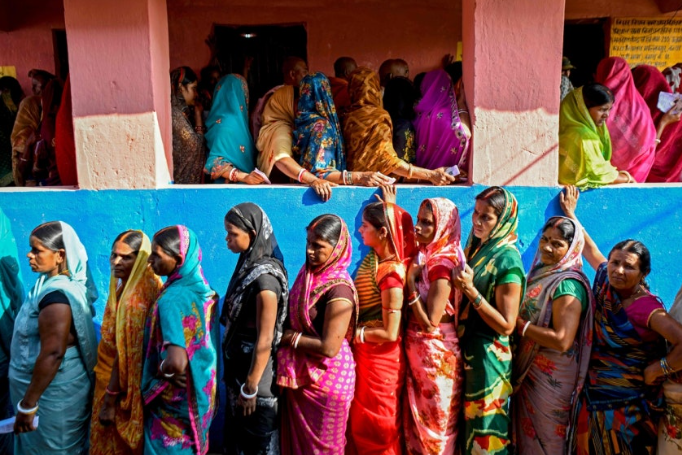
BBC reportedly noted that the ruling Bharatiya Janata Party (BJP) pledged to pay Rs 10,000 to female voters against the backdrop of its recent landslide victory in the elections for the eastern Indian state legislature. In Bihar, India’s poorest state, the number of female voters this year surpassed that of men for the first time.
In last year’s election in Maharashtra, the BJP won a landslide victory amid the highest voter turnout (66.05 percent) since 1995 when it pledged cash equivalents to female voters. The reason they paid attention to female voters is that in India, where voting has long been regarded as men’s exclusive property, it was necessary to win the election to attract women’s participation in voting. BBC recently saw that India’s pork-barreling pledges continue regardless of ruling and opposition parties.
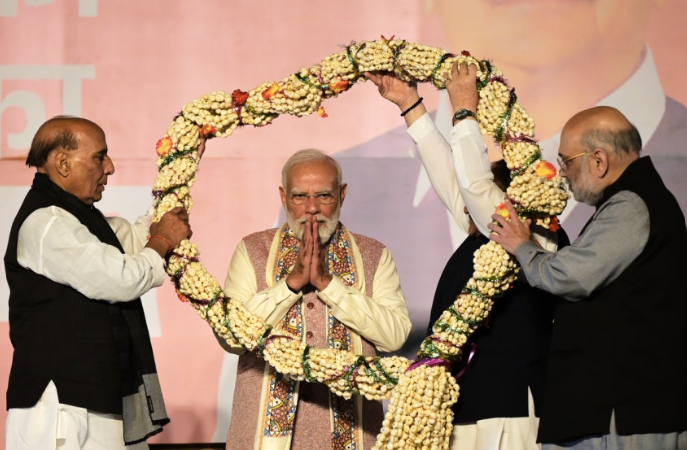
Cash The current method of assistance can be seen as an extension of India’s long-standing “Levdi culture.” Levdi is a traditional Indian candy name that also refers to the government’s free populist policy. The Dravida Progressive Party in Tamil Nadu once pledged to provide free color TVs to all families. Indian Prime Minister Narendra Modi in the past warned of the danger, comparing the culture of Levdi to “the act of sharing sweet snacks recklessly.” The problem is that competition for pork-barrel pledges is getting overheated. Bihar had a fiscal deficit of about 6% of the state’s gross domestic product, but ahead of the election, it announced a cash-equivalent support plan worth about 4% of the state’s GDP. Earlier in Maharashtra, the state government withdrew some of its pledges after the deficit increased by 0.4% point due to cash-equivalent pledges. Emkay Global, an Indian brokerage, called the phenomenon “a swamp of pork-barrel policies.”
The Central Bank of India warned that such practices could weaken fiscal health. In its “2024-2025 State Fiscal Report,” the central bank pointed out that pork-barrel policies are a major risk factor for main debt. In particular, the report specified specific risk policies, including the cancellation of farm loans, free and low-cost power, transportation, and gas support, and cash payments to farmers, young people and women.
However, it is unlikely that this practice will change immediately as cash pledges are effective in the election. Emkay Global said, “The results of the Bihar election signal a further strengthening of competition for pork-barrel policies that have swept the state over the past two years,” adding, “The competition will continue ahead of major elections next year in Tamil Nadu, Kerala, and West Bengal.”
EJ SONG
US ASIA JOURNAL

