


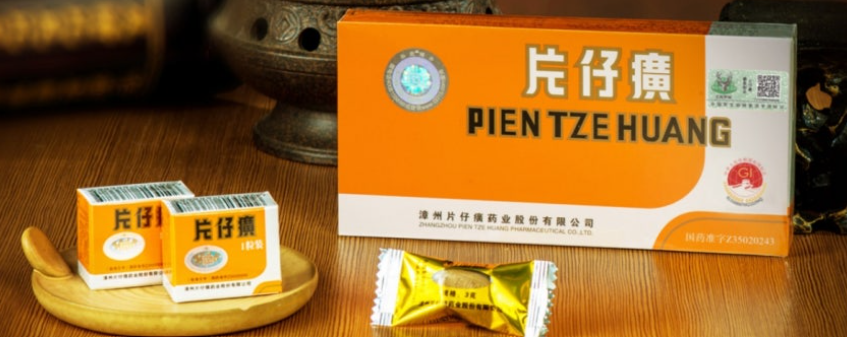
Poor performance of P&T Huang, also known as Mao Zedong among Chinese medicine, continues. The price of the medicine for liver disease, the flagship product, is halved and inventory is piled up. As the Baiju market shrinks due to the Chinese government’s “no drinking decree” aimed at preventing luxury in officialdom, analysts say that P&T Huang’s liver protection system may have been directly hit. According to Chinese economic media including Thei Qixing and Jimi Nxinen on Tuesday, P&T Huang’s sales in the first three quarters of this year fell by 12 percent year-on-year. Net profit dropped to 2.12 billion yuan, a 20.74 percent drop from the same period.
P&T Huang explained that the decline in sales and profit margins in the pharmaceutical manufacturing sector are the main reasons for the slowdown in performance. The key items in the P&T Huang drug manufacturing sector are drugs for liver disease led by “P&T Huang Refining,” and sales in the sector fell 9.41% to 3.88 billion yuan in the first three quarters of this year.
The Chinese daily called it a “fall of the emperor’s medicine.” Founded in 1956, P&T Huang is one of China’s top three manufacturers of Chinese medicine along with Tonglundang and Yunnan Baiyao. It has established a solid position as a high-priced premium drug manufacturer based on the treatment of P&T Wang, a treatment for liver disease. The price of a tablet of P&T sulfur once reached 1,500 yuan (300,000 won), making it known as “emperor medicine” and “Mao Thai of medicinal herbs.”
The institute analyzed that excessive price adjustment and inventory instability were the cause of the fall of the emperor drug. As supply increased to stabilize prices that soared to 1,500 yuan per pill, the price plunged to 500 yuan, one-third of the price at the end of last year. As a result, wholesalers’ inventory purchase and sales systems began to falter, and sales and distribution margins fluctuated quarterly from this year.
Despite the lower price, sales have not increased. Currently, one tablet of P&T sulfur tablet is priced at 570 to 600 yuan, lower than the official price of 760 yuan, on China’s e-commerce platform. The retail pharmacy channel says, “It’s still expensive, so you can’t sell a few tablets a year.”
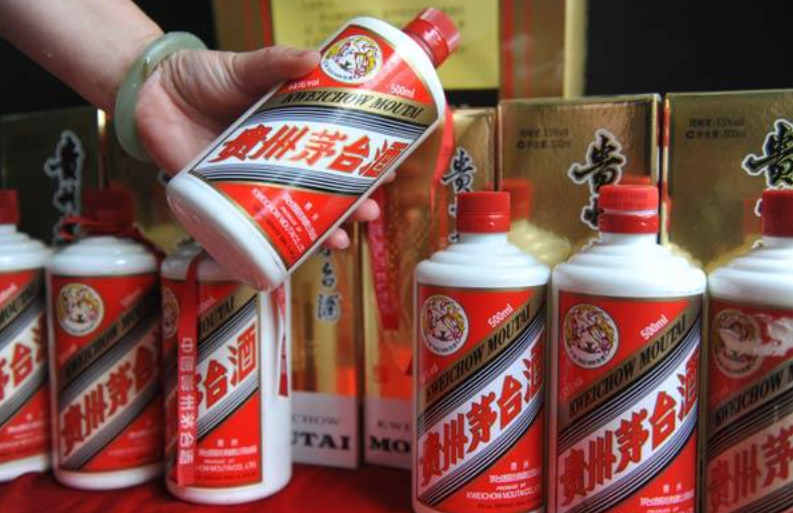
Some even cite China’s stagnation in the baiju market as a more fundamental cause of the fall of the emperor’s medicine. Until now, the term “Mao tai for the left hand and Pien tzu Huang for the right hand” had been widely used in the high-end social and hospitality markets in China. This means that the Chinese drinker serves dinner with Mao tai, which is alcohol, and presents him with Pien tai to protect his liver.
However, in May, when the Chinese government issued a “no drinking order” to prevent luxury and waste of officialdom, the market for Maotai and other Baizhu shrank. The wholesale price of Maotai’s flagship 53 degrees 500ml Peyten Maotai fell from 2180 yuan per bottle to 1,720 yuan in the second quarter of this year, and as a result of the bleeding competition of Baizhu companies for promotions, the total number of Baizhu companies and agents decreased in the first half of this year. As the Baizhu market shrinks as if it were stuck on a needle, sales of Pienzhuang naturally decreased, according to industry officials.
“The key to the decline in P&T sulfur revenues is a sharp drop in margins for liver disease treatments, which are their main businesses, and inventory has increased by more than 20 percent,” said Chen Xing, a researcher at the Institute of Pharmaceutical Industry. “Right now, it is urgent to stabilize consumer prices, reduce inventory, and improve cost efficiency.”
JULIE KIM
US ASIA JOURNAL

