


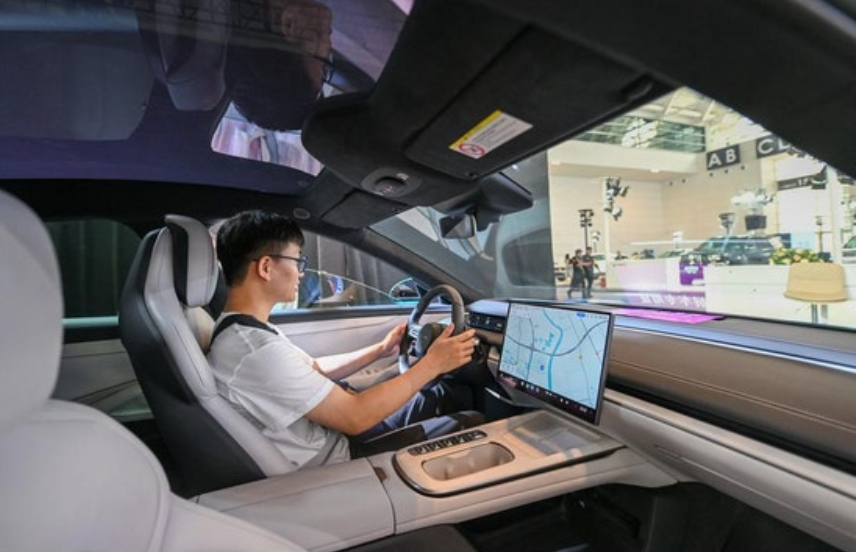
Cross-border cooperation has become a distinct trend in China’s new energy vehicle sector in recent years.
Not long ago, internet platform company Jingdong announced that it would work with Guangzhou Automotive Group and Ningers Dai to introduce new cars, drawing attention from the industry.
By opening the Jingdong app, consumers can design their own vehicles. Smart and convenient functions, performance that emphasizes safety and trust, and speed configuration that relieves driving anxiety are all ways that users can participate in the development of new cars.
Jingdong entered the new energy vehicle market in earnest based on the consumer insights and sales network of the e-commerce platform. According to related statistics, about 170,000 customized designs were received in two days.
In this collaboration, Guangzhou Motor Company is in charge of manufacturing finished vehicles, Ningers Dai supports battery technology and battery exchange ecosystems, and Jingdong excels in user insights, retail channels, and warehouse logistics. It is a method in which the three companies collaborate to realize resource integration across the entire process, from research and development of a vehicle to production, sales, and service. This is an example of a platform company entering the automobile market. Huawei supports automakers based on technology and product capabilities that it has accumulated in the field of information and communication technology, while Xiaomi develops overall technology on its own to produce vehicles. Alibaba is providing services to a number of domestic and foreign suppliers through support for computing power and foundation models.
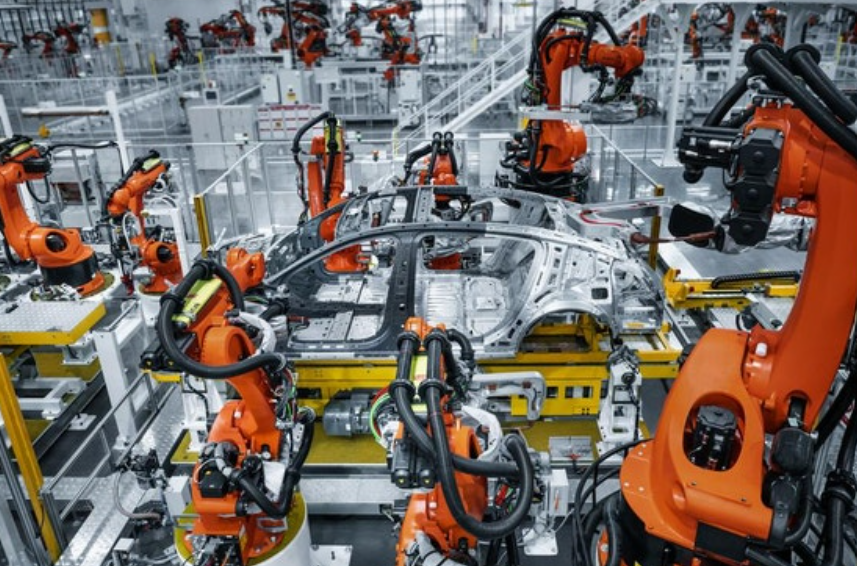
For the 10th consecutive year, China has been ranked first in the world in terms of production and sales of new energy vehicles. In the January-September period, both production and sales exceeded 11 million units, and the market penetration rate (the share of sales) was close to 50 percent.
In addition, China has already established an independent, complete, and efficient entire industrial chain, from metal materials and sensors to body structures. Through the industrial cluster, finished car plants can procure the parts they need within four hours. On top of this, as cross-bordering has become commonplace and convergence opens up new possibilities, the new energy vehicle industry is expected to have a bright future as technology-led, product upgrades, demand re-creation, and platform support are combined. In fact, as more and more companies cross-border to enter the new energy vehicle market, the automobile industry is continuously expanding its boundaries through convergence.
It can recognize various dialects and mixed word order commands and even capture emotions. The camera inside the smart cockpit monitors the driver’s condition in real time and immediately alerts the driver when he or she is drowsy. A vehicle and a smart home are linked on the way home, allowing the user to turn on the air conditioner in advance and adjust the temperature to an appropriate temperature. As a vehicle is a means of transportation and an assistant to life, the concept of “IoV” is coming into reality.
The pace of cross-border convergence of new technologies in each stage and field of the industrial chain is also accelerating, centering on products. From high-performance batteries and lightweight materials to smart cockpit and vehicle systems, a variety of fields such as new energy storage technology, new materials, and electronic manufacturing are concentrated in one vehicle. In addition, many advanced technologies such as basic parts, communication, and basic software are actually applied through automobiles.
As such, in China today, automobiles are no longer staying in vehicles in the traditional sense, but are gradually expanding the scope of daily life as a smart mobility terminal and a lifestyle.
JENNIFER KIM
US ASIA JOURNAL

