


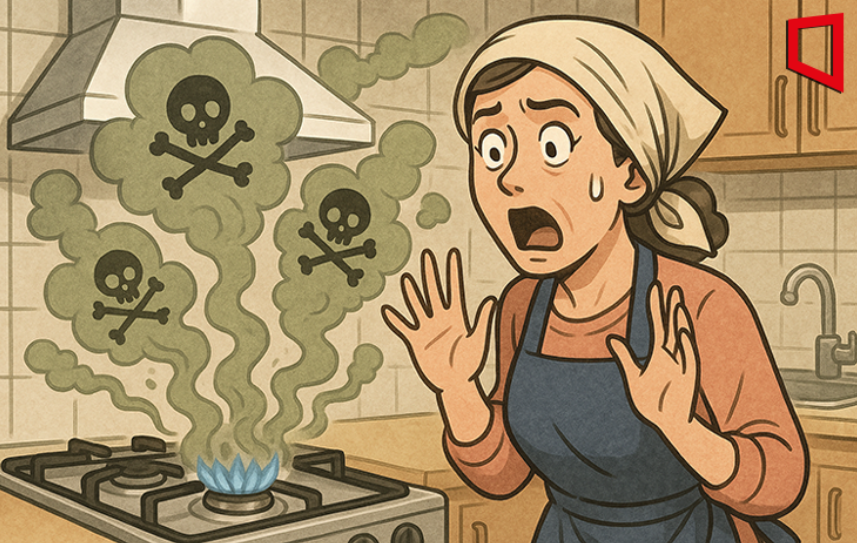
In fact, three out of 10 workers who stand in front of a gas stove for a long time at a cafeteria and other places have been found to have abnormal lungs, and the danger of the kitchen environment is drawing attention again. Kang Sang-wook, a professor of chemical energy engineering at Sangmyung University, recently said on his YouTube channel “Physician”, “Just turning on the gas stove generates harmful substances such as carbon monoxide and nitrogen dioxide,” and added, “Even the American Chemical Association has issued a position to replace them with electric ranges.”
According to Professor Kang, 30% of the workers working in front of the gas stove for about eight hours a day received lung abnormalities, and young workers were no exception.
“It doesn’t cause problems if you use it for a day or two. However, constant exposure every day will inevitably damage your body,” Kang said. “About 90 percent of female lung cancer patients are non-smokers, and the medical community considers kitchen culture as the main cause.” Methane gas, the main fuel of the gas stove, generates carbon monoxide when oxygen is insufficient during combustion. Professor Kang said, “The cases of death in briquette gas poisoning in the past are carbon monoxide poisoning,” and added, “The kitchen is open, so it is not a lethal amount, but the amount that enters the nose even when the hood is turned on is considerable.”
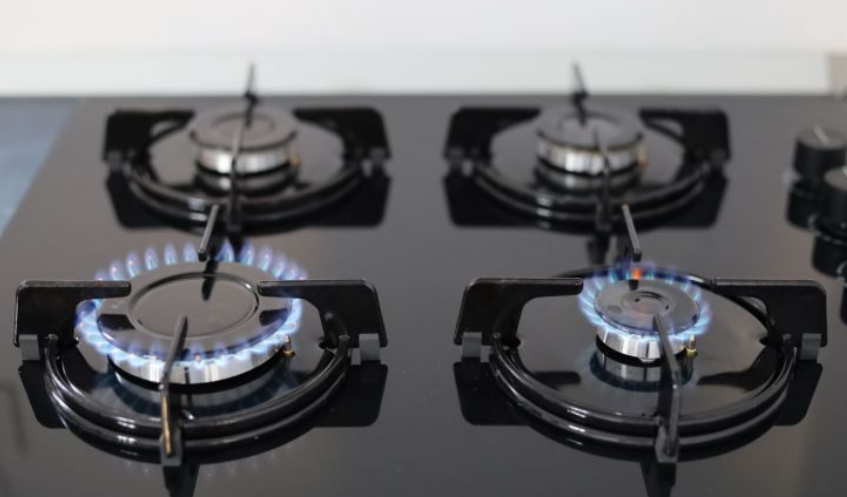
In addition, oxygen and nitrogen in the air react at high temperatures of 800 to 1,300 degrees Celsius to produce nitrogen dioxide. “You are continuously inhaling substances that are no different from automobile exhaust gas,” Kang said.
For this reason, some states in the United States are pushing for a ban on the use of gas stoves. California has proposed a new ban on sales, and New York is also considering a similar bill. If the bill is passed, gas stoves will not be able to be sold in both regions.
The American Chemical Association also made official the harmfulness of gas ranges official in 2017 by issuing an official statement saying, “Replace them with electric ranges.” Professor Kang said, “If you ask if a gas range is dangerous or an electric range is dangerous, I can tell you definitely. A gas range is much more dangerous,” and emphasized, “It is better to get an electromagnetic wave.”
“If it is difficult to change the gas stove to an electric stove immediately, you must open the window when cooking,” he said. “It is useless to open one side, and harmful substances are diluted only when at least two places are opened to create airflow.”
He also added, “Electric stoves also have electromagnetic problems, but they are much safer than gas stoves,” adding, “Even if you step back a little while cooking, the intensity of electromagnetic waves decreases significantly, and even if the intensity of the fire is adjusted to the middle.”
JULIE KIM
US ASIA JOURNAL

