


It would have been convenient for those who thought about “how much to pay in tips” when traveling to other countries, not having to think about this in Japan. That’s why Japan is famous for not having a tip culture.
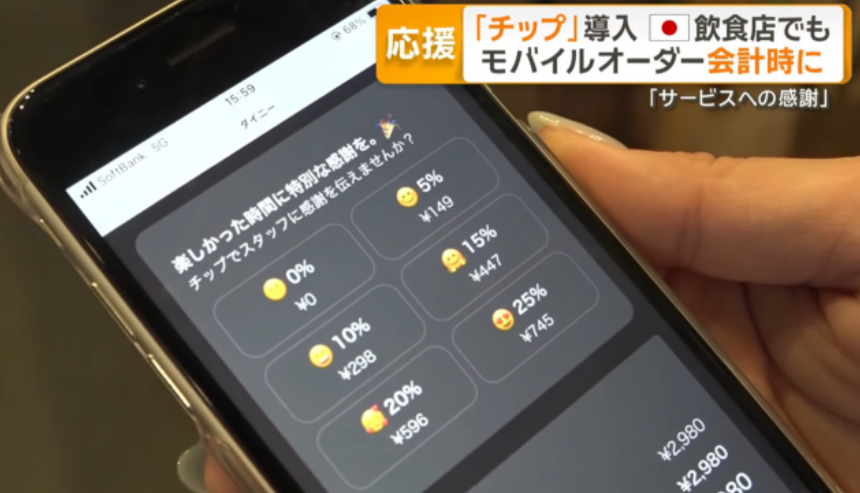
New changes are being made in Japan. According to Asahi TV, a service that allows customers to tip directly through a mobile order system is spreading in Japan recently. You might think, “Hey, do you want me to pay more after all?” But the way it operates seems a little different. A hamburger store in Tokyo introduced a new payment function last month. It is a system that allows customers to tip the store separately from the price of food when ordering and paying on their mobile. The store says it doesn’t inform customers that it has a tip function. A customer who just wants to cheer for the store or the staff gives them a tip on his or her own when paying after a meal. A store official says, “We didn’t have a tip system in Japan, so it was difficult to get a ‘service fee’ due to the nature of the industry, but we introduced it because we thought it would be good for customers to judge.”
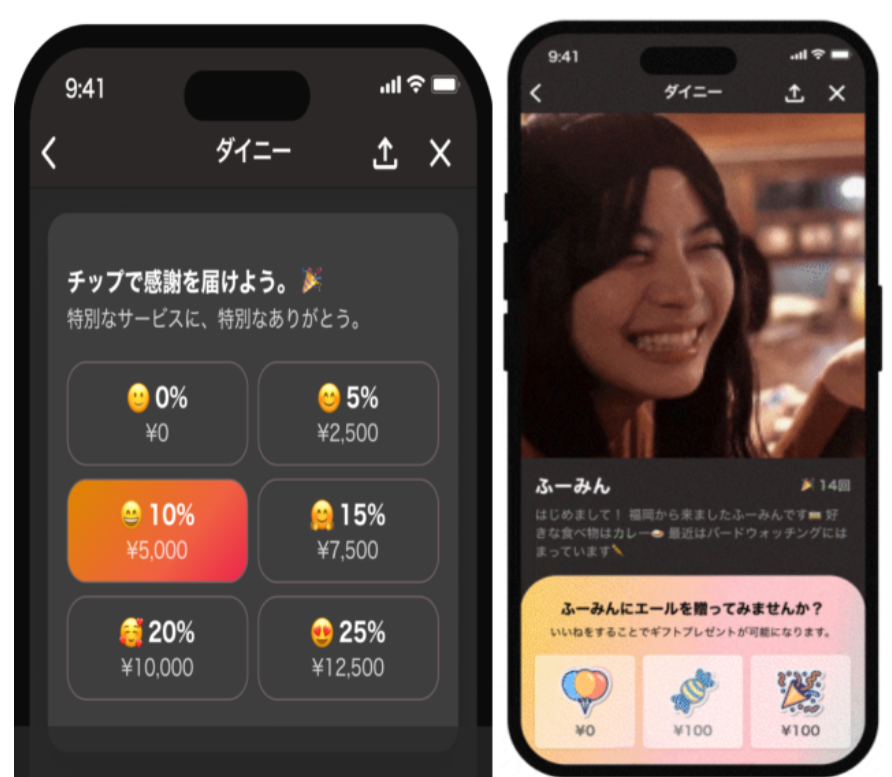
The system is simpler than you think. If you touch the tip ratio displayed on your smartphone screen, it will automatically add to your bill for the day. There is also ‘Cheer for’ system. It is a system that sends donations by selecting specific employees that customers want to support by searching their profile. It is similar to the star balloon of the Internet broadcasting. In one of the stores introduced, a kitchen employee received about 150,000 yen (about 1.4 million won) for a month. “It is motivating part-timers because efforts can be visualized,” says an izakaya manager in Nagoya. In fact, a female employee who received the donation said, “I was motivated to know that my hospitality was ‘more than expected’ from the customer.” Behind this change is a serious shortage of manpower in the Japanese restaurant industry. According to the Ministry of Health, Labor and Welfare, the effective recruitment rate in May this year was 1.05 times the average for all jobs, while restaurants recorded 2.40 times for cooking and 2.63 times for hospitality. That means there are 2.4 to 2.6 jobs per job seeker. This means that there are not enough people to work.
“It is difficult to raise labor costs due to tight profits and profit margins due to rising prices,” a company official who developed the service said. “We wanted to ease this difficulty even a little with the ‘tip function’ that is not influenced by rising prices.”
The tip service, which began last month, has already been introduced to about 900 restaurants nationwide.
SALLY LEE
US ASIA JOURNAL

