



Following Indonesia, Nepal, and East Timor, there is a wave of protests by “Gen Z” against social inequality and corruption among the privileged.
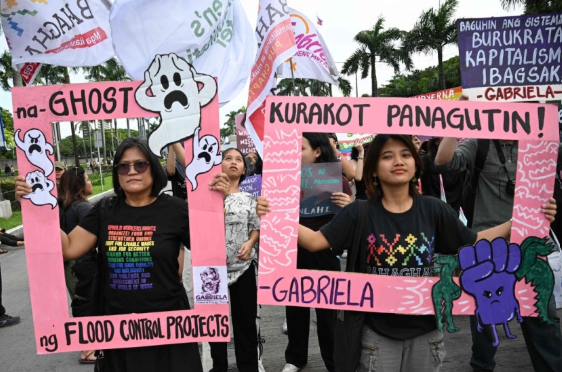
Philippine media outlet Rappler reported on Monday that demonstrations took place in at least 20 cities to protest the corruption scandal over infrastructure projects. Manila’s city government estimated that at least 49,000 people attended the rally at Lunetta Park (Rizal Park) as of Sunday morning. The protest is the largest since Philippine President Ferdinand Marcos Jr. took power in 2022.
The protest was co-hosted by youth groups, including university student groups and the Philippine Student Federation. Sept. 21, when the protest was held, marks 53 years since former President Ferdinand Marcos, father of President Marcos Jr., declared martial law during his dictatorship. Lunetta Park is considered a holy place for People Power in 1986, which drove out former President Marcos. The protest was triggered by President Marcos Jr. raising suspicions of bribery between construction companies and lawmakers over flood infrastructure projects. The Philippines, which suffers severe typhoon damage during each rainy season, has allocated at least 616 billion Philippine pesos for flood infrastructure projects for three years from 2023 to 2025. However, investigations by the government’s independent committee and the Senate have revealed that some infrastructure has not been poorly constructed or even constructed. Finance Minister Ralph Lexto estimated that the scandal may have caused about 42.3 billion to 118.5 billion Philippine pesos in financial damage from 2023 to this year.
A construction company owner who attended a Senate hearing claimed to have bribed 17 members of the House of Representatives, including House Speaker Martin Romualdes, in connection with flood prevention work. In the aftermath of the construction company’s revelation, President Marcos Jr.’s cousin, House of Representatives Speaker Romualdes, and Senate President Francis Escudero resigned.
Protesters urged the government to seize all assets used in corruption cases and compensate flood victims in areas such as medical care, education and housing. They also demanded dismissal of government officials involved in corruption cases and full disclosure of government bidding documents.
Some young people took part in the protests with mud all over their bodies to recreate the victims of the flood damage. The “One Piece Pirate Flag,” a symbol of Indonesia’s youth’s inequality protest, also appeared.
“There are people suffering from the floods,” Francis Aquino Di, the protest leader, told GMA News. “On the other hand, those suspected of being involved in irregularities are showing off their luxurious lives on social media.” Ali Villarermosa, a 23-year-old nursing student, told AFP, “I have lived through the floods myself before. (Corruption) is a real shame.”
Philippine police said the protest was peaceful until this morning without any clashes.
Recently, a series of protests by young people have taken place in Southeast and South Asian countries against corruption and economic inequality by bureaucrats. Last month, a protest against the payment of a parliamentary housing allowance was held in Indonesia, and a delivery driver passing by the protest site was crushed to death by a police armored vehicle. Protests against the government’s blocking of access to social media were held in Nepal, and demonstrations against the support of lawmakers’ car purchases and lifelong pensions were held in East Timor this month.
EJ SONG
US ASIA JOURNAL

