


This agreement is the largest among AI’s intellectual property infringement agreements.
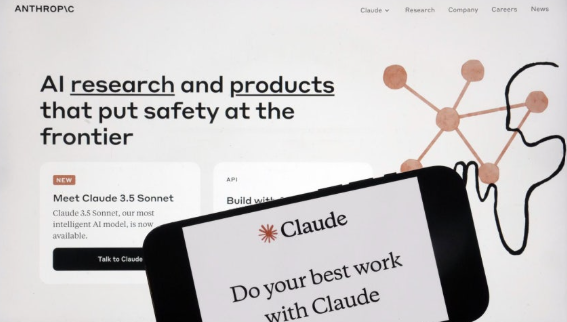
According to Bloomberg and CNBC on the 6th, Anthropic agreed to pay $3,000 and interest per copy for about 500,000 books and destroy data that is believed to have been illegally copied. In August last year, three authors, Andrea Bartz, Charles Graber and Kirk Wallace Johnson, filed a class-action lawsuit against the company, claiming that illegal copies of their works and hundreds of thousands of other works were used to train Anthropic’s AI chatbot “Claude.”
In response, Anthropic has argued that it has made “fair use,” as many AI companies claim. Fair use is a principle under U.S. copyright law, which means that copyrighted works can be used on a limited basis without obtaining permission from the copyright holder.
In June this year, the U.S. Court for the Northern District of California also admitted that Ansropic’s use of books to train AI models was a fair use. However, the court judged that storing more than 7 million pirated books for that purpose infringed on the authors’ copyright. A trial to determine the amount of compensation was scheduled in December this year.
Bloomberg reported that Anthropic would have gone bankrupt if he lost the lawsuit. Anthropic said in a court filing that he felt pressured to agree to avoid a lawsuit that could have ended the business, and that he could have been liable for damages worth up to $1 trillion.
The settlement is the first of dozens of copyright lawsuits filed against AI companies, including OpenAI, Meta and Midjourney. “This case could be an industry guideline, and it will set the standard for corporate practice for an unconsented approach,” said Chad Hummel, a lawyer at McCool Smith Law Firm.
Recently, big tech companies have signed formal contracts with media companies and content companies and started paying for them as the risk of litigation increases if data is used for AI learning without resolving copyright issues. In May this year, the New York Times signed the first contract with Amazon to provide its contents to AI companies for learning. Several media groups, including News Corp and Axel Supreme, have signed contracts with OpenAI and Reuters to use content with Meta last year.
JENNIFER KIM
US ASIA JOURNAL

