


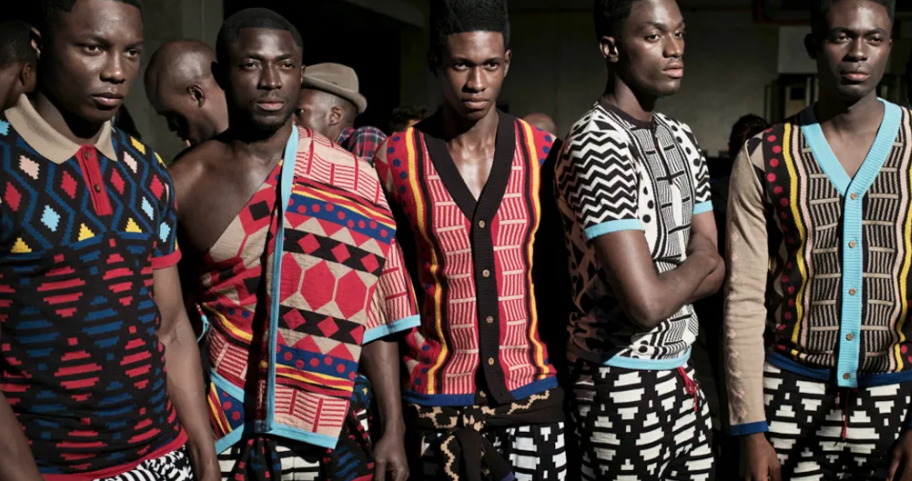
When it comes to Africa, it is easy to think of wild images such as leopards and spotted patterns, but the world has been paying attention to unique African fashion that is in harmony with tradition and modernity. In December 2022, French luxury brand Chanel held a fashion show in Dakar, the capital of Senegal, to showcase its 2022/2023 workshop collection.
To this end, he held a workshop in person and collaborated with designers and artists from Senegal to present various works.
Costumes inspired by music such as funk and disco in the 1970s and made with colors and designs reflecting Senegal’s cultural heritage were on stage.
It was the first time a European luxury brand held a fashion show in sub-Saharan Africa.
African designers and brands rose to prominence worldwide after the 2000s.
Rie Kebede, a supermodel and designer from Ethiopia, founded the brand ‘remrem’ in 2006.
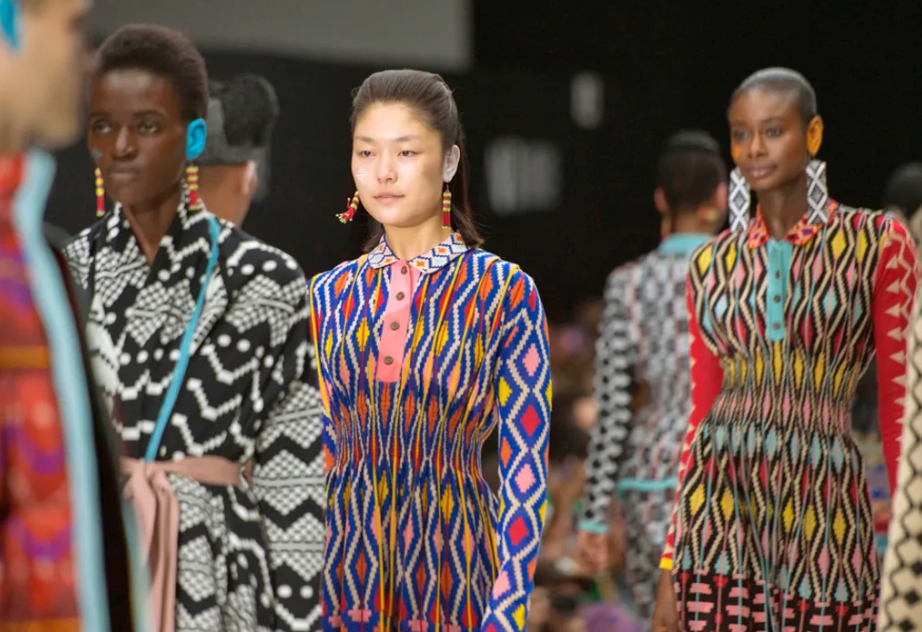
Lemrem preserved Ethiopia’s weaving skills and created jobs for local women.
Teve Magugu from South Africa and Kenneth Izei from Nigeria are famous for their world-class designers.
Magugu became the first African to win the LVMH Prize, a fashion awards ceremony organized by global fashion group LVMH.
Now, it is known as a designer who incorporates craftsmanship by adopting “Aso Oke,” a weaving technique of the Nigerian Yoruba people, as its main design.
South African fashion brand MaXhosa participated in the official Paris Fashion Week schedule for the first time as an African brand last year.
It featured clothes with geometric patterns such as triangles and diamonds inspired by traditional fabrics and crafts of the Cosa, a traditional South African tribe.
Celebrities such as former U.S. President Barack Obama’s wife Michelle Obama, pop singer Beyoncé and Hollywood star Zendeia also wore African designer outfits in public.
Specifically, Beyoncé and his dancers in 2023 wore Senegalese designer Sarah Diouf’s outfits for the Renaissance World Tour. To understand African fashion, you first need to look at the traditional fabrics that have their roots.
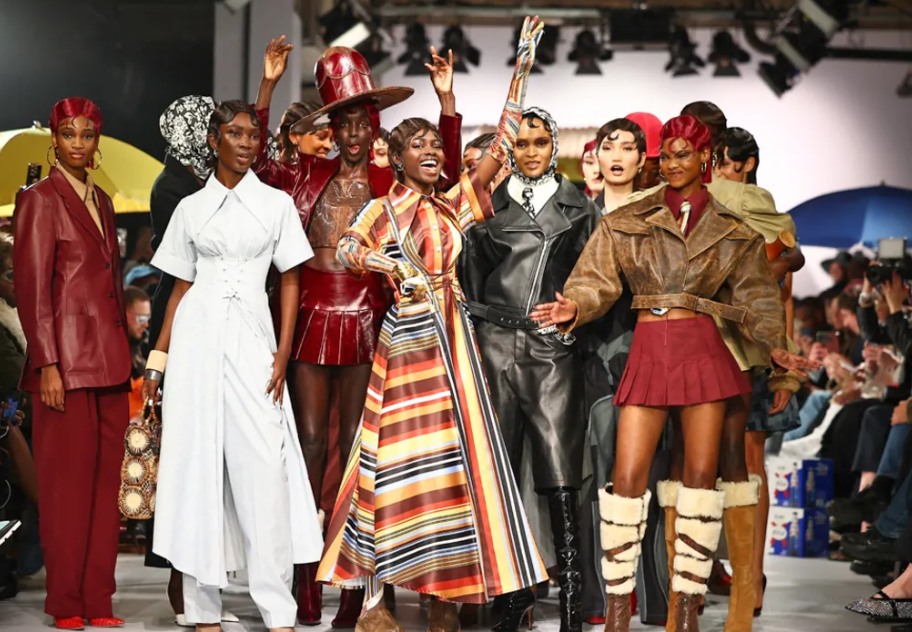
There are many different styles of fashion in Africa, where many ethnic groups coexist.
Featuring colorful colors and a variety of patterns, wax prints have become Africa’s most famous fabric, with names such as Ankara and Kitengue.
Wax prints are made by waxing on cotton cloth and dye on it.
Interestingly, the origin of the wax print is the batik pattern of the Java region of Indonesia.
Europeans copied this and mass-produced wax-printed fabrics, which were introduced to West Africa in the mid-19th century.
Wax prints with local lifestyle and experiences are still used as everyday clothes in Africa to this day.
Ethiopian Airlines flight attendants also wear uniforms inspired by Shema, a traditional Ethiopian cotton fabric.
In North Africa, which includes Morocco and Tunisia, costumes such as gelava and kaftan are mainly worn.
Unlike wax prints, they are made of wool or silk and are characterized by looseness.
Other traditional fabrics such as kente inspired by spider silk and Bogoran made with mud dyeing techniques show off their beauty. It is interesting to see the growth of African fashion.
African countries, which faced independence in the mid-20th century, strategically fostered the textile industry for economic development.
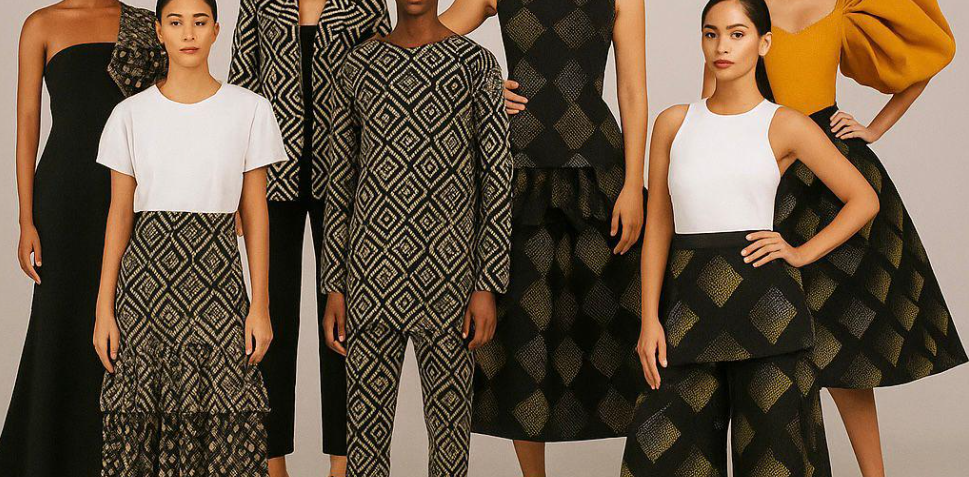
Since the 2000s, the fashion industry has also reached a turning point as the African economy has grown and consumers’ purchasing power has increased.
In addition, African fashion has attracted attention as Afrobeat, which combines traditional African music with Western contemporary rhythms, has gained global popularity. Lagos Fashion Week has been held every year in Lagos, Nigeria since 2011.
It is the largest fashion show in Africa, with more than 40,000 people visiting last year’s five-day event.
In addition, fashion shows with unique personalities will be held in more than 30 African countries, including Ghana’s Accra Fashion Week.
Africa’s potential in the fashion industry is estimated to be enormous.
The African fashion industry is growing rapidly thanks to high population growth and improved household spending power.
Currently, 60% of Africa’s total population (about 1.4 billion people) is estimated to be under the age of 25, which is sensitive to fashion. The population across Africa is expected to exceed 1.7 billion by 2030.
Fashion can be the first step in understanding Africa.
SALLY LEE
US ASIA JOURNAL

