


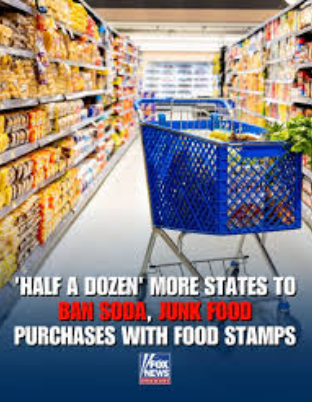
According to ABC and other U.S. media on the 7th, U.S. Secretary of Agriculture Brooke Rollins officially signed measures to exempt six states from the “low-income food purchase assistance program (SNAP) food choice.”
“We will further advance President Trump’s ‘MAHA’ policy,” Rollins said in a statement.
Under the move, six more states – Nebraska, Iowa, Indiana, Arkansas, Idaho and Utah – will join the purchase restrictions, including Texas, Florida, Louisiana, West Virginia, Colorado and Oklahoma.
Starting next year, these states will not be able to buy soda, candy, and energy drinks with food subsidies provided to low-income people.
SNAP is the nation’s largest low-income food aid system, available for those with a monthly income of $2790 or less for a four-person household as of 2020.
The federal government pays them an average of $6.16 per person per day as of this year.
It is issued by electronic card and is legally designed to purchase food for home consumption.
You can purchase groceries at a regular mart with this card, but alcohol, cigarettes, vitamins, etc. are not available, nor are you able to buy food that has already been cooked or food from restaurants.
In addition, 12 states have added junk food such as soda, candy, and energy drinks to their prohibited items.
The Trump administration is in a position that “people cannot be left to buy health-damaging food with taxpayers’ money.”
However, some academics and civic groups point out that these restrictions are ‘infringement of personal freedom’.
Craig Gunderson, a professor of economics at Baylor University, criticized the U.S. WUSF for “insulting the vulnerable and taking away autonomy.”
Some are skeptical about the effectiveness of the policy itself, saying that recipients can purchase prohibited items with personal cash instead of subsidies.
In particular, criticism has been raised that carbonated drinks are often cheaper than bottled water due to the U.S. distribution structure, and that low-income people are likely to be “food deserts” where fresh food is already difficult to obtain.
Arkansas has banned the purchase of “less than 50% natural juice,” which requires buying much more expensive juice to avoid.
According to the 2016 “Foods Mainly Purchased by SNAP Households” report released by the U.S. Department of Agriculture, it was similar to consumption patterns of other low-income households that do not receive SNAP benefits, followed by the No. 1 meat and No. 2 sweetened beverages.
Experts said, “Alternatives such as ‘Health Incentives’ may be more effective than outright bans,” adding, “Like the Health Incentive Pilot Project, which was piloted by the U.S. Department of Agriculture in the past, it is more effective to maintain the health of low-income people by refunding some of the subsidies when purchasing health foods such as vegetables and fruits.”
SAM KIM
US ASIA JOURNAL

