


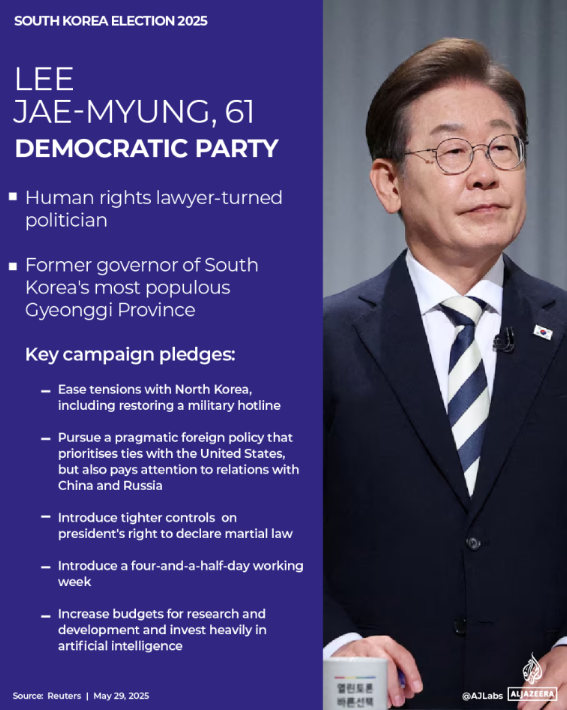
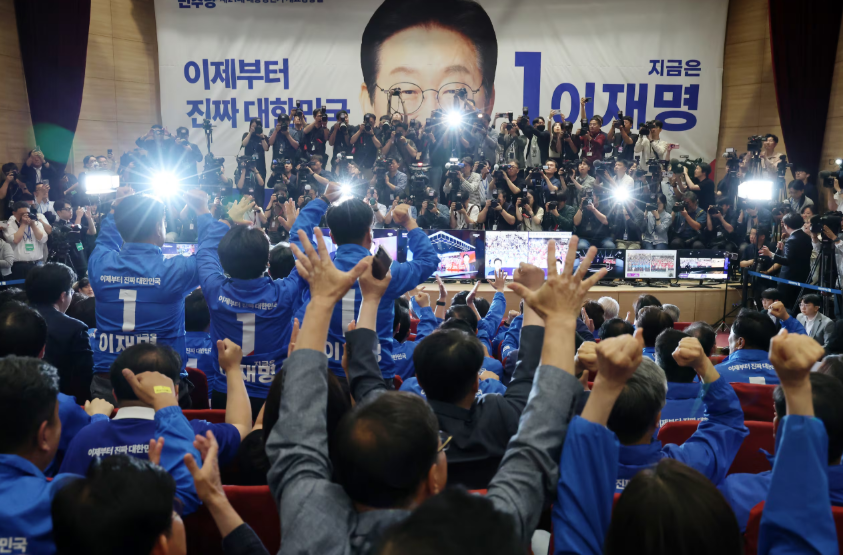
Major foreign media, including the New York Times, the Washington Post, and Reuters, reported on the 3rd that Lee Jae-myung, the Democratic Party candidate, won the early presidential election in South Korea on June 3, 2025 and officially took office as the 21st president on the 4th.
Foreign media reported that voters chose a new leader in the end of extreme division and crisis as a result of ending six months of political turmoil that occurred after former President Yoon Suk Yeol’s declaration of martial law and the passage of the National Assembly’s impeachment bill late last year. The New York Times (NYT) evaluated President Lee Jae-myung as “one of the most powerful presidents in Korea in recent decades” after enduring various crises such as criminal prosecution, knife attack, and political oppression. With the Democratic Party securing a majority of the National Assembly, President Lee Jae-myung has even secured strong legislative momentum.
Former President Yoon Suk Yeol declared martial law in December last year, defining the Democratic Party of Korea as an “anti-state force,” but was dismissed due to massive resistance from citizens and the National Assembly’s decision to impeach him. Since then, the acting president has been impeached amid confusion, and the power of the people has been greatly confused by the internal strife surrounding the nomination of the candidate.
The BBC said, “This presidential election is the result of an explosion of anger among the people who felt that democracy had collapsed,” and Reuters also reported that the “wave of angry voters” ended the election. Experts weighed in on the analysis that candidate Lee Jae-myung’s election was a “judgment against the Yoon Suk Yeol regime and the ruling party.” The Washington Post diagnosed that President Lee Jae-myung is facing three tasks: economic crisis, diplomatic conflict, and political polarization. The OECD lowered Korea’s economic growth rate to 1% this year, and President Donald Trump’s high tariff policy is expected to deal a big blow to Korea’s steel, automobile, and electronics industries.
Even before taking office, President Lee Jae-myung declared a pragmatic diplomacy centered on national interests, saying, “I will crawl under the Trump bridge if necessary,” and said, “But I am not an easy person.” <Reuters> said President Lee proposed specific policies to revitalize the economy, such as drawing up an extra budget, paying vouchers for small business owners, strengthening care for the elderly, and expanding public rental housing at the same time as requesting to postpone tariff negotiations.
Relations with China are expected to be approached carefully considering that they are the largest trading partners. Regarding Japan, it demands a responsible attitude toward past history issues and maintains a position that excessive relationship improvement is avoided. The policy is to ease tensions with North Korea by restoring military hotlines and resuming military agreements in 2018. President Lee Jae-myung is currently involved in a total of five criminal trials. The Supreme Court has made a decision to destroy and repatriate the guilt for making false remarks during the 2022 presidential election, and has been charged with preferential development of Daejang-dong, remittance to North Korea, and misappropriation of public money. AP pointed out that President Lee’s judicial risk could act as a significant variable in the sustainability of future state affairs.
Article 84 of the Constitution of the Republic of Korea restricts the prosecution of incumbent presidents, but legal controversy continues over how to deal with trials that have already been initiated. The Democratic Party is pushing for a revision of the law to suspend trials while the president is in office, and the conservative camp is protesting it, defining it as a ‘political shield’.
President Lee Jae-myung stressed that “there will be no political retaliation,” but left the possibility of conflict with the conservative camp, saying, “I will find out and hold the forces involved in the martial law attempt during the Yoon Suk Yeol regime.” The NYT warned that “the vicious cycle of political retaliation, a chronic problem in Korean politics, can be repeated.” Meanwhile, <AP News> introduced that President Lee Jae-myung’s personal history left a strong impression on many voters.
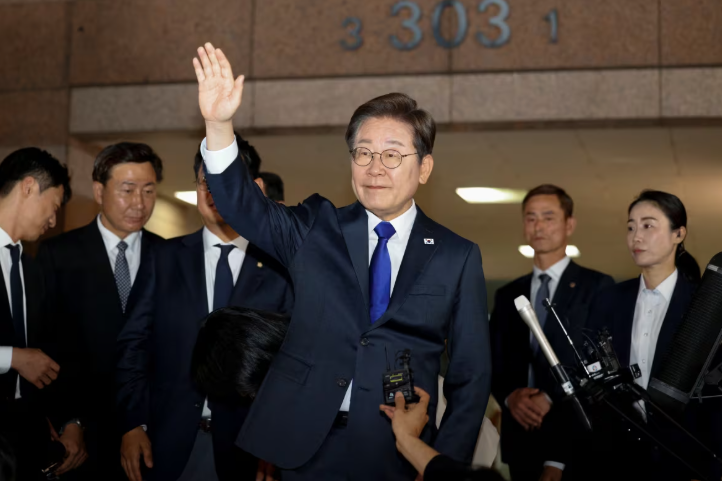
Born in Andong, North Gyeongsang Province, he suffered from a press machine accident while working at a factory after graduating from an elementary school, and experienced extreme poverty by even attempting suicide. However, his academic background was recognized through the GED, and he entered Chung-Ang University School of Law as a scholarship student and became a human rights lawyer.
He has shown strong tendency for reform through his stint as Seongnam mayor and Gyeonggi governor, and has been at the center of controversy due to his opposition to THAAD deployment and his claim on basic income. The Associated Press said Lee’s life “compressively shows inequality and conflict in Korean society.”
Now, President Lee is in a position to prove practical results through practical leadership amid political polarization, public distrust, and complex economic, diplomatic and legal crises.
In his acceptance speech for the election, President Lee Jae-myung said, “I will not disappoint the expectations of the people by fulfilling the great responsibilities and mission given by the people.” Having taken power in the middle of conflict, he is now standing before the test to prove his ability to turn crisis into opportunity as a leader of unity.
EJ SONG
US ASIA JOURNAL

