


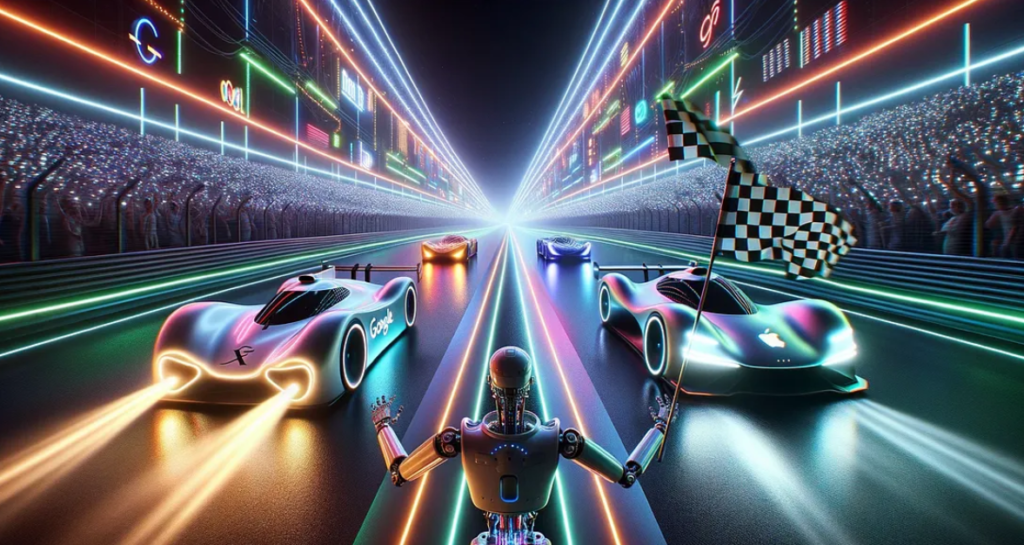
Apple is lagging behind major technology companies in the competition for artificial intelligence (AI). Critics point out that Apple, which has been called an icon of innovation, is rather a chaser in the Generative AI era. “Apple promised a brilliant AI function in iPhone 16 commercials and events last year, but none of them were actually released,” Bloomberg IT reporter Mark Gurman said on the Bloomberg podcast “The Big Take” on the 18th. “The gap between advertising and products is unprecedented in the history of Apple.”
As a representative example, the Siri function in the advertisement featuring actor Bella Ramsey was cited. Although there was a scene where the AI remembered the name of the person the user met at the cafe, the feature was not released and the advertisement was later deleted. As a result, U.S. consumers filed a class action lawsuit calling it false advertisements.
“Apple promised AI function, but there was nothing in reality,” Gurman said. “As a result, consumers were disappointed, and the technical trust of companies was also cracked.”
Apple has become a technology leader by introducing iPod, iPhone, AirPods and Apple Watch in succession to reshape the market. However, Apple’s presence is relatively small in the competition for Generative AI led by OpenAI, Google, Meta and Amazon.
Apple has been installing some functions of AI for a long time. For example, biometric technology such as Face ID or schedule-based notification function are types of AI using machine learning. However, it has not shown much technology in the recent trend of Generative AI such as text summarization, image generation, and voice synthesis.
“Apple Intelligence, which was recently released by Apple, did not meet expectations, and the beta version was only noisy in marketing and had little substance,” Gurman said. In fact, Apple withdrew some of its functions last year due to controversy over errors in Apple Intelligence’s news summary function. When the BBC protested that suicide-related headlines were incorrectly reflected in the AI summary, the function was deleted.
Apple’s AI strategy began in earnest in 2018 when it recruited former Google AI chief John Gianandrea, but it did not produce as much as expected. Siri and AI teams were integrated and maintained, but there has been no noticeable change since then. Apple is only recently seeking to cooperate with OpenAI and Antropic, and is planning to introduce AI functionality in the next version of iOS. It is also considering integrating AI search function into Safari browser and adding Google-generated AI Gemini to Siri and writing tool in addition to ChatGPT.
“Apple has fewer AI engineers and lacks differentiated vision than Amazon,” Gurman said. “It has been too conservative to avoid technical difficulties unique to AI, such as hallucinations, and missed opportunities.”
There is a growing sense of crisis within Apple that falling behind in AI competition could directly affect its hardware competitiveness in the future. “AI is the next generation of core technologies after smartphones,” Gurman said. “To realize future devices such as augmented reality glasses and humanoid robots, Apple needs to support its own AI capabilities.”
Just as iPhone has changed the market to multi-touch technology, future hardware will be dictated by AI, he said. “We cannot rely solely on external technology.” “In order for Apple to remain competitive, it needs to change its organizational culture and product development process more quickly and boldly,” he added. “If we follow it like now, we cannot secure the leadership in the AI era.”
JENNIFER KIM
US ASIA JOURNAL

