


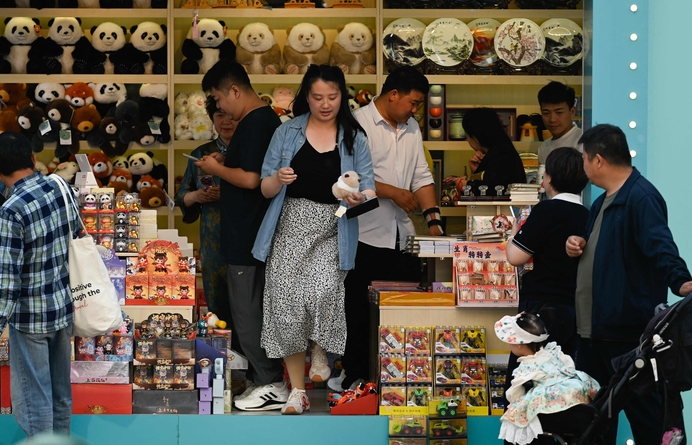
Analysts say that it is contributing to boosting domestic consumption by “self-satisfying consumption,” which does not spare money on products with interest. Bloomberg shed light on the consumption habits of Generation Z in China on the 15th and reported, “Brands that reflect their tastes are showing a clear upward trend in terms of performance and stock prices.”
Examples include Pop Mart, a toy manufacturer listed on the Hong Kong stock market, Laopu Gold, a traditional gold jewelry brand, and Mixue, a beverage chain. These companies have recently seen their sales and stock prices rise sharply by more than double digits.
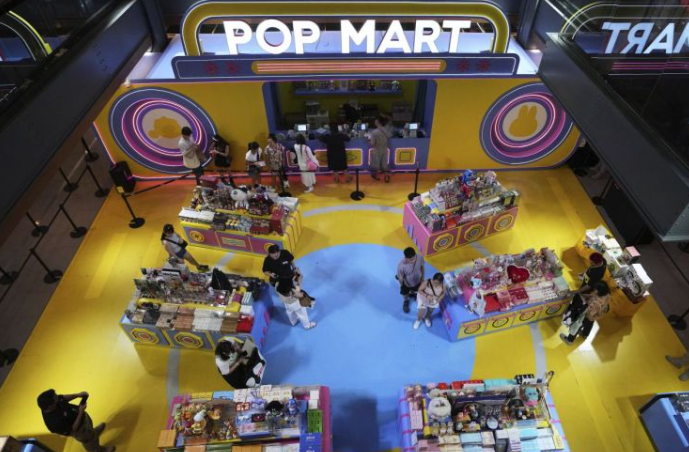
Pop Mart’s flagship product is a random box that sells high-end figures produced by world-famous designers so that the contents are unknown in advance. Pop Mart’s corporate value fell short of those of global toy manufacturers such as Barbie’s Mattel and My Little Pony’s Hasbro until the end of last year, but now it exceeds the combined value of the two companies.
The jewelry company Lao Pou Gold benefited from the combination of traditional Chinese gold crafts with the retro (retro) craze. In particular, Lao Pou Gold’s stock price has jumped 184 percent this year alone since its listing last year.
On the other hand, companies that use older generations as their main customers, such as high-end liquor company Guizhou Motae and home appliance company Haier, are struggling.

China’s Generation Z is estimated to have 250 million people. They drink less, are not interested in traditional assets such as housing or real estate purchases, and tend to focus on brands or hobbies that their parents do not understand. K-pop celebrity goods, figures, niche perfumes, cosmetics, and traditional jewelry are considered popular items.
Lee Seo-woo-chang, fund manager of Shenzhen JM Investment, said, “Generation Z consumes sensuous pleasure or emotionally, and spends money on what the older generation considers useless.” A consumer in his 30s said, “If I had invested as much money as I bought in a pop mart doll in the company’s stock, I would have become rich.”
Bloomberg said, “Emotional consumption is causing a craze enough to have a separate analysis, which is the opposite of the overall downturn in the Chinese economy,” adding, “It is also contributing to domestic consumption and boosting domestic demand, which are the top priorities of the Chinese government’s economic policy.”
SOPHIA KIM
US ASIA JOURNAL

