


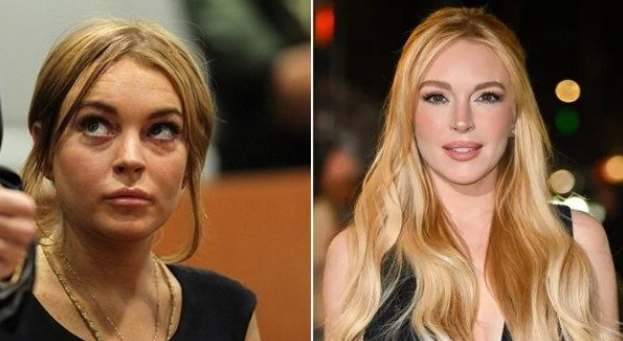
In Hollywood, a procedure to maintain youth by transplanting fat from a deceased person is gaining popularity.
According to the British media The Mirror on the 12th, Hollywood stars such as actress Lindsay Lohan, Anne Hathaway and singer Christina Aguilera are choosing an injection called Renuva instead of a filler procedure for their appearance. Renuva is made by refining the fat of a deceased donor, and is characterized by promoting fat production in the body itself at the injection site.
The filler procedure breaks down over time, but Renuba produces new adipocytes, which are long-lasting and naturally restores volume. It can be injected anywhere on the hand, face, or body. It was approved by the Food and Drug Administration in 2021, and is being implemented in the United States and Dubai. Currently, it is reported that the procedure cannot be performed anywhere except for the two countries.
Renuba is a game-changer in the beauty industry, said Dr. Howard Sobel, a renowned dermatologist in the United States. “It doesn’t require surgery or recovery, and it lasts a long time.”
Art director Diane Stasi, who recently spent $3,000 on Renuba, said, “The regular filler that I’ve received in the past only lasts four to six months, but Renuba can last several years. What’s surprising is that it keeps getting better.” Renuba is gaining popularity as a new procedure to replace filler procedures, but it is at risk of causing many side effects because it uses someone’s fat other than your own.
Typically, there is an allergic reaction. When another person’s body tissue is injected, the body’s immune system recognizes it as a foreign substance and can cause an allergic reaction. After the procedure, the face swells and in severe cases, anaphylactic reactions such as difficulty breathing and decreased blood pressure may occur. However, Renuba is known to have little immune rejection reaction because the immunogen is removed and injected.
There is also a risk of necrosis of the skin. This is because if the area where other people’s fat is injected is compressed and there is a problem with blood circulation, the supply of oxygen and nutrients is cut off. The necrotic area turns dark blue or black, and the pain becomes severe.
In addition, there is a possibility that swelling does not subside or hard nodules may occur for a long time after the procedure. Infection by bacteria or viruses can also occur when other people’s tissues are injected. In severe cases, it can lead to sepsis.
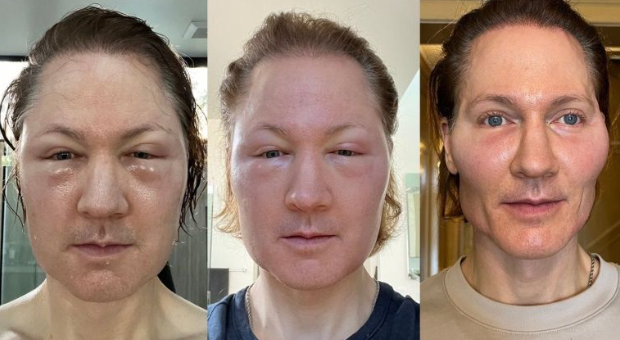
Brian Johnson, a “billionaire” who is drawing attention for various experiments and projects to maintain his youth, also recently revealed that he had suffered a major side effect by transplanting other people’s fat into his face.
Johnson lost weight all over his body due to diet restrictions and exercise, which he ate less than 2,000 calories a day, making his face look too old for his body age. As a result, he planned an autologous fat transplant, but it seems that Renuba was injected because there was no extra fat.
Johnson explained that he developed swelling on his face immediately after the procedure and that it was an allergic reaction. However, the allergic reaction he experienced can also occur in other factors, such as the anesthetic used in the injection, not the side effect of Renuba, and it can be a simple swelling.
JULIE KIM
US ASIA JOURNAL

