


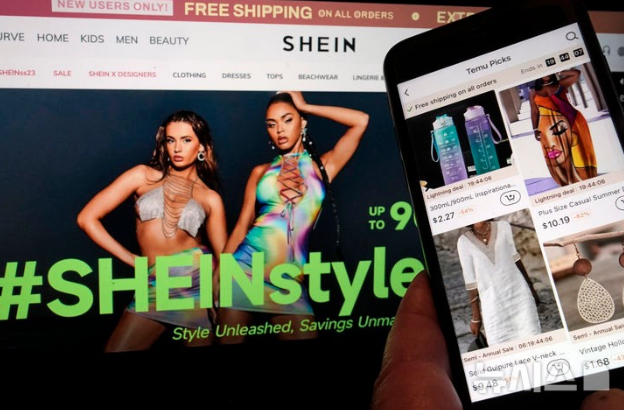
Chinese e-commerce companies Temu and Shein will drastically reduce advertising costs for U.S. big tech companies and raise prices.
The elimination of tax exemption benefits for low-priced products and high-intensity tariffs of 145 percent on most Chinese products have changed the survival methods of the two companies, which had been attracting consumers with wide exposure to advertisements and ultra-low-priced products. Not only them, but also U.S. big tech companies, which had been relying on advertisements, have been hit hard.
According to the Financial Times on the 16th, Temu has suspended all advertising spending on Google shopping platforms since the 9th. This is when tariffs were imposed on Chinese products.
Shein slashed average daily ad spending on Meta, TikTok, YouTube and Pinterest by 19% in the first two weeks of the month. Notably, ad spending on YouTube has been slashed by nearly half year-on-year.
The platform industry, which relies on advertising revenue such as Facebook, Instagram, Snapchat, X and TikTok, will also be hit, as those who were the biggest advertisers on social media platforms last year cut advertising costs sharply in recent weeks.
Temu and Shein have poured billions of dollars into the U.S. advertising market over the years, but each has a share of less than 1% in the U.S. e-commerce market, according to consumer analyst Consumer Edge.
“Both Temu and Shein have low brand loyalty, so reducing advertising will have a direct impact on sales,” said James McDonnell of marketing information analysis company WARC. “You have to constantly advertise to keep your customers.”
Temu and Shein sharply cut advertising costs due to the Trump administration’s high-intensity tariffs. Under the new tariff policy, the two companies will also have to pay tariffs on low-priced products under $800 that were exempted from tariffs. The United States has decided to impose tariffs on 90% of the price of the goods or a flat rate of $75-150 or higher.
Temu and Shein accounted for more than 30% of 1.5 million duty-free low-cost products entering the U.S., according to a 2023 U.S. Congressional report and customs data.
In response, both companies announced that they will start raising prices from the 25th. It did not specify specific increases or items.
“We’ve already got enough stock, and we’re ready for your order to arrive smoothly during this time,” Temu said, “and we’re doing our best to keep prices as low as possible and minimize the impact on you.”
Temu sells a variety of products, including household items and small electronic devices, and mainly promotes online advertisements. Xu Yin sells clothes and cosmetics targeting young women and collaborates with influencer.
JULIE KIM
US ASIA JOURNAL

