


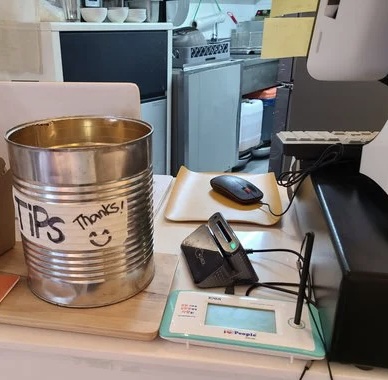
Eastern countries do not have a tip culture. Asian countries think that kindness when using the service is a service included in the amount I pay while using this store. Therefore, when using the service, it is inevitable to feel rejected to apply the tip culture. Paying tips is a position that Asians should pay more in addition to what they have already paid. Unlike the culture where tips are a livelihood like the West, in Korea, where the minimum wage and service price are included, tips will be accepted as having to pay more for people. Previously, in Korea, paying tips was only used in limited places such as hotels and expensive restaurants. One of the natural cultures in the West, the ‘tip’ culture, has recently also appeared in Korea. A tip is that the person who received the service pays the person who provided the service voluntarily. A tip is that receiving good service and giving it voluntarily has a positive side and a negative side that is obligatory even after receiving bad service. If the tip culture takes place, you will be able to receive higher quality from the standpoint of receiving service. The person receiving the tip will provide better service to the customer to receive more money. However, it could be rather poisonous. Service discrimination will arise, and classes will exist. Depending on the difference in tips, there may be a difference in the service that customers can receive. For example, at a cafe, customer A received a tip of 5,000 won and customer B received 3,000 won. The employee brought drinks to the seat for customer A who gave more tips and not customer B. The employee provided better service to the customers who gave the tip, but the service difference will be felt from the standpoint of the service provided. In the future, customers B will inevitably give more tips to receive better services regardless of their will, and the nature of the tip will become mandatory as the vicious cycle in which other customers C, D, and E are forced to pay tips for better services is repeated. In addition, tips are money given to the service provider, and it is unclear whether the employee or the employer will receive these tips. The delivery of tips to employees who provide good services is a positive aspect of tips, but the system called tips should not allow employers to benefit from taking away employee tips. Tips could become a social problem that establishes themselves as additional benefits for employers. Recently, by introducing a system that gives audit tips when a driver is given 5 out of 5 stars after using a taxi on the largest platform in Korea, Kakao Mobility (Kakao Taxi App), a service that gives tips to taxi drivers was introduced, which can lead to a heated debate among users. Recently, Kakao Taxi in Korea has established a system that evaluates and gives tips to drivers after arriving at their destination, which is said to be a voluntary system, but it has become a stress that customers must pay more. Kakao Mobility is one of the companies that are one of the most influential companies in Korea, and the introduction of tip culture will be compulsory with a sense of duty rather than spontaneity. And there could be some drivers who use it. There could be problems that can lead to a crime by forcing tips or creating service differences. One of the delivery apps, ” Baedal Minjok,” encourages customers to use tips by adding items such as “thank you” and “I’m always eating well” because shop owners are unable to use the term “tip.” This app encourages customers to tip. People largely expressed opposition and expressed rejection.
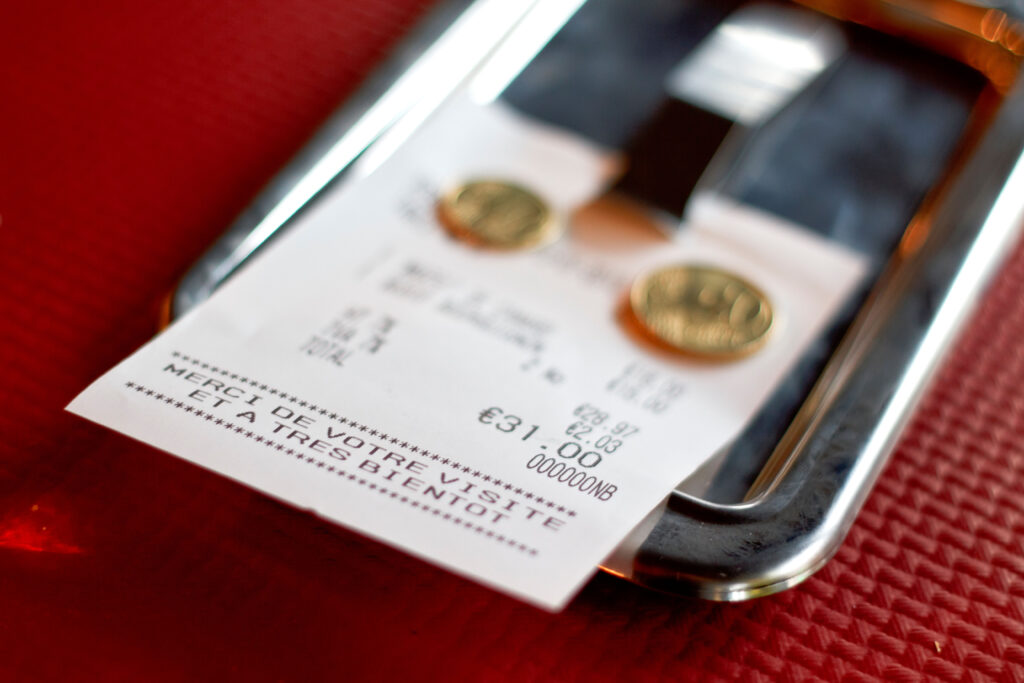
In the United States, where tipping is natural, it is rude not to tip. In the United States, most service workers have a lower basic wage than the minimum wage, and tips are important for those working in service positions such as waiters, bartenders, hairdressers, taxi drivers, and hotel employees. In addition to a certain salary, service workers are paid tips to supplement their income. Unlike Korea, service workers in the United States are not guaranteed the minimum wage and cover their short wages by receiving tips from customers receiving services. However, even in the United States, where tip culture is common, the word “tip inflation” has recently emerged due to the excessive rise of tips. Tip inflation means that tips raise prices as tip rates soar and more businesses require tips even when ordering face-to-face. Tipping was originally a means for service users to express satisfaction and gratitude to the person who provided the service, but as the tip ratio required by the service industry gradually increased, the burden on consumers increased. During the COVID-19 pandemic, consumers gave more tips for service workers who would have a hard time, but as the sales did not expect higher tip levels, confusion arose. Previously, tips that pay 10-15% are now required to be 20% to 30%, or tips are mandatory and compulsory. Not only restaurants but also cafes and fast-food restaurants that accept kiosk orders have begun to demand tips. When you finish your order, you will see a tip selection page of 15%, 20%, and 25%. There is also a “No Tip” button or a button that allows you to set the tip amount, but it is not easy to press the button itself or the employee is looking right in front of you, making it difficult and burdensome to press it. As a result, a new word “Guilt Tipping” has already been created in the United States, which means that you have to touch the tip amount in a way that you can’t do, be chased, or feel guilty.
We aim for a culture of voluntarily giving tips, but rather, tips are mandatory and should be avoided if it is stressful. Tips should not be forced, and classes should not be created due to the presence or absence of tips or differences in tips.
SALLY LEE
ASIA JOURNAL

