


Hanwha SolarOne, Hanwha Group’s China-based photovoltaic manufacturing unit, ranked among firms showing the fewest environmental and social sustainability efforts in its sector, according to a U.S. research and advocacy group.
The Silicon Valley Toxics Coalition, a California-based group that promotes safe environmental practices in the high-tech industry, said Hanwha SolarOne earned the second-lowest score in this year’s “Solar Scorecard,” which assesses the actions and level of commitment toward transparency in regards to environmental and social justice practices by solar manufacturers.
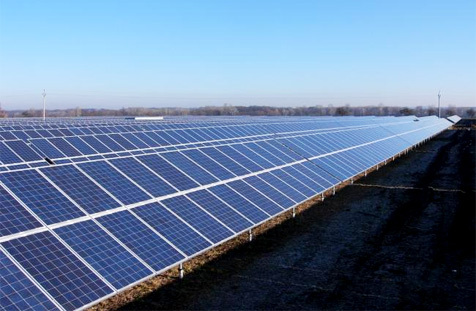 |
| Hanwha SolarOne’s 3.9-megawatt solar power project in Malesovice, Czech Republic. (Hanwha SolarOne) |
 |
| Hanwha SolarOne chief commercial officer Kim Dong-kwan |
Hanwha SolarOne received 10 out of 100 points based on surveys on the firm as well as publicly available information. The figure was far lower than the industry average of 31 points set by the SVTC.
Hanwha was also second to last with 4.4 points for a five-year average score compiled by SVTC, which said a lack of responses was part of the reason why “industry stragglers” such as Hanwha had such low scores.
For this year’s scores, the U.S. coalition ranked 37 solar manufacturers’ actions and commitments to practices such as reporting emissions, using water and energy efficiently, avoiding the use of conflict materials, and promoting workers’ health and safety.
“When the clean-tech movement started, the solar industry had a lot of the similar environmental impacts as the microelectronics industry that the SVTC had looked into,” said Sheila Davis, executive director of the coalition. “We wanted to ensure that the solar industry is clean.”
According to the coalition, the industry has grown sixfold, from producing just 6.4 GW of photovoltaic modules in 2009, to producing 38.7 GW in 2013.
Among the 12 judging criteria, the photovoltaic manufacturer received zero points in eight categories, including extended producer responsibility, emission transparency, chemical reduction and supply chain.
The SVTC solar scorecard this year was its fifth, with its first report issued in 2010.
Hanwha SolarOne said in a statement that the company did not have time to respond to the survey. It also refuted the score stating that they are “in no way an accurate measure of the sustainability of HSOL’s business,” according to the U.K. newspaper the Guardian, which initially reported the scores.
Meanwhile, SolarWorld had the highest five-year average with 81.8, followed by Yingli with 77. SVTC said Yingli and SolarWorld were the only companies that have responded to the Solar Scorecard every year.
In the second quarter of this year, Hanwha SolarOne failed to claw its way back to profitability by posting a $6.4 million operating loss as low-margin module sales in China began to edge out the higher-margin markets in its portfolio.
Seeking a rebound, the firm signed a memorandum of understanding to develop 100 MW of distributed generation projects in the Chinese port city of Yantai last week. Hanwha is expected to ship 1.5 to 1.6 gigawatts of panels this year, according to a company statement.
By Park Han-na (hnpark@heraldcorp.com)