


(Source from Reuters/Alamy)
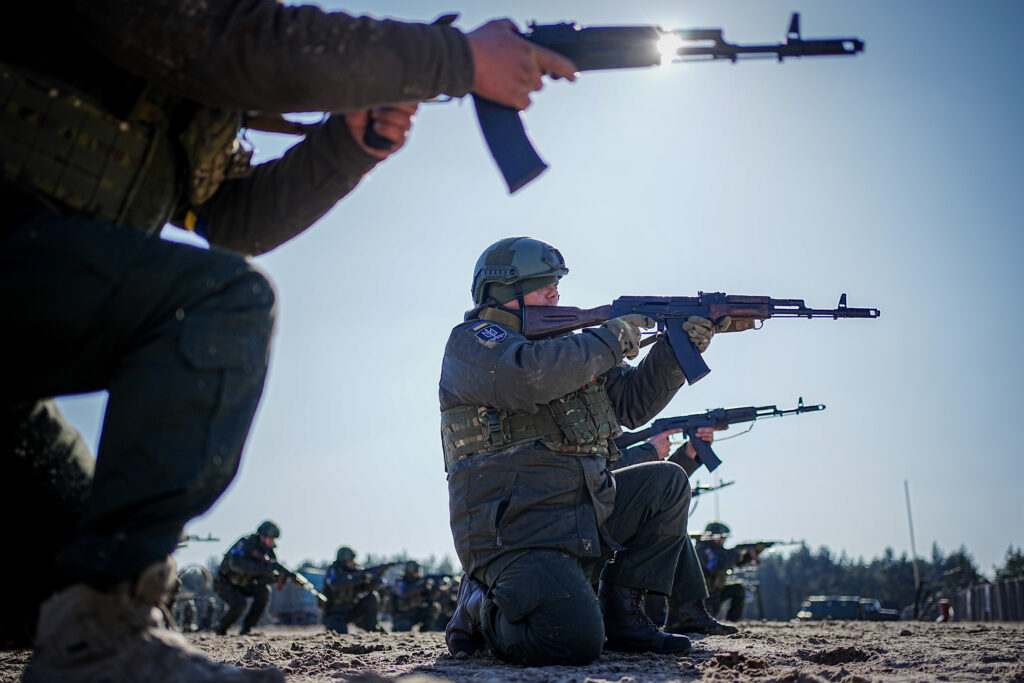
With the outbreak of the Ukraine war, rising prices of raw materials such as energy and food have brought unprecedented inflation to the global economy. The war has fueled inflation at a time when prices are already unstable due to each country’s fiscal expansion policies to overcome COVID-19.
When the West imposed economic sanctions on Russia for invading Ukraine, Russia protested and stopped supplying natural gas to Europe. The result was a global ‘energy crisis’. European countries that relied on Russia for 40% of their natural gas were hit hard.
Ukraine, dubbed the “world’s granary,” has been engulfed in gunfire and food prices have soared. According to the International Institute for Food Policy, more than a third of the world’s wheat and about a fifth of its corn were produced in Russia and Ukraine as of 2018-2020.
(Source from Reuters/Alamy)
As a result, U.S. consumer price growth hit a 41-year high of 9.1% in June last year, and the eurozone also suffered from severe inflation, with consumer price growth hitting an all-time high for 12 consecutive months until October last year.
This has resulted in poor countries becoming poorer. As well-off countries scramble to raise interest rates to curb inflation, the debt crisis in middle and low-income countries has deepened. Last year, Sri Lanka fell into a state bankruptcy, and some analysts say that at least 20 countries want to receive International Monetary Fund (IMF) bailouts.
In particular, African and Middle Eastern countries, which suffered from reduced aid and soaring food prices due to blocked food import routes during the COVID-19 pandemic, became more vulnerable to the food crisis as they failed to get cheap wheat from Ukraine after the war. The U.N. Food Program purchased 1.4 million tons of wheat in 2021 before the war to support poor countries, 70% of which were from Ukraine and Russia.
(Source from Reuters/Alamy)
In Egypt, where 80% of wheat consumption was imported from Russia and Ukraine, inflation, which was 5% before the war, is now soaring to 25%. Zimbabwe (230%), Venezuela (156%) and Lebanon (122%) recorded triple-digit annual inflation rates.
As of the first year of the war, energy and food prices have recovered to pre-war levels. However, the world’s high-intensity austerity policies, the U.S.-China trade conflict, and the return to protectionism, which began with high prices, have led the global economy to a swamp of stagnation.
In a report released on the 15th of last month, the IMF analyzed that the global divide such as the COVID-19 pandemic, the ensuing Ukrainian war, and the U.S.-China confrontation could lower global GDP by up to 7%.
JULIE KIM
ASIA JOURNAL

