


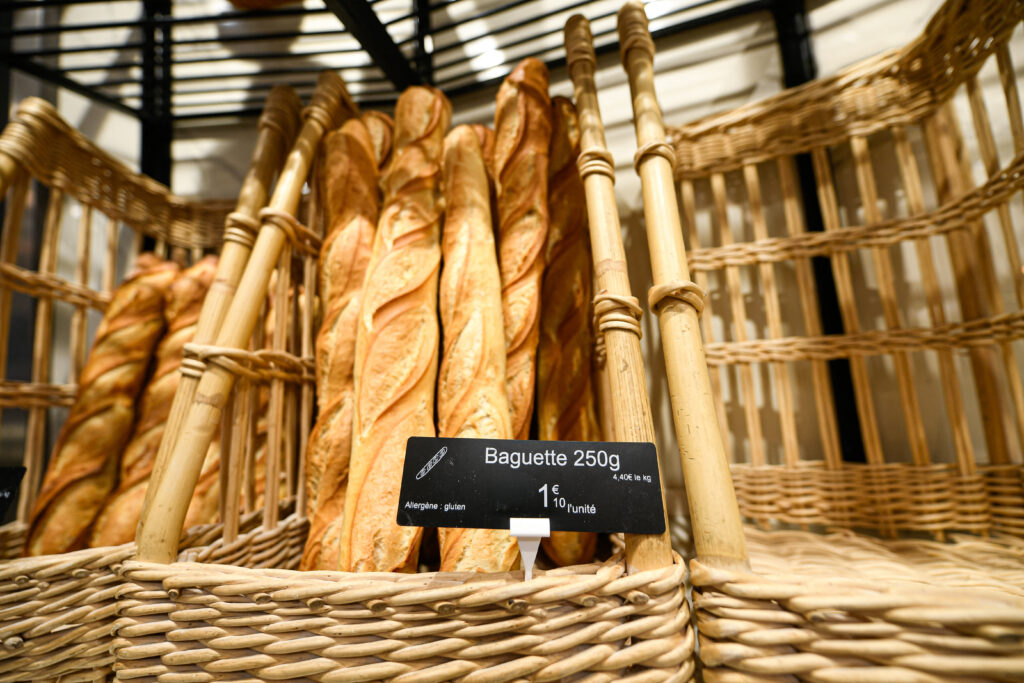
This is because bakeries, which have become unable to afford steeply soaring energy and material prices since the Ukraine war this winter, have been closing and going bankrupt. The bakery crisis and the anger of bakers have emerged as the most explosive detonator in French politics.Veronique Capilierz, which has been operating a bakery called La Bourguelois for 27 years near the northern French city of Lille, has decided to open only on weekends starting this year. He also fired apprentices and salespeople. Some customers were disappointed, saying, “Closing the only bakery in the village is tantamount to the village’s death,” but there was nothing we could do. “The electricity bill, which was 1,900 euros (about 2.65 million won) in January last year, will be 6,700 euros (about 9 million won) this month,” Capilierz said on public radio channel France 3. “Without government help, even weekends may be closed.”
Capilierz is not the only one to accept the shocking bill. Jules Péd셀ssel, a baker in the northern French city of Cray, revealed the electricity bill he had been charged for the past three months on local media Curie Picard. It was 1,000 euros in October last year, 6,000 euros in November, and 12,880 euros in December. Frederic Louis, a famous baker in the Mediterranean city of Nice and campaigning for the protection of French culinary heritage, tweeted that monthly electricity prices jumped from 780 euros in November last year to 17,514 euros next month. Monthly electricity usage was similar at 5000 kWh, but fares jumped more than 10 times. December, which is usually the case with Christmas and New Year, has become a nightmare for many bakers this time.
In France, electricity bills are linked to gas prices. The French government has put an upper limit on the rate of increase in electricity rates used by consumers this year following last year, but has not taken any action on business electricity. As a result, all French operators are suffering from a steep rise in electricity prices. Bakery, which uses a lot of gas due to ovens, is considered a particularly vulnerable industry in the energy crisis.
Prices of raw materials other than energy have also risen significantly, putting pressure on the baking industry. Prices of all ingredients, including flour, eggs, butter, and packaging materials, have all soared since the Ukrainian war. The price of flour alone rose 15 percent last year. In the case of eggs, the spread of bird flu has fueled the price increase. Since many years ago, large supermarket chains have been offering low-priced bread one after another, pushing out independent bakeries.
On the other hand, there is a limit to the increase in bread prices. According to a recent survey by IFOP, an international polling agency, only 31 percent of French people said they were willing to pay 1.5 euros for the baguette. Baguettes are currently sold for 1.2 to 1.3 euros. After the French Revolution, there is a strong perception that baguettes should be a “symbol of equality” that anyone can buy and eat at a low price. As a result, bakery owners are being pushed into a situation where there is no alternative but to close their businesses.
The number of villages without bakeries is also increasing. According to France 3, the only bakery in the village of La Rochevokuch in southwestern France was also recently closed. Residents were forced to drive for 10 minutes to buy bread. This bakery also served as a news station. “I can’t even drive,” Susanne, 95, said. “The day goes by faster when we go to a bakery in the morning and talk to each other while buying chocolate bread. The death of the bakery is the death of La Rochevokuch.There are about 33,000 bakeries across France because they cannot afford soaring energy and material prices. 110,000 people work in bakeries. The development of large superchains and changes in diet have reduced the number of visitors to independent bakeries run by craftsmen in France, but millions are still loyal customers. In particular, in small and medium-sized cities and rural areas, craftsmen have a lot of pride in bakeries, with traditional recipes.
“People in the region feel that France is shaking and that bakery is the last social link in town, so if we let the baker die, the countryside will explode,” said Stefan Lachlay, a baker who ran for the left-wing coalition in Bzangsong at the last general election. He became famous when an apprentice from Guinea in Africa was on the verge of deportation and went on a hunger strike to support him.Politicians are also nervous. Some say that it could be a detonator that will shake the Emmanuel Macron administration as it coincides with the pension reform plan scheduled to be announced on January 10. This is because the crisis of bakeries not only affects the people’s diet right away but can also be an issue that shakes the cultural pride of the French people. President Macron praised the baguette as a “magic 250g” when it was selected as a UNESCO intangible cultural heritage in November last year, but was criticized for doing nothing for the baking industry, which was directly hit by inflation. The far-right party National Front is penetrating the hearts of bakery owners by releasing an open letter stating, “Your products are not just consumer goods, but a source of national pride.”The government belatedly began to come up with countermeasures. As complaints in the baking industry grew, Finance and Economy Minister Bruno LeMer called officials from energy suppliers such as the Korea Electric Power Corporation (EDF) and Total Energy to hold a countermeasure meeting on January 3, AFP reported. Minister Lemer added that the bakery industry should not be in despair a month after the “baguette’s artisan know-how and culture” was listed as a UNESCO Intangible Cultural Property.According to Le Monde and others, the government’s measures are under discussion to exempt cash-strapped bakers from paying taxes and give them the authority to terminate contracts if energy prices rise too much. The government believes that fuel subsidies can save about 40% of electricity bills. Some lawmakers are pushing for a bill to impose a ceiling on electricity bills on businesses. On the other hand, there are voices of concern about equity issues with other industries.The baking industry is complaining that the government’s current measures are absurdly insufficient to quell the survival crisis. Bakers are scheduled to stage a massive protest in Paris on Jan. 23. “The bread crisis represents the crisis in France,” said Jules Bernard Renard, a baker who recently closed down in Moselle, Northeastern France, in an interview with Le Figaro. “If our bakers take to the streets, it’s because there are real problems all over the country that go far beyond our jobs.”
JULIE KIM
ASIA JOURNAL

