


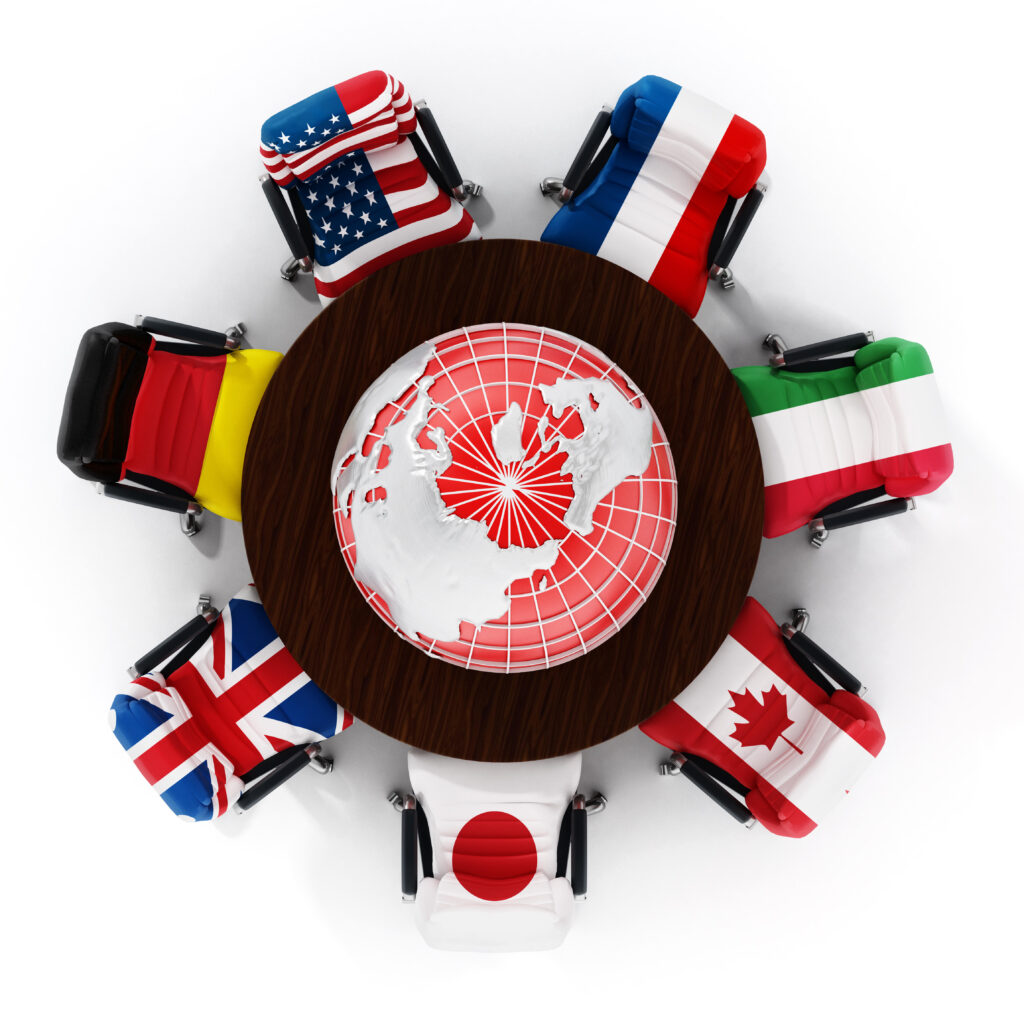
An international organization with 20 major countries in the world, including the Group of Seven summit talks, the chair of the European Union (EU) and 12 emerging market countries.
It was established in December of the same year at the International Monetary Fund (IMF) General Assembly held in September 1999, agreeing to create an organization involving the G7 and emerging markets. ‘G’ is the initial letter of the English ‘group’, and the last number refers to the number of participating countries.The members are seven G7 countries, including the United States, France, the United Kingdom, Germany, Japan, Italy, and Canada, and 20 European Union presidents, plus 12 emerging markets, including Korea, Argentina, Australia, Brazil, China, India, Indonesia, Mexico, Russia, Saudi Arabia, South Africa, and Turkye.
If the European Union presidency belongs to the G7, it will be 19 countries.Since the first meeting in Germany in December 1999, the finance ministers and central bank governors of member countries have regularly met each year, and have been upgraded to a summit meeting since 2008 in the wake of the global financial crisis. The main contents of the meeting are international financial issues, measures to prevent the recurrence of economic crises in certain regions, and establish a cooperative system between developed and emerging markets, and the IMF, the European Central Bank, and the International Monetary and Financial Committee (IMFC) will participate as observers.
Previously, the G7 usually held annual summits to discuss global economic issues, but in the wake of the 1997 Asian financial crisis, it faced limitations that cooperation from seven advanced countries alone could not solve the crisis, and it lacked representation as it did not include emerging countries such as China and India.
As a result, the G20 gathered the 20 most influential countries among IMF members. The total population of the G20 countries is two-thirds of the world’s population, and the gross domestic product (GDP) of the 20 countries is 90% of the world’s, and 80% of the world’s trade is made through these 20 countries.
The G20 is divided into five groups: the U.S., Canada, Saudi Arabia, and Australia, Russia, India, Turkye, South Africa, Brazil, Argentina, Mexico, Brazil, France, Germany, Italy, and five groups, including Korea.
There is no separate secretariat, and the chairmanship serves as the secretariat for one year.ASEAN was established on August 8, 1967, following the developmental dissolution of the Association of Southeast Asian Nations (ASA), which was established in 1961.
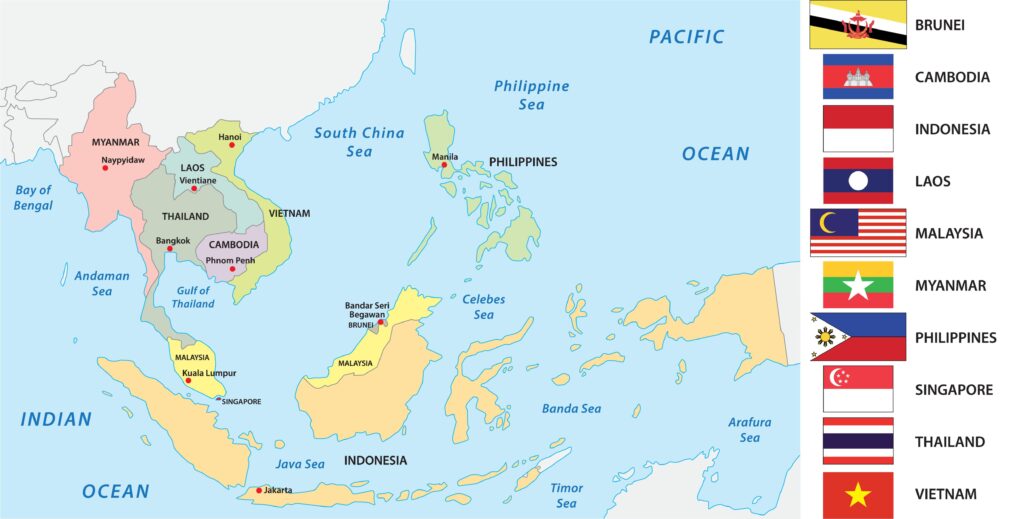
At the time of its establishment, the members were five countries, including the Philippines, Malaysia, Singapore, Indonesia, and Thailand, but Brunei in 1984, Vietnam in 1995, Laos and Myanmar in 1997, and Cambodia in 1999 joined in turn, and it is also called ASEAN 10.
The ASEAN Secretariat is located in Jakarta, Indonesia. The organization consists of a summit attended by the leaders of the member states, a ministerial meeting consisting of the foreign ministers of the member states, a standing committee composed of the foreign ministers of the host countries and ambassadors of the member countries, and the domestic secretariat of each country.
In the early days, it cooperated mainly in non-political areas such as economy and culture, but in the 1970s, the “Declaration of Neutralization of Southeast Asia” was adopted in 1971 to balance power between Southeast Asian countries as the U.S.
left Asia and China and the U.S. approaches. After the communization of Vietnam, Cambodia, and Laos in 1975, ASEAN was also anti-communist. In 1977, the ASEAN Industrial Project (AIP) and the ASEAN Preferential Trade Agreement (PTA) were signed to strengthen the foundation for economic cooperation.

After the end of the Cold War in the early 1990s, the regional security environment was improved by joining ASEAN, and the ASEAN Free Trade Area in 1992 and the ASEAN Regional Forum in 1994 were launched to strengthen the level of political and economic cooperation.
In 1997, when the Southeast Asian economic crisis occurred, economic integration between member countries was accelerated, and the ASEAN Vision 2020 was adopted to bridge the development gap between the selected and late member countries.The 2007 summit agreed to the launch of the ASEAN Community and the adoption of the ASEAN Charter to strengthen the integration of member states.
In 2011, an institutional framework for democratization and human rights protection through the Right Declaration was established, and in 2014, the Nepido Declaration for the Realization of the ASEAN Community declared a leading role in regional peace and environmental issues.
The 2016 Vientiane Summit adopted the ASEAN Integration Initiative Action Plan to bridge the development gap and the ASEAN Linkage Basic Plan 2025 to expand infrastructure. The current world situation requires cooperation and cooperation more than ever due to the Ukraine crisis, the tense confrontation between China and Taiwan, the only divisional confrontation between South Korea and North Korea, the threat of a war backlash, as well as the high-interest dollar.
KS CHOI
ASIA JOURNAL

