


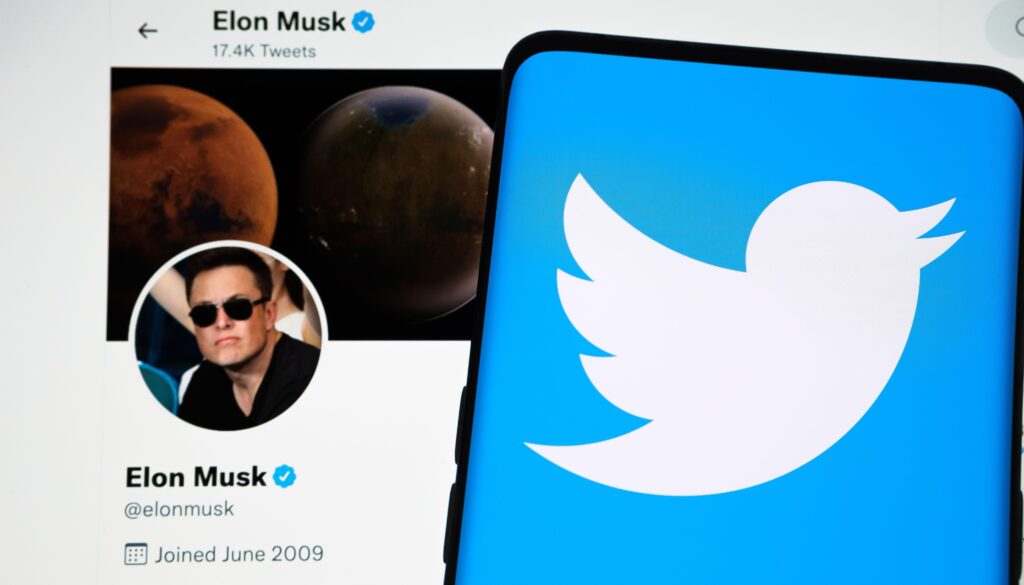
(Source from Reuters/Alamy)It has been confirmed that Twitter attempted to introduce a paid plan that allows users to view adult content earlier this year to maximize profitability.
Earlier this year, Twitter pushed for the “Adult Content Monetization” project, which provides paid subscription services to adult content creators such as “OnlyFans,” according to a report by IT media The Verge citing its own documents and former Twitter employees.
Twitter takes some of the brokerage fees and generates profits. Some executives expected that Twitter will easily increase profits by launching paid subscription services, as it is already used as a major marketing channel for only-fans content producers. The ACM project was carried out until just before the final release, and an organization called ‘Red Team’ was formed for pre-test. The 84-member Red Team’s goal was to test whether Twitter could do this safely and responsibly when it allowed adult content creators to generate revenue on the platform. After completing the review, the Red Team concluded in April that “Twitter has been like that in the past, and even now, it cannot accurately detect harmful content such as child sexual exploitation or unagreed excessive exposure.” It also found that there was no effective means to confirm that content creators or consumers were not minors. In this situation, Tesla CEO Elon Musk has proposed an acquisition for $44 billion in May, and the project has been postponed indefinitely. The Verge reported that Twitter executives took the Red Team’s opinion seriously and decided not to start the project until they could filter illegal content more healthily and safely.

(Source from Reuters/Alamy)WP pointed out that Twitter’s abandonment of allowing adult content is also in line with the problem raised by Musk on Twitter. Musk withdrew the acquisition contract, saying he could not believe Twitter’s opinion that the proportion of fake accounts is less than 5% of the daily active users (mDAU). WP explains that if Twitter cannot properly detect harmful content, there may be a problem in accurately identifying fake accounts. Last week, Twitter was not only incapable of identifying fake accounts, but also an internal revelation from a former security manager that it had reduced even the accounts it had identified and falsely reported them to regulators. WP explained, “There are a series of scandals related to Twitter and they seem to be different, but all scandals have something in common in that they are related to business models that rely on advertising.” He pointed out, “The fact that the world’s most influential Twitter has reviewed adult content services means that the platform is not healthy enough, as Musk belatedly realized, or that the current profitability is not that good.”
KS CHOI
ASIA JOURNAL

